|
Getting your Trinity Audio player ready...
|
Petrol subsidy and underproduction of crude oil are ripping the nation’s treasury apart, experts say, warning that unless the government summons the courage to end both, the country’s finances will get worse.
Between January and September this year, subsidy payment cost the Nigerian National Petroleum Corporation’s (NNPC) a whopping N864 billion.
The corporation recorded N2.44 trillion worth of revenue in the period, out of N3.73 trillion projected, leading to revenue shortfall of N1.29 trillion in the period (based on a monthly expected income of N414 billion).
Experts, who reacted to the revenue shortfall, said while sales of crude products were decreasing, continuous payment of subsidy was also cutting down oil revenues which have been the mainstay of Nigeria’s economy.

Speaking with BusinessDay, the CEO, Cowry Assets Management Limited, Johnson Chukwu, blamed the poor revenue generation of the NNPC on its continuous payment of subsidy as well as a decline in product sales.
Read Also: Nigeria sinking as petrol subsidy mounts
According to him, nations are gradually moving from fossil fuel to cleaner fuel. “Crude oil sales are declining gradually and this will affect how much of the product we are able to sell as well as the profit to be declared by the NNPC. “Another factor to be considered is the payment of petrol subsidy. While oil revenue is on the decline, Nigeria has continued to spend huge sums paying subsidy.
“The consequences of the shortfall in the corporation’s revenue will definitely affect the national treasury because Nigeria still depends largely on income from the oil sector. Till subsidy payment is removed completely we may continue to see a further decline in oil revenue.”
Corroborating Chukwu, the executive director of Civil Society Legislative Advocacy Centre, (CISLAC), Auwal Musa Rafsanjani, stressed that while subsidy payment appeared to be in favour of the few rich Nigerians, it may have a greater effect on the general public as it poses threat to the nation’s wealth.

According to him, the current revenue decline should point the government to act fast on its economic diversification agenda which will change the nation’s dependence on oil revenues.
“This speaks to what we have been calling for, ‘economic diversification.’ Nigeria cannot continue depending on revenue from fossil fuel when other countries are moving towards cleaner energy. Countries that used to buy oil are seeking other energy sources.
“If we continue driving our revenues on this path, we may be faced with greater revenue challenges in the near future,” he said.
The group managing director of the NNPC, Mele Kyari, in October had lamented that the nation losses up to 42.25 million barrels annually.
According to him, importation of the finished product erodes necessary gains through the use of foreign exchange earnings and payment of subsidy, which has risen to over N1 trillion in less than eight months.
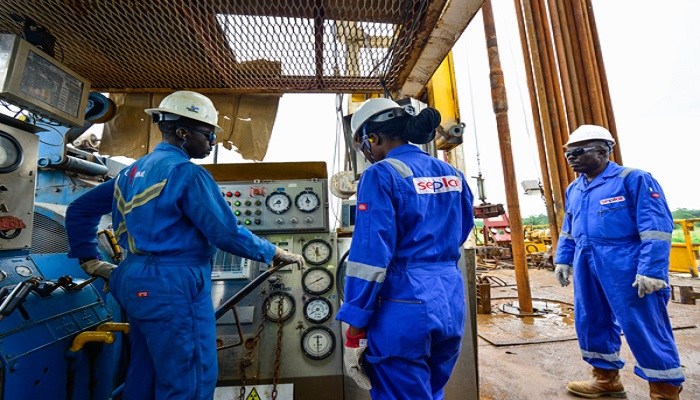
“The national oil company has lost over 42 million barrels to underproduction in all its assets in the Niger Delta which it operates alongside its Joint Venture (JV) partners in the last one year.
“While oil price is heading high and should have been a bumper harvest for the Nigerian ailing and hydrocarbon-dependent economy, Nigeria is in an energy deficit as it imports all its petroleum products.”
Available data from the NNPC showed that the corporation generated N195.62 billion revenue in January out of N414.9 billion projected for the month.
The revenue base further reduced to N191.19 billion in the month of February, and increased to N225.58 billion in March. Revenues for the months of April, May, June, July were N156.36 billion, N320.3 billion, N295.39 billion and N270.4 billion respectively.
Revenues for August and September increased significantly to N389.1 billion and N400.446 billion being the highest revenues generated in the period.
Similarly, the corporation fell short in its monthly obligation as it was only able to remit N82.2 billion, N79.5 billion, N75.8 billion and N125.33 billion in the months of January, February, March, April and May.
The corporation in the months of June to September paid N56.6 billion; N70.4 billion and N104.5 billion and N147.501 billion respectively as against N172.66 billion monthly projections.