|
Getting your Trinity Audio player ready...
|
19 months ago, the world was a different place.
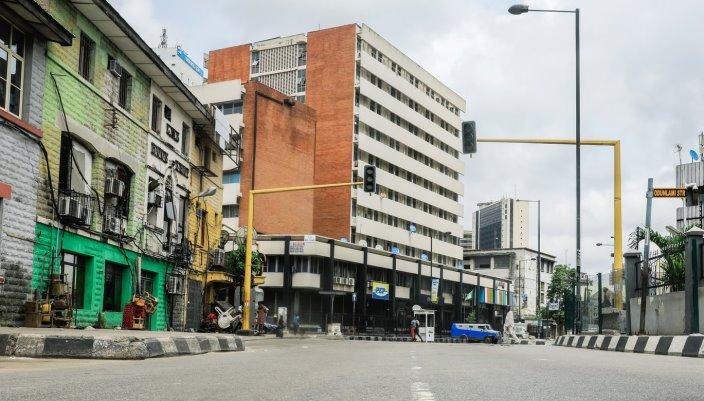
I was camped in my cosy little office space in Ogba, Lagos, waiting out the 5-week COVID-19 lockdown and hoping that the unfolding anarchy at the nearby Iju-Ishaga area would not extend to my location. I wrote an article in this column excoriating the idea and execution of a total lockdown in Nigeria, and as always the response was heavily polarised. On the one hand, the recommendation of distancing protocols instead of draconian curfews and lockdowns was hailed as commonsensical. On the other hand, some wanted to know “Who does he think he is, a doctor?”
There were days upon days of fiery arguments, head butting, accusations and counter accusations. Finally – mercifully – the lockdown came to an end and it was time to take stock. The unprecedented 5-week total lockdown of most of Nigeria’s visible production capacity was apparently intended to achieve certain public health outcomes while avoiding the exact economic and political consequences I warned about in this very column in April 2020. Did it do those things? Well, a year and a half later is enough time to make that judgment, so let’s dive into it shall we?
Read Also: As lockdown eases, corporate Nigeria rethinks going back to office

The public health outcome
My principal criticism of the decision to lock down was that it was a giant knee-jerk overreaction to a problem that – even as at March 2020 – was known to be peripheral in Africa. To put it very simply, COVID-19 mortality is primarily the preserve of the over-40 and immunocompromised. Nigeria’s median age is 17.9, and Africa’s median age is 19.7. According to pandemic figures from the American CDC, the COVID-19 mortality rate four under-18s is 558 out of 736,835 total deaths – 0.075%. For reference, CDC figures place Malaria’s global annual death toll at 409,000 out of 229 million total infections – 0.17%.
In other words, this was never going to be a significant Nigerian or African problem, or at least not significant enough to justify the economic and social mayhem of imposing draconian lockdowns on the people least equipped to survive such policies. If statistically, Malaria is 2.2 times deadlier to Africans than COVID-19 as these figures show – and certainly nobody is hitting the nuclear button because of Malaria – then what was the rationale behind the 5-week spurt of insanity last year? Just as importantly, when we examine the public health data that emerged following the end of the lockdown, can we truthfully claim that it “worked”?
At the point when Nigeria made the incredible decision to tie one hand behind its back and shoot one of its feet in March last year, the total known infection numbers were fewer than 100. When the Federal Government ran out of money and found itself tweeting pleas for early tax payment to telecoms companies in May 2020, this number had ballooned to more than 25,000. If the existence of 100 infections in Nigeria was sufficient justification for an unprecedented draconian lockdown, why was it safe to open up at 25,000? More to the point, what did these figures even mean?
At the point when Nigeria made the incredible decision to tie one hand behind its back and shoot one of its feet in March last year, the total known infection numbers were fewer than 100
As I pointed out repeatedly at the time, the countries with high-capacity governments that carried out lockdowns, used lockdowns primarily as an opportunity to carry out mass testing and data gathering. Nigeria had no such capacity, so even the figures quoted above were generally quite pointless. Nigeria could have had half a million COVID-19 infections. It could also have had 100 million – we have no idea and we will never know, because we had nothing close to the kind of capacity needed to find out. So in terms of healthcare, the lockdown was a completely unnecessary brain fart that measured nothing, achieved nothing, and wasted 5 weeks of everybody’s time. And still, it somehow gets even worse.

The economic and social outcome
In this column at the time, I warned twice that nothing – not even a vastly overestimated viral pathogen – is as deadly as a broken economy and political turmoil. I drew a comparison between the outcome of the Black Death in Europe and the fallout of the Great Depression, which directly led to the rise of the Nazis, the breakout of World War 2, the partitioning of Europe and the deadly polarisation of the world into Communist East and Capitalist West. I outlined how almost every significant deadly global conflict today is a direct descendant of the turmoil that started on September 4, 1929.
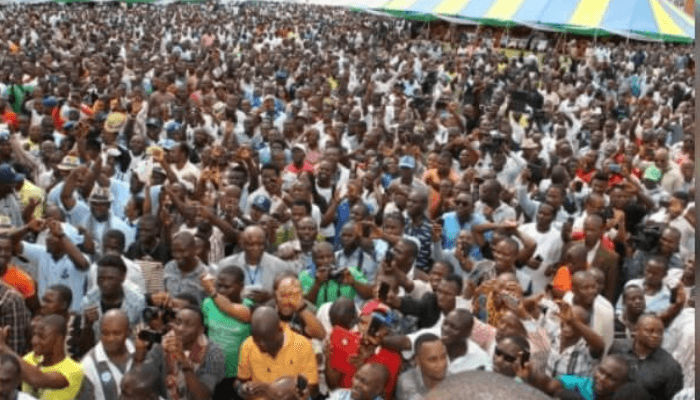
As usual, this point failed to register because just 6 months from the end of the lockdown, the government found itself puzzled at the rapid rise of an unprecedented youth protest and civil disobedience movement called #EndSARS. In its typically short sighted and pathetically gormless fashion, the Nigerian government completely failed to draw the direct and obvious link between the economic devastation caused by the lockdown and the rise of youth anger and dissatisfaction that manifested itself in October 2020. Not even the sight of Nigerians looting warehouses filled with hoarded COVID-19 palliative supplies was sufficiently on-the-nose for the gerontocrats in Abuja.
One would think that seeing more than 40 percent of Nigerians who had a job before the lockdown losing it and becoming unemployed during and afterward, would present a very obvious hint. One would think that post-lockdown youth unemployment crossing the 50 percent mark would have made it exceedingly clear that young Nigerians would soon hit the streets and make their anger felt. One would even think that seeing young Nigerians refuse to get off the streets and making more demands even after SARS was “ended” by official pronouncement would have further made the point that #EndSARS was a symptom of a much deeper wellspring of rage and discontent.
Unfortunately, Nigeria is a country where the ability to add 2 and 2 to get 4, and say so without prevarication, is revolutionary. I am not some kind of genius for accurately predicting that the lockdown would result in economic devastation, destruction of hard-won civil freedoms, rise in human rights violations and authoritarianism, and a complete non-impact on COVID-19 itself. These things were painfully obvious at the time – I just happened to be one of the very few people with that “revolutionary” ability to declare that 2+2 is definitely 4.
As we fire up our VPNs every morning to circumvent the ban on Twitter – the platform where some of us performed the most aggressive cheerleading for the lockdown – I hope we can find the moral fibre to admit to ourselves that there is a direct link between the fool’s errand that was a total lockdown, and the unceasing march of totalitarian dictatorship on our shrinking freedoms.
Even if we would rather die than admit it.