For a national oil company with billions of dollars worth of business, a net profit of $698m looks insignificant but this was in a year a rampaging pathogen shuttered economies and killed thousands and sent oil companies reeling.
To contain the outbreak of COVID-19, governments in many countries including Nigeria ordered economic lockdowns and restrictions to movement to halt the spread of the virus.
This crippled oil demand, crimped burgeoning economies, tipping some into recession and eroding the profits of industries including the energy sector, which emerged as one of the worst hits.
According to the data from the Organisation of Petroleum Exporting Countries (OPEC), COVID-19 gutted 9.75 million barrels a day of crude oil demand and prices crashed to 20-year lows.

In the scramble for value, oil-producing countries compounded the problem with disagreements over production quotas eventually morphing into a trade war.
In April, as storage spaces were so filled to the brim, traders paid some customers to take their oil. US benchmark, the WTI tripped into negative territory and Brent crude oil sank below $17 a barrel.
Following this situation, the revenues of oil companies took a beating. ExxonMobil recorded the largest loss at $22.4 billion, British-Dutch oil giant Shell reported a loss of $21.7 billion and BP’s losses amounted to $20.3 billion.
Read also: How NNPC recorded first profit after tax in 40 years
The world’s biggest oil company, Saudi Aramco earned $49 billion last year but its net profit was about 44 percent below its earnings in 2019.

Russian oil giant Rosneft’s net profit decreased by 79.8 percent when compared to 2019, reaching approximately $2.2 billion.
Equinor was the latest oil group to fall heavily into the red in 2020, reporting a net loss of $5.5 billion compared to a profit of $1.8 billion in 2019.
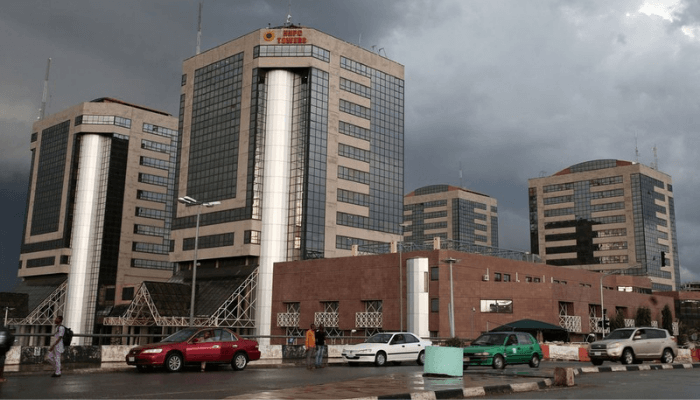
Against this backdrop, the Nigerian National Petroleum Corporation’s declaration of net profit of N287billion ($698m), the first profit it claimed it was declaring in its 44-year history, does not look like a pittance.
In a statement signed by his spokesman, President Buhari said the NNPC losses were reduced from N803 Billion in 2018 to N1.7 Billion in 2019 and the eventual declaration of N287bn net profit in 2020.
Some analysts however say it is still early to reach conclusions on whether the performance merits being described as impressive.
“First we are yet to see the audited reports. That would be helpful. Secondly, turning a corner means the profitability is repeated. You can’t use a one-off to determine efficiency. But we celebrate small gains,” said Ademola Henry, the Team Leader: Facility for Oil Sector Transformation.
Mele Kyari, the group managing director of the Nigerian National Petroleum Corporation attributed this feat to cost-cutting measures and automating the company’s processes.
In a press conference, Thursday night, Kyari said there were drastic changes to the way it does business including gutting costs and ensuring that the corporation was efficient and accountable to Nigerians.
“We stopped buying the things we did not need, we insisted that all our contractors cut costs by 30 percent. We saw the opportunity to be much more efficient by automating our systems, to be careful about what we invest in and what we don’t and focusing on people issues so that when they are happy they would work better, be much more efficient and the combination first resulted to the reduction of losses in 2019 and thereafter, we ended up with a positive statement account at the end of 2020,” he said.
Elaborating on what costs were reduced, Kyari said the NNPC simply stopped buying what it does not need, engaged its contractors and insisted on cutting costs to at least 30 percent, and automated its systems to be faster and reduced logistic costs. He also said the corporation was able to attract low-interest rate debt.
Since the outbreak of the coronavirus last year, over four million people have been killed by the pandemic globally and has sickened millions.
Nigeria passed the petroleum industry bill this month which seeks to make the NNPC a commercial entity