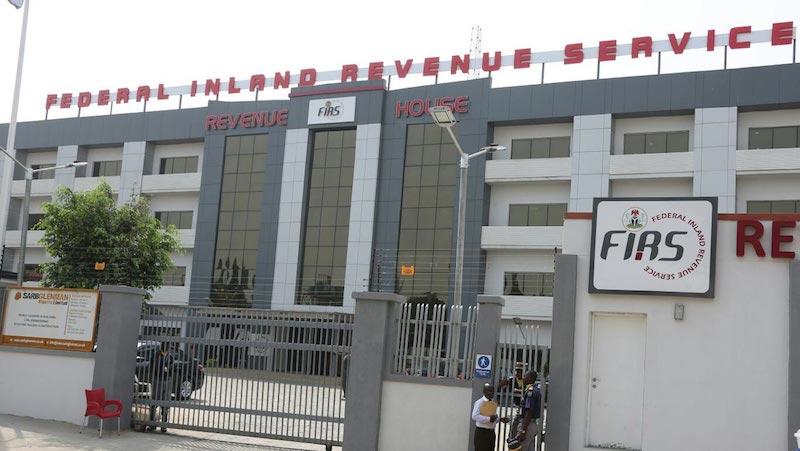
A purported attempt by the Federal Inland Revenue Service (FIRS) to have Value Added Tax (VAT) included under the already bloated exclusive list in order to halt attempts by states to control collection, could be a clog in the wheel of efforts to depopulate a list that has been described as limiting growth across the country.
The exclusive list with 68 items has often been described as a limitation to states growing at their own pace, as states are tied to others that may not be motivated to pursue developmental objectives at all.
“Once we get rid of the exclusive list, we are home and dry. What it means is that every state will have to develop at its own pace and then we can begin to hold our leaders accountable,” Teslim Folarin, senator representing Oyo Central, was quoted while demanding removal of the exclusive list from the 1999 Constitution being amended by the National Assembly.
The senator, reported to have condemned the present Federal Allocation System, argued that it had never worked in the interest of the country.

However, it has emerged that the FIRS was lobbying lawmakers to include VAT collection in the exclusive legislative list, even though it had appealed the ruling of a Federal High Court in Port Harcourt, which restrained it from collecting VAT and personal income tax (PIT).
Read also: Pay value added tax to us, FIRS advises
“The FIRS proposes for the insertion of value-added tax immediately after Stamp Duties under item 58 part II of 2nd schedule of the 1999 Constitution of the FRN,” read a letter reported by The Cable to have been sent to the National Assembly.
The FIRS was also said to be proposing the establishment of a Federal Revenue Court (FRC), which would adjudicate and have exclusive jurisdiction on Federal Tax Matters. It is also reported to want an amendment of the Constitution to remove the exclusive jurisdiction of the Federal High Court on Federal tax matters, as they are to be vested on the proposed Federal Revenue Court.
The FIRS was said to be hinging its proposals for amendment on potentials to increase revenue generation for the government, even if it means states that should be getting more control over revenue within their domain cannot be said to be reporting commensurate growth.

FIRS’ focus, it appears, is for the Federal Government to get more revenue by retaining more control over revenue generation, leaving states to perpetually be at the mercy of the central government for funds.
“It is not sustainable; every month, they (states) go to Abuja to share money and come back. It breeds laziness, nobody is thinking,” Folarin was quoted as saying.
His position is buttressed by views expressed by Emmanuel Ijewere, who in 1991 was chairman of the committee set up by the military regime of Ibrahim Babaginda to conceptualise the introduction of VAT in Nigeria.
Ijewere told BusinessDay his committee had recommended that VAT, which was to replace sales tax, be aggregated every month then each state given its own money, less 5 percent as administrative cost. However, politicians within the regime scuttled the proposal.
“The idea of VAT was to replace sales tax in states,” said Ijewere.
Even though the original proposal was for central collection of VAT, each state was to retain 95 percent of whatever was collected. Under the current sharing arrangement, however, most states get far less as revenue generated by one state is shared with another state that made no contribution to it. In some cases, as reported by BusinessDay, certain states get more revenue than states where revenue was actually generated.