|
Getting your Trinity Audio player ready...
|
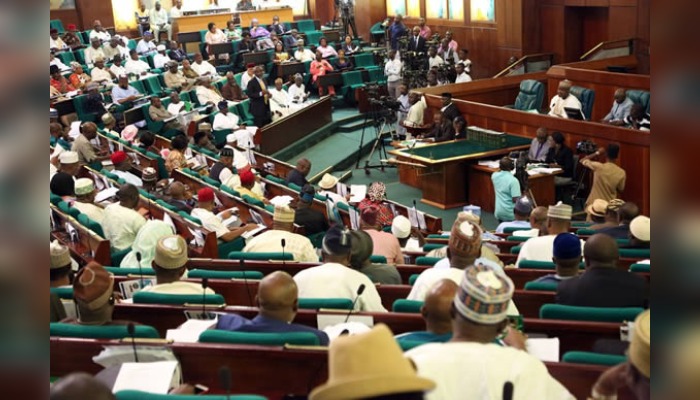
The House of Representatives Monday lamented that Nigeria has lost about $30 billion from revenue leakages between 2005 and 2019 alone.
These leakages are basically from agencies and companies in banking, oil exploration, engineering, procurement, construction, installation, marine transportations, manufacturing and telecommunications upon which the Committee noted significant foreign exchange and revenue shortfall infractions against the country.
Joint House Committee on Finance, Banking and Currency made this disclosure when it grilled the Management of Citibank and Fidelity Banks on several alleged financial infractions.
James Faleke, chairman, House Committee on Finance and co-chairman of the Joint Committee, in his opening remarks said that the House at its sitting on 5th of March 2020, resolved to conduct an investigative hearing on revenue leakages in excess of $30 billion.

Read also: PMI talent gap report highlights growing demand for project management skills
Faleke said the Committee consequently deemed it imperative to investigate revenue leakages and loopholes in the system that have contributed to a loss of over $30 billion dollars in annual federation tax revenue between 2005 and 2019.
He explained that during documentation, compilation and a critical look at the economic woes caused the country by some companies, the Committee observed major infractions which “have multiplier effects on other infractions”.
These according to him include: “Liftings of some crude oil and gas by oil exploration companies that were not wholly and legally allocated to the Consignors in JV, PSC and PSA exploration activities including those whose crude oil Certificates of Quantity were not signed by the Department of Petroleum Resources and terminal operators.
“Concealment and non-disclosure of some crude oil lifting’s that ought to have been subjected to Petroleum Profit Taxation at PPT rates ranging between 50 percent of profit for PSC and PSA companies, and 85 percent of profit for JV companies.

“Inflow of foreign investments in the form of equity, foreign cash loans, equipment loans whose utilizations are majorly subject to tax, end up in transactions, foreign transfers that were at variance with the purpose of such inflows.
“Overnight and fictitious disappearance of Naira proceeds of foreign inflows from the bank accounts of Nigerian beneficiaries, and subsequent allocations of foreign exchange by CBN for Capital repatriations, Principal loan repayments and Interest payments”.
While grilling Ngozi Omoke, the managing director of Citibank, the Committee accused the bank of not making remittances to the federation accounts from certain transactions such as outstanding withholding tax collectible on Form A :2, $544, 973, 484, outstanding VAT collectible on Form A $1, 081, 383, 885, outstanding withholding tax collectible on known Form A bank transfers by customers $927, 556, 300 dollars; amongst others.
Faleke said the Committee discovered that Citibank has Form A transfer by customer through their bank accounts that were not filed with the CBN with no evidence of withholding tax amounting to $3, 107, 398, 073, insisting that advertisement was a taxable item contrary to the bank’s claims.
He directed the bank to make available all the receipts of various transactions and asked the Clerk of the Committee to write to the Federal Inland Revenue Services, FIRS to appear before it to confirm the remittances.
Responding to the allegations, the representive of Citibank, Omoke said the bank conducted its activities within the foreign exchange monitoring and miscellaneous provision act
She said: “I will just say in a summary before I go to specifics which is also our presentation is that we are guided by the foreign exchange monitoring and miscellaneous provision act and from time to time, the central bank as well issues guidelines to regulate transactions on foreign exchange. And it is in the light of this that we have reviewed all the allegations and the transactions mentioned in the report sent to us and we want to affirm again that we were not in any way in contravention of any of the guidelines in the Act or in the Foreign exchange manual”.