



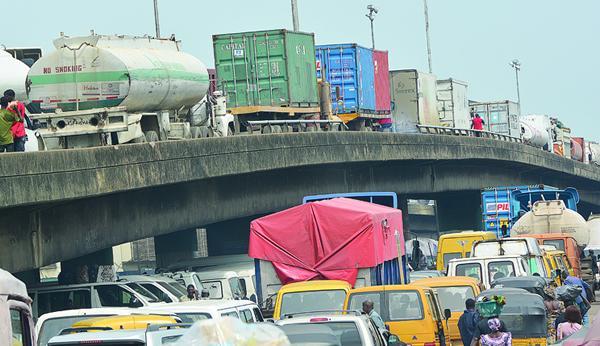
 Babatunde Fashola of Lagos State visited Mile Two and Apapa and extracted a pledge from oil tanker drivers to free roads leading in and out of Apapa within a week, nothing seems to be changing as hundreds of tankers and container laden trucks queue up the Mile Two-Tin Can axis and the Ijora-Apapa bridge, forcing commuters and motorists to spend excruciating hours in gridlock inbound Apapa.
The one week period given the tanker drivers by Fashola to decongest the roads will expire on Saturday, and Lagosians are expecting that the governor will put action to his promise to come to the rescue of residents and businesses within and around Apapa should the drivers remain adamant.
This is as Tokunbo Korodo, Lagos zonal chairman of the National Union of Petroleum and Natural Gas Workers (NUPENG), the parent body of Petroleum Tanker Drivers (PTD), said the tanker drivers cannot automatically end the congestion.
“We are pained and equally affected by the continuing loss of man-hours in the traffic and collapse of businesses within Apapa due to the congestion. But we cannot carry the tankers on our heads. We can only ensure that the drivers are orderly, and that we have been doing.”

Korodo told BusinessDay that an enduring solution to the Apapa congestion lies in increasing capacity for local refining of oil and less dependence on imported petroleum products.
He said much as the tanker drivers are pained by the situation, they have a duty to keep the economy running by supplying around the country.
He said the situation would improve upon the completion of construction work on Apapa-Oshodi Expressway and the park opposite Tin Can port to accommodate trailers.
Nigeria currently relies almost 80 percent on imported petroleum products which are discharged only in Apapa with tankers from sundry parts of the country headed to Lagos on a daily basis to lift the products.
Korodo said the situation is usually worsened whenever kerosene is available, as several more tankers are bound to head to Lagos to
load from the various tank farms located within Apapa.

Meanwhile, the Mile Two-Tin Can axis has since Tuesday been clogged up, and traffic flow hampered forcing commuters to alight from commercial buses and trek to their destination.
The situation is same inbound Apapa from Ijora as the bridge was again yesterday taken over by tankers and container bearing trucks headed to tank farms in Apapa.
“I was held in the gridlock for more than three hours,” a commuter who identified herself as Chidima told BusinessDay. She described the situation as “getting out of control”.
Governor Fashola on Sunday during a visit to Apapa and Mile 2 raised a ray of hope after extracting a commitment from the PTD officials to restore some sanity on roads within Apapa in one week’s time. PTD officials led by Tayo Aboyeji, the zonal public relations officer of the body, who met with the governor had pleaded for time to change their ways.
“They (PTD officials) have assured me that in the next one week, things will change for the better. And we are accepting that from them. It
is easier for the state to accept their commitment but if we do not see the change we expect, we know what to do on behalf of the residents. One business cannot disturb the other,” Fashola said on Sunday during the visit to Apapa.
Bad Roads
Meanwhile, the Nigerian Ports Authority (NPA) has blamed the incessant gridlock in and out of Apapa on the bad state of the port access roads especially the Apapa-Oshodi Expressway, which is worsened by flood resulting from constant downpour.
According to the ports authority, the gridlock which is affecting the smooth delivery of cargoes at the port needs urgent collaborative effort of major stakeholders in the nation’s maritime sector to address it.




