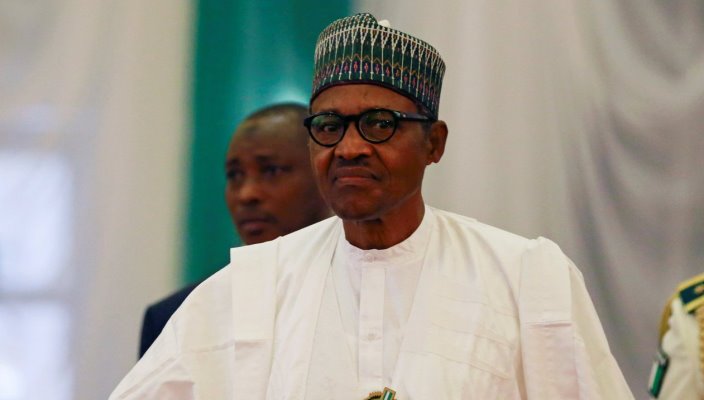
President Muhammadu Buhari is an ineffectual leader in a time of crisis. He lacks the ability and even the willingness to engage in genuine dialogue and build a national consensus for progress. What’s more, he’s unable to handle any crisis with even-handedness.
But at the heart of this problem is the fact that Nigeria is not practising true democracy. What this country practises is “electocracy”, followed by autocracy. In Nigeria, democracy is seen only through the prism of elections. In between elections, the citizens have no means of engaging with and influencing the government they elected, let alone holding it accountable.
In his New Year’s speech this year, President Buhari kept saying “as your elected leader.” But what does being an “elected” leader mean? Well, for Buhari, it means that when it comes to how to govern Nigeria, it’s his way or the highway. A former military dictator, Buhari behaves, as an elected leader, like an autocrat or a monarchical president. He is holed up in his Abuja palace, utterly unresponsive and unaccountable.
Indeed, one can see from the belligerent statements President Buhari often issues through his media aides that he is not interested in engaging in constructive dialogue with Nigerians, but rather in maintaining rigid positions and issuing threats. One of his spokespersons once told anyone unhappy with how Buhari runs Nigeria to wait until the next election! For them, democracy starts and ends with an election.

But, although elections are part of the rich tapestry of democracy, true democracy is more than elections. There are two critical elements of democracy, apart from elections. First, democracy must deliver prosperity for the people; second, it must provide channels for governance engagement and grievance ventilation and resolution. Both are critically important, but neither is present in Nigeria.
Take the first. Over the past six years of the Buhari administration, unemployment has reached 33%, poverty and misery levels are among the worst in the world; inequality has widened considerably, and perceptions of unfairness and injustice are widespread among some ethnic and religious groups. What’s more, Nigeria is not an effective state!
Last week, it was widely reported that Nigeria ranked 102nd out of 104 countries in the inaugural Chandler Good Government Index (CGGI), which ranks countries on the basis of government capabilities and outcomes. The only countries that came behind Nigeria were Zimbabwe and Venezuela. With this appalling ranking, which chimes with those of other indexes, Nigeria is one of the worst-performing and most fragile countries in the world.
By 29th of this month, Nigeria would have had uninterrupted civil rule for 22 years, with six general elections. Surely, if you judge democracy only by elections, Nigeria is a democracy. But a democracy measured only by elections is mere “electocracy.” Elections create a social contract, but true democracy is when an elected government honours the social contract. Sadly, in that sense, Nigeria is not a democracy at all.
But here’s the problem. Where a “democracy” is not serving the best interests of the people, crisis is inevitable. Think of it: if there is mass unemployment, if poverty and inequality are widespread, if there are entrenched feelings of injustice and unfair material treatment among different ethnic and religious groups, a country will not have peace, or would it? Most people have attributed the widespread organised non-state violence and insecurity in Nigeria – the terrorism, banditry, kidnapping etc – to all the above failings.

Truth is: the situation is dire. Nigeria is in turmoil. President Buhari himself told the new service chiefs: “We are in a state of emergency.” The Minister of Defence, Major General Bashir Magashi (retd) said: “Make no mistake, our nation is bleeding.” The Senate declared: “Nigeria is under siege.” The Speaker of the House of Representatives, Femi Gbajabiamila, added his voice: Nigeria faces a “very difficult situation.” So, even heads of the executive and legislative branches of government can no longer pretend all is well with Nigeria.
But that brings us to the second critical requirement of democracy: it must provide channels for governance engagement and grievance ventilation and resolution. As Alexis de Tocqueville, the 19th century political philosopher, said: “The discourse of crisis is the nature language of any genuine democracy.” In other words, democracy is not about the absence of crisis but about having channels for ventilating and resolving grievances, channels for government-citizen engagement to resolve crisis through dialogue.
Sadly, as I said earlier, the Buhari government does not believe in any of these; it does not believe in engaging with people and groups whose views it does not like; and certainly, it does not believe in creating channels for building a national consensus on how to tackle the multifaceted challenges that this country faces.
Recently, writing in response to the killing of some students at Greenfield University in Kaduna State, Professor Wole Soyinka said: “This nation is at war”, adding that what Nigeria is going through are not “mere birth-pangs of a glorious entity”, as some pretend that they are, but “death throes.” He concluded with a plea: “To this government we repeat the public cry: Seek Help”! Several concerned Nigerians have called a national conference, and there’s a groundswell of opinion that Nigeria must be restructured to overcome the structural obstacles to its unity, stability and progress.
But President Buhari is characteristically defiant. Some say Nigeria is at war with itself, but, in truth, President Buhari is at war with Nigeria. You just need to read the contemptuous and defiant press statements issued in his name by his media aides. In the latest, Shehu Garba dismissed the calls for a national conference and branded those calling for one as “unelectable”, asking them to take their case for restructuring to the National Assembly. But anyone with an understanding of true democracy knows that the presidency’s approach is utterly ignorant, arrogant and irresponsible, a total abdication of leadership.
Think of it: Can any American president say to Americans seeking constitutional changes on issues such as gun control, racial justice and civil rights: “It’s nothing to do with me, if you want changes, go to Congress; they are your elected representatives? No. Rather, as President Biden is doing, American presidents build a national consensus around change, send a bill to Congress and work hard to secure its safe passage.
For example, the famous Civil Rights Act of 1964 was a collaborative effort by President Lyndon Johnson, Congress and the civil rights movement led by Martin Luther King. Major constitutional settlements, such as restructuring, often start as a political process before morphing into a legislative process. The president must lead the political process, building a national consensus for change. Sadly, President Buhari is shirking that responsibility!
Finally, what about Buhari’s double standards in the government’s “war” against organised non-state violence? I mean, what credibility does President Buhari have about tackling organised non-state violence when he is, apparently, more sympathetic to killer-herdsmen than the farmers and communities they kill and destroy daily; more tolerant of Boko Haram terrorists than separatist agitators; and more tolerant of an espouser of terrorism than a certificate forger!
Take the case of Isa Pantami, the communications minister. He once espoused terrorist views, including the killing of Christians, and openly supported Al Qaeda, the Taliban and Boko Haram. Yet, President Buhari has rejected calls to sack him, saying he has changed his views. Asked why Kemi Adeosun was sacked as finance minister for forging a certificate, the presidency said certificate forgery is worse than supporting terrorism and jihadism! It’s beyond belief!
So, President Buhari is not only governing autocratically, but he is also Janus-faced and duplicitous in his attitude to organised non-state violence. Thus, he’s not part of the solution, but part of the problem. Nigeria deserves better!