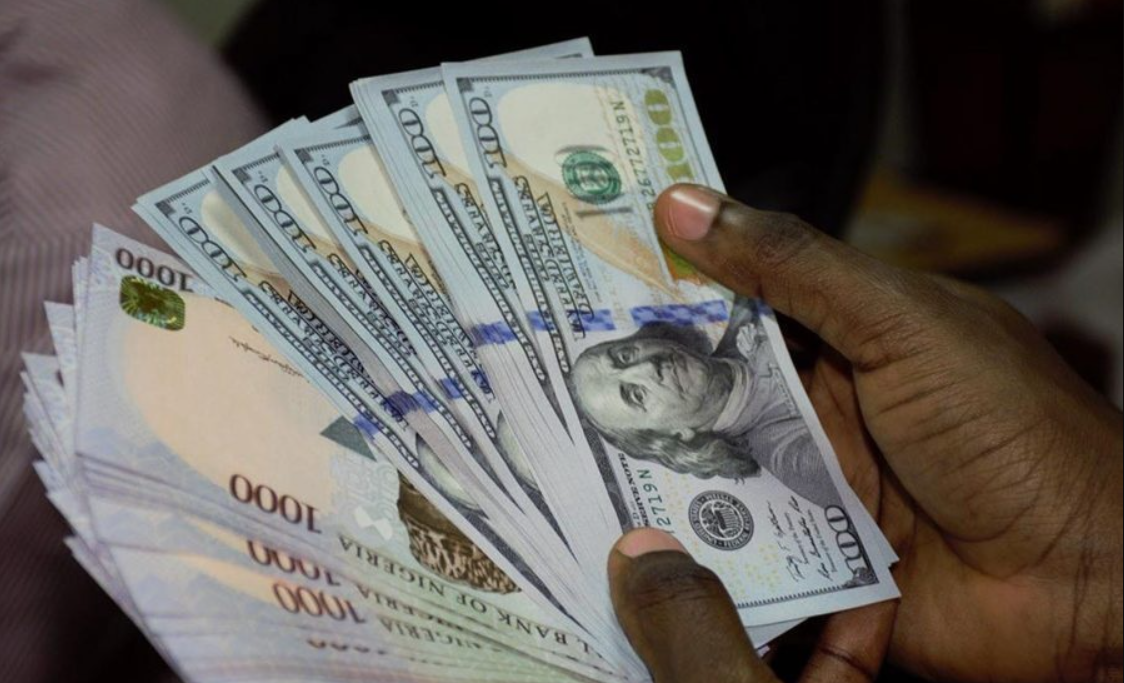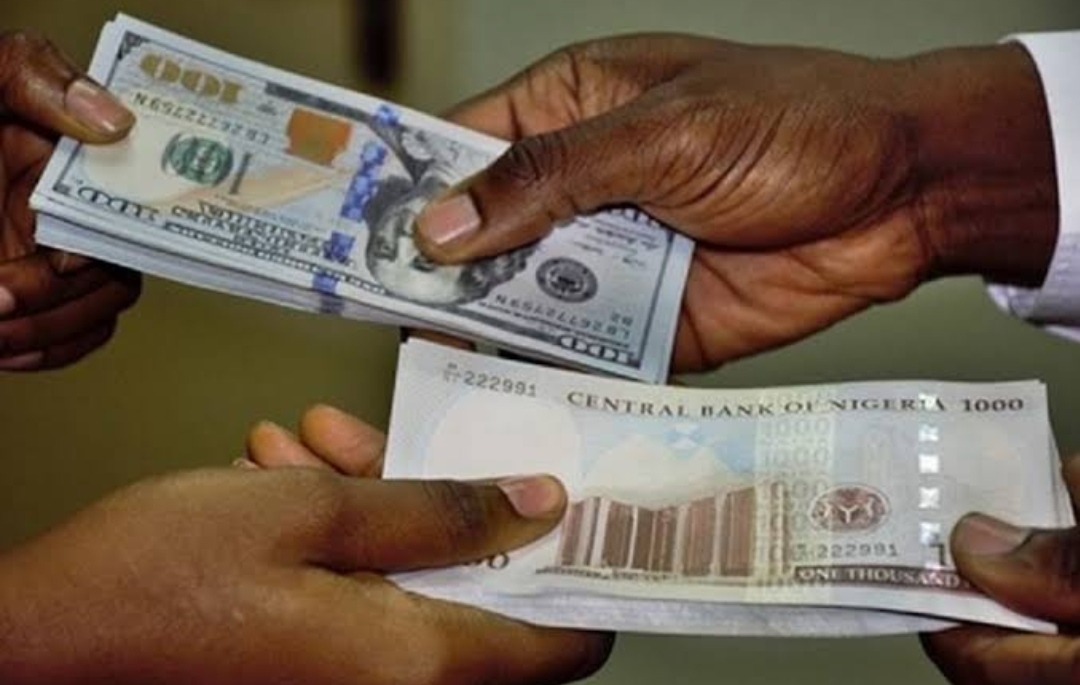
Aggregate dollar inflow through autonomous sources amounted to $15.43 billion in the fourth (Q4) of 2020, accounting for 65.4 percent of the total inflow through the economy.
This represented an increase of 6.5 percent from $14.49 billion recorded in the third quarter of 2020. However, it declined by 32.4 percent compared with the level of inflow in the corresponding quarter of 2019.
Autonomous Foreign Exchange Market (AFEM) was introduced in 1995 by the Central Bank of Nigeria for the sale of foreign exchange to end-users through selected authorised dealers at market-determined exchange rates.
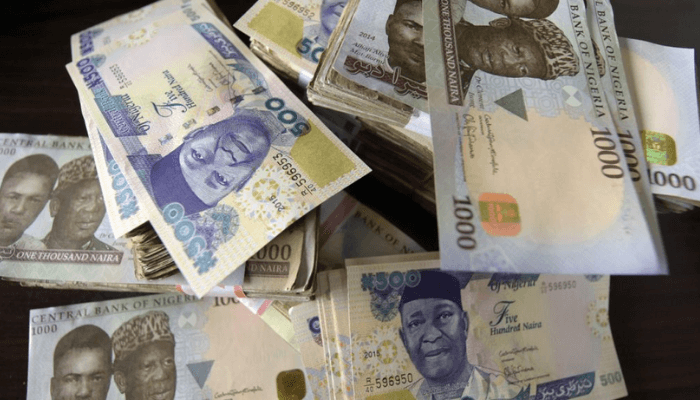
Nigeria’s currency depreciated by 0.21 percent as the dollar was quoted at N409.75 on Tuesday as against the Monday close of N408.90. Most participants maintained bids between N390.00 and N412.00 per dollar.

At the Bureau De Change (BDC) segment of the foreign exchange market, naira weakened by 1.04 percent to close at N485 to the dollar on Tuesday from N480 previously. The local currency steadied at N485 per dollar at the black market.
The economic report for the fourth quarter 2020 released by the CBN on Tuesday showed that the increase in inflow was due to 8.7 percent rise in proceeds from invisible purchases to $14.79 billion, relative to the preceding quarter.
Invisible purchases comprise total over-the-counter (OTC) purchases and ordinary domiciliary account valued at $10.61 billion and $4.19 billion, respectively.
Total OTC purchases comprised capital importation ($1.05 billion) and home remittances ($0.11 billion), which decreased below the levels in the preceding quarter by 28.5 percent and 55.7 percent, respectively.
The decline in capital importation indicated the loss of investment appetite by non-resident investors on account of uncertainty around the resurgence of COVID-19. Due to the decline in home remittances, the CBN issued a policy directive to encourage the flow of diaspora remittances on November 30, 2020. Consequently, remittances inflow slightly improved in December 2020.

Other OTC purchases ($9.45 billion) increased by 16.5 percent, compared with the level in the preceding quarter. The inflow through ordinary domiciliary accounts increased by 10.8 percent to $4.19 billion, due to rise in repatriation of export and investment proceeds.
Non-oil export inflow to banks amounted to $0.61 billion, indicating a decline of 29.8 percent compared with $0.87 billion in the preceding quarter. However, external account purchases increased from $0.01 billion in the third quarter of 2020 to $0.02 billion in the fourth quarter of 2020.
Foreign exchange inflow through the CBN increased in the fourth quarter of 2020 due, largely, to an increase in global demand, on account of gradual recovery of economic activities from the effect of the COVID-19 pandemic.
In the review period, foreign exchange inflow through the CBN was $8.17 billion, an increase of 17.2 percent above the level in the third quarter of 2020, but a decline of 39.4 percent below the corresponding quarter of 2019. The development, compared with the level in the preceding quarter of 2020, was attributed to a rise of 48.3 percent in non-oil receipts.