As Professor Wang Gungwu of the National University of Singapore observes in Mahbubani (2020), “while the world has had many ancient civilizations, the only ancient civilization to fall down four times and rise again is China. As a civilization, China is remarkably resilient (Mahbubani, 2020).”
African countries which see China as a model must bear this in mind. The resilience that underpins China’s remarkable success cannot be learned. There is a necessary indigenous and experiential element.
Mahbubani (2020) highlights this feature in the Chinese case succinctly: “Cultural confidence, which the Chinese have had for centuries, combined with what China has learned from the West [are what] have given Chinese civilization a special vigor today (Mahbubani, 2020).” Besides “America has been walking away from [its] institutions, while the rest of the world, especially China, has been walking toward them (Mahbubani, 2020).”
China stood up again after a hundred years because of a towering figure like Mao Zedong. American society produces many Mao Zedongs
Still, it would be hasty to dismiss America entirely. This is because it has entrenched cultural elements that suggest it would likely prove resilient and resurgent yet again. Where “in many societies, the tall nail that stands out is hammered down,…in America, the tall tree is worshipped (Mahbubani, 2020).” Thus, there is no gainsaying the fact that “no society has as powerful an ecosystem as America for producing strong individuals (Mahbubani, 2020).” And eastern societies like China’s are not wired similarly.

Put more dramatically, “China stood up again after a hundred years because of a towering figure like Mao Zedong. American society produces many Mao Zedongs (Mahbubani, 2020).” And despite China’s demographic advantages, America surpasses it by far in its ability to attract the best and the brightest.
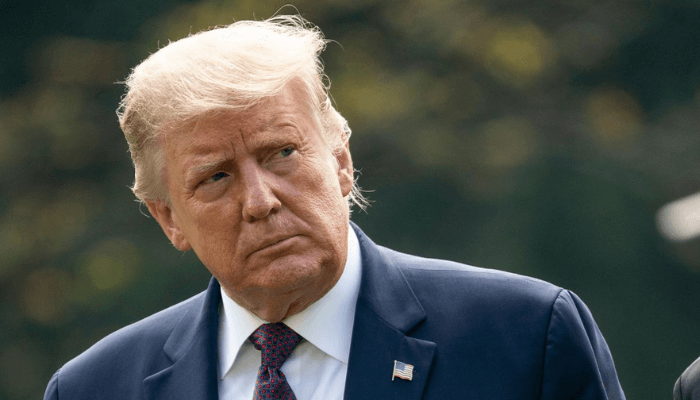
Besides, “in America, the rule of law is stronger than the government of the day (Mahbubani, 2020).” We saw proof of that in how despite former President Donald Trump’s negative and disruptive tendencies, American institutions proved resilient. China has not been similarly fortunate; even by its own standards. For instance, President Xi Jinping has managed to install himself as leader for life in defiance or in spite of instituted term limits.
Read Also: Capitalism: East or West? (6)
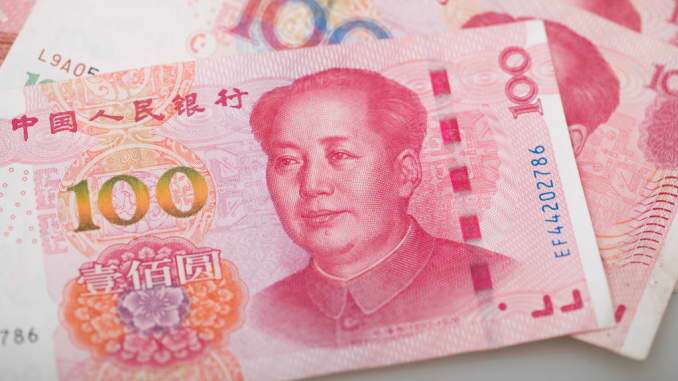
And even as the Chinese Yuan is gaining ground in global markets, it would hardly succeed in displacing the American dollar if China is unable to match America’s adherence to the rule of law and the primacy of democratic institutions over any individual, no matter how highly placed.
And because America allows dissent, encourages and support diversity, and challenges conventional wisdom, it has created “the most powerful intellectual ecosystems in the world (Mahbubani, 2020).” In China, where the reverse is the case, it is almost a certainty that its technological progress would be stunted at some point.

Still, China is almost certain to become the world’s largest economy in a decade or so. How long it would remain so when it does is anyone’s guess. But would that be evidence of the supremacy of its capitalism?
After our exposition thus far, you could not say for sure. African policymakers would find useful ideas in both systems. Even so, there would always be peculiarities in their respective economies that require new and independent thinking.