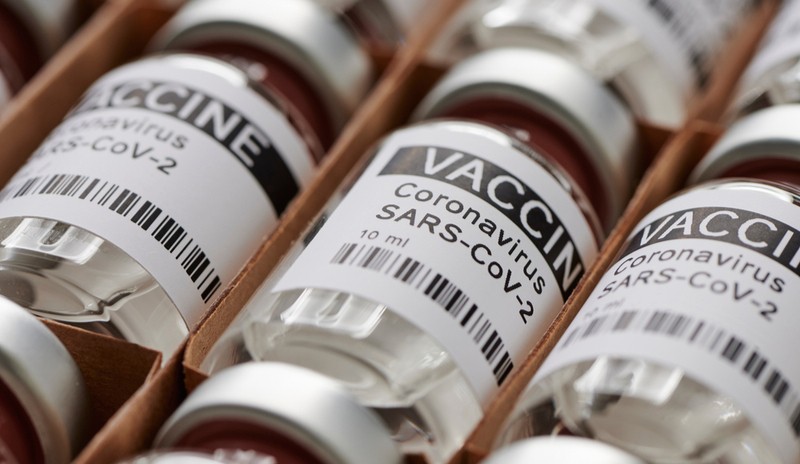
Nigeria’s desire to be self reliant and produce vaccines locally amid the devastating Coronavirus (Covid-19) pandemic is now threatened following the inability of the health authorities to provide a clear plan on how to utilise the N10 billion already disbursed by government to achieve the target.
More so, the Minister of Health had announced different plans on how the money would be spent, and this has raised concerns on the ability of Nigeria to judiciously use the funds to build local capacity.
Experts say the latest development clearly exposes the attitude government has towards implementing actual reforms in the health sector even in the face of something as catastrophic as the pandemic, and consequently, the sector has not witnessed significant or sustainable progress for many years. They raised concerns over mismanagement of the resources which they note are scarce.
Recall that on November 3,2020, the Federal Government announced plans to set up a modern vaccine production company in Nigeria and work towards licensed indigenous production of vaccines. It signed a Memorandum of Understanding (MoU) with Biovaccine Nigeria Ltd (BVNL), a joint venture with May and Baker Nigeria to begin local production of vaccines and enable Nigeria achieve self-reliance in vaccine production.

Subsequently, the Federal Government, through the ministry of finance, released N10 billion to support the plan.
In one of the briefings of the Presidential Task Force (PTF) on Covid-19, the minister was quoted as saying that “The N10 billion was released for local production of Covid-19 vaccines.
“While we are working to develop our own vaccines, Nigeria is exploring options for licensed production, in collaboration with recognised institutions. We are also exploring the option of local production of the vaccines in the country.”
But, three months after health authorities announced the initial plans for local production, there is still uncertainty on details of the execution of the plan, including what vaccines will be produced, how the vaccines will be produced and any information that may be necessary.
The minister of State for Health, Olorunnimbe Mamora, recently said the N10 billion is a seed money that would be used to assist various entities such as the Institute of Medical Research (NIMR), African Centre of Excellence for Genomics of infectious Disease, among others, to speed up the local development of vaccines.

But, When Osagie Ehanire appeared before the National Assembly Joint Committee, he said the money was part of an agreement between the Federal Government and a foreign partner, May and Baker Plc for the production of bio vaccines. The minister explained that the ministry was acting on a Memorandum of Understanding (MoU) between the Federal Government and the foreign partner.
The committee, dissatisfied with the explanation, mandated the Ministry of Health to suspend further action on the plans to spend the N10 billion released to them by the Ministry of Finance.
Expressing his dissatisfaction, Ibrahim Oloriegbe, chairman, Senate Committee on Health, said the committee had directed that the money should not be spent until the ministry could state clearly, what the money would be used for, adding that the explanation from the minister was not satisfactory.
“This N10 billion is just given to you, with due respect, with what you have given to us, you don’t have a specific detailed plan for it. Our decision, for now, is that you can’t spend it (the money) until you provide us satisfactory answer. Once you provide us the details then we will invite all the necessary persons,” he said.
While these are on, Nigeria is witnessing a more deadly second wave of the pandemic and daily increase of infection. As at 28th January, there are 128,024 confirmed cases of Covid-19, with 1547 deaths.
Though non- pharmaceutical measures and other prevention protocols help manage the pandemic, vaccines are said to be the ultimate exit from it and this pandemic has informed the need for local sufficiency rather than relying on other countries during emergency situations like this.
Adaobi Onyechi, a public health expert while describing the development as unfortunate, raised concerns over corruption and misappropriation of the said fund.
“Let me even start with the popular saying that ‘when you fail to plan, you plan to fail’. At a critical time like this, something as Covid-19 that literally stopped the world and our leaders still have no clue what they are doing? Is there even a future for our health care system?” she queried.
She added, “This will further exacerbate the mistrust Nigerians have for the government, it’s almost as if they have something up their sleeves, how can Nigerians trust a government that don’t even know its direction. When Nigerians hear this, you can only imagine what opinion they could hold of government.
“This is also a problem of misplaced priority, should the minister even wait to be asked for a plan? Shouldn’t it be at the back of his palm? I also see a problem of Coordination and lack of synergy in the health sector.”
Onyechi noted that government has made beautiful promises to the health sector, but regrets the lack of political will and interest or commitment to actually realise, targets.
“With this trend, I don’t see Nigeria becoming self-reliant in vaccine production anytime soon. In fact, I am worried that that huge sum of money may be mismanaged and we return to nothing,” he said.
In the same vein, Senator Iroegbu, a public affairs analyst and CEO, CANAG Communications said:
“The ongoing confusion is a reflection of the anomaly we have in the country and the level of unseriousness.”
He reiterated that Nigeria missed a big opportunity to develop the health sector at the heat of the pandemic and is now being unserious with another opportunity to develop local capacity.
“The pandemic pushed a lot of countries to take a lot of drastic measures to improve their health care system and Nigeria is one of the few countries that did absolutely nothing. No new hospitals were built, the old ones were not remodeled; what they did at the National Hospital was to chase away emergency ward of the paediatrics unit and converted it to isolation centres.
“Now, we are talking about vaccines, we all heard the story of how a Nigerian was among the Pfizer team, this shows that nothing is wrong with the average Nigerian, but because of the lapses on the part of the administration, lack of fund, lack of vision, direction and planning which is reflective of what the minister is doing now, even the money that has been disbursed, they cannot even explain how that money will be used,” Iroegbu said.
The expert said if Nigeria had invested in research when the Covid-19 started, it would have had its own local vaccines.
“Most countries that are serious have their own local vaccine. But, all we do here is to acquire what others have produced.
He recalled that Bill Gates had advised Nigeria not to budget billions to buy vaccine, but more attention should be focused in improving the health care sector.
He added that there is also the problem of corruption and self interest, stating that the average Nigerian leader does not have the overall interest of Nigerians at heart.