|
Getting your Trinity Audio player ready...
|
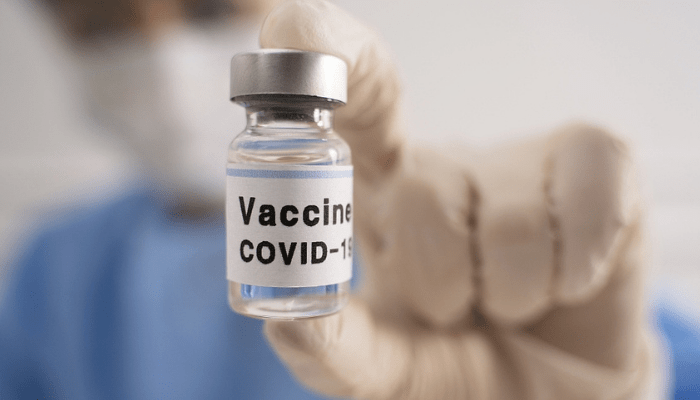
The earliest Nigerians can expect to be vaccinated against COVID-19 will be February 2020 based on the fastest approval procedure the Nigerian National Agency for Food and Drug Administration and Control (NAFDAC) can deliver.
That is if the government’s expectation of receiving at least 100,000 doses of Pfizer vaccine by the end of January goes as planned.
Faisal Shuaib, executive secretary, National Primary Healthcare Development Agency, on January 5 said 42 million doses of vaccines were expected under COVAX agreements, which provides inoculation for 20 percent of each lower and middle-income country participating.
When the COVAX vaccines will reach Nigeria remains uncertain but without fast-tracking, the first approval is expected at the end of April or early in May, according to NAFDAC.

Apart from COVAX, Nigeria is also in talks with China to procure an unspecified amount of vaccines, according to Geoffrey Onyeama, Nigeria’s minister for Foreign Affairs.
Upon receipt, the vaccines should typically undergo several months of domestic review process for regulatory approval and licensing.
Read also: LASUTH CMD re-emphasizes on COVID-19 second wave
But Mojisola Adeyeye, NAFDAC’s director-general, has said the approval process will be accelerated for completion in 15 days, given the urgent need for vaccine application.
This means application for the Pfizer vaccines might start during the third week of February, contrary to popular expectations that vaccination may begin immediately after receipt.

The Agency plans to leverage already-established pre-qualification procedures by the World Health Organisation (WHO) to facilitate the screening, while also taking a cue from approvals done by the US Food and Drug Administration (FDA) and European Medicines Agency (EMA).
However, Nigeria’s preparedness for storage and administration of vaccination, particularly for its priority population, has been stormed with doubts.
Nigeria already demonstrated incompetence at safely enrolling 50 million of its population for national identity number by compelling enrolment in less than a month.
In the middle of a deadly second wave, the disorganised process has created additional hotspots for community spread of COVID-19 at the various National Identity Management Commission (NIMC) enrolment centres before they were shut.
Virologists on the other hand have expressed concern that Nigeria will need an additional freezing facility to store COVID-19 vaccines regardless of the type of vaccines it eventually receives.
“Certainly, we will need to prepare the facilities for storage, that is, buy more refrigerators and freezers from the -20 degrees to the +2 to +8 types. I think we should steer clear of freezers followed temperatures, that is, -70 degrees and below. I do not think our electric power supply can cope adequately with such low-temperature freezers,” Oyewale Tomori, a professor of virology, told BusinessDay.
Lagging giant
Nigeria, Africa’s largest economy, is yet to receive vital data from clinical trials of any of the vaccines expected, despite the import for evaluation of safety and compliance with specific standards of use in Nigeria.
The first doses it expects are 100, 000, only sufficient for 0.04 percent of its population estimated at 206 million by the World Bank.
Meanwhile, South Africa expects 1.5 million of UK’s AstraZeneca’s doses from India.
The country has already established a specialised COVID-19 vaccine registration working group to expedite reviews, implying its first approval might come earlier.
The South African Health Products Regulatory Authority (SAHPRA) received its first vaccine application on December 10 from US-based Johnson & Johnson and has already begun a rolling review process that evaluates vaccine candidate data as it becomes available.
Johnson & Johnson’s vaccine is one of at least four vaccines being trialled in South Africa and the country is also on course to receive its vaccines from COVAX.
Kenya claims to have ordered 24 million doses, according to local reports, while Swaziland says it will begin vaccinating its more than 1.1 million people in the first quarter.
Also Seychelles, a tiny island archipelago, will begin vaccinating its population with 50,000 doses from China on Sunday.
With a deadlier variant of the coronavirus ravaging nations, Nigerians eagerly await more clarity on when the vaccines will land and what the scope of protection will be.