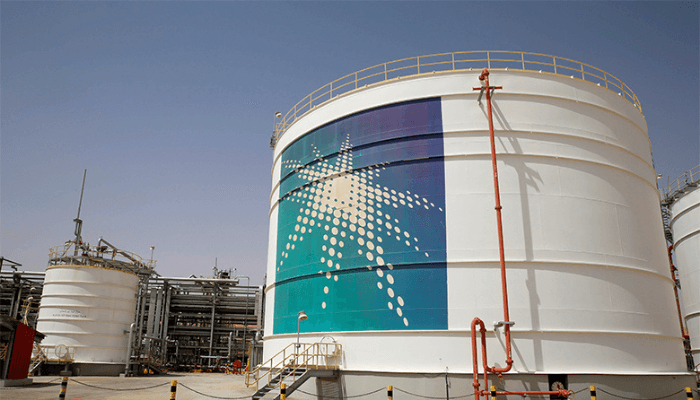
Saudi Aramco is banking heavily on automated data collection and analysis, along with predictive modelling to generate significant improvements in energy and carbon intensity, safety management, and overall cost and efficiency as Nigerian oil producers struggle seven decades-old systems.
Teams of data scientists design and implement complex analytics at Aramco’s 4IR Center (4IRC) in Dhahran. This advanced research and operations hub brings together a suite of digital technologies under one roof.
Every day, the 4IRC receives more than 5 billion data points, generated from Aramco’s operations across the Kingdom, as well as access to millions of engineering drawings, and inspection and maintenance data.
Combining this operational big data with the available computing power, state-of-the-art Artificial Intelligence and machine learning tools, the Centre is able to translate the data into actionable insights, which help predict and improve asset performance, safety and reliability.

The Company’s robots – such as SWIM-R (Shallow Water Inspection and Monitoring Robot), an aquatically adept mechanical arm developed in-house – work alongside other cutting-edge robotic technologies, which the company has adopted. Powered by data, these machines take to the air, the land and the sea, detecting methane levels, tracking inventory, minimising confined spaces entry, and inspecting underwater assets.
READ ALSO: Glo felicitates with Nigerians at Christmas, preaches peace
Ahmad Al-othman, division head of Advanced Process Solutions, which manages the 4IRC, says; “The Centre, powered by our young and talented people, plays a major role as the corporate digital think tank – exploring and discovering new opportunities, innovative ways of using 4IR technologies, and solutions to drive excellence and create value for the company.”
So far, the use of big data has led to a reduction in flare emissions of 50 percent since 2010; flaring intensity remains at less than 1 percent of Aramco’s gas production.
In a persistently low oil prices environment oil companies are speeding up the digitalisation of processes to push down operating costs, save billions of dollars, promote transparency and optimise value creation.

Last year, Rystad, an energy research firm analysis report showed that the global oil and gas industry can save as much as $100 billion through automation and digitalisation in the 2020s. The efforts could help cut about 10 percent of the $1 trillion spent in 2018 on operational expenses, wells, facilities and subsea by more than 3,000 producers.
In Nigeria, some oil companies have been leveraging digitalisation and automation to keep operating expenditures (OPEX) low, make processes repeatable, auditable and to shorten opportunity maturity cycles by more than 60 percent. This has also led to efficient oil well stock inventory management.
“We have been able to save as much as $20 million in operating expenditure. Our OPEX is about the lowest in Nigeria’s oil and gas industry,” Emeka Onyeka, petroleum engineering manager, Eroton E&P Limited had said during the second edition of NNPC/IDSL Asset Management Operational Excellence Webinar Series themed Process Digitalisation to Improve Asset Management Efficiency. “We were producing a barrel of oil at $12 until some security challenges set in and started eroding value.”
Nevertheless, Edirin Abamwa, chief operating officer of NPDC/NDW OML 34 AMT said decisions are not purely based on data. The process of data gathering, integration, storage and democratisation are more valuable because of the critical information generated.
Adamwa argued that the current environment in which operators do businesses cannot make it possible, talk less of being feasible to bring down the unit operating cost to $10 per barrel by 2021 as Mele Kyari, NNPC’S general managing director recently suggested. For a starter, sufficient censors are required for surface operators.
“We run systems that were set up 70 years ago and designed to militate against disaster. The systems ensure emergency preparedness and quick shutdown of assets but fail to address the issues of optimal performance. Let us start by changing these systems,” Adamwa said. “With more censors in the operations, we can build a dashboard showing on a per-second basis how an asset is doing.”
At the exploration and production level, Total saves $1 billion yearly because it has begun digitalising some processes and continues to do so. At the affiliate level, the oil major saves $200 million yearly, according to Olatunji Akinwumi, executive manager Deepwater Geosciences & Planning Total E&P.