The National Bureau of Statistics has released the sixth instalment of its COVID-19 Impact Monitoring, a survey of 1,950 households across the country that it conducts with support from the World Bank.
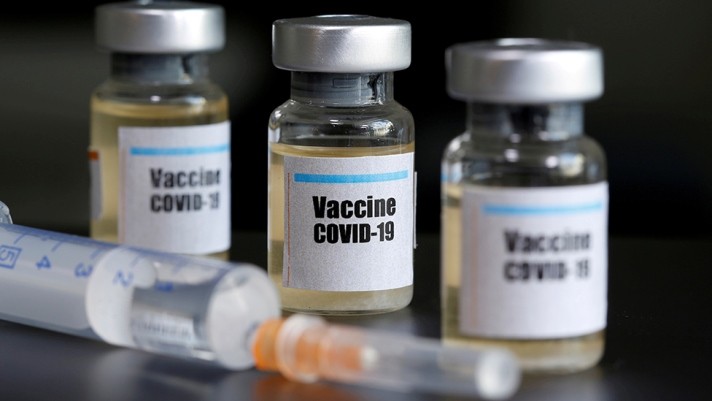
One major result of this sixth instalment is that the vast majority (90%) of respondents reported that they were willing to get tested for and vaccinated, if it were free.
However, when asked ‘If an approved vaccine to prevent coronavirus was available at no cost, would you agree to be vaccinated?’ respondents in urban areas were more skeptical: 14% of urban respondents would not agree to be vaccinated (even at no cost) compared with 8% in rural areas.
According to analysts at FBNQuest Capital, this latest survey by NBS was held in October, when restrictions on movement within the country were minimal.

The first took place during selective lockdown in April/May. The sixth round of the survey had two key innovations. The first was to collect specific information on education for school-aged household members and the second was to ask households directly about their perceptions of and willingness to engage in testing and vaccinations for Covid-19.
· Based on the survey, the share of survey respondents who are working remained stable at 87%, close to the pre-COVID level. However, household income remains precarious. This may limit the investments households are able to make in education and health services, even if schools fully reopen and the government supports more testing and vaccination.
· The survey shows that school attendance in October was substantially lower than in January/February ‘19. Among household members aged 5-18 years, 59% were attending school in October compared to 74% in January/February last year. The main reason that school-aged household members did not attend school was that most schools were still closed due to the coronavirus restrictions.
· For some of the schools yet to resume physical classes, virtual learning is the main route for students (notably those enrolled in private schools). The mandatory push into the virtual landscape due to the covid-19 pandemic has further exposed the infrastructure gaps within the country’s technology sector.
· Access to stable internet for uninterrupted school classes is difficult. Furthermore, anecdotal evidence show that parents have struggled with assisting their children (particularly those aged 3 – 5 years) with virtual learning from home as this is a new approach and will take some adjusting.

· It can be assumed that the attendance for virtual learning may have also been lower in the month under review partly due to suspension of support from some parents across households.
· The analysts note from the survey that the main reason for non-attendance for 27% of those school-aged in the oldest age group (15-18 years old) was that they were awaiting admission. This may reflect the fact that older students rely on further academic testing and administrative procedures before progressing between grades or switching between schools, which in many cases were delayed by the pandemic.
· The NBS plans to produce twelve reports in this series. There are growing concerns around a second wave of the virus in Nigeria. This could result in another mandatory lockdown across states and will further weaken economic activity. The economy contracted by -3.1% y/y in Q3. In the absence of a resurgence of a second wave, we expect a slower contraction of -2.5% for 2020.