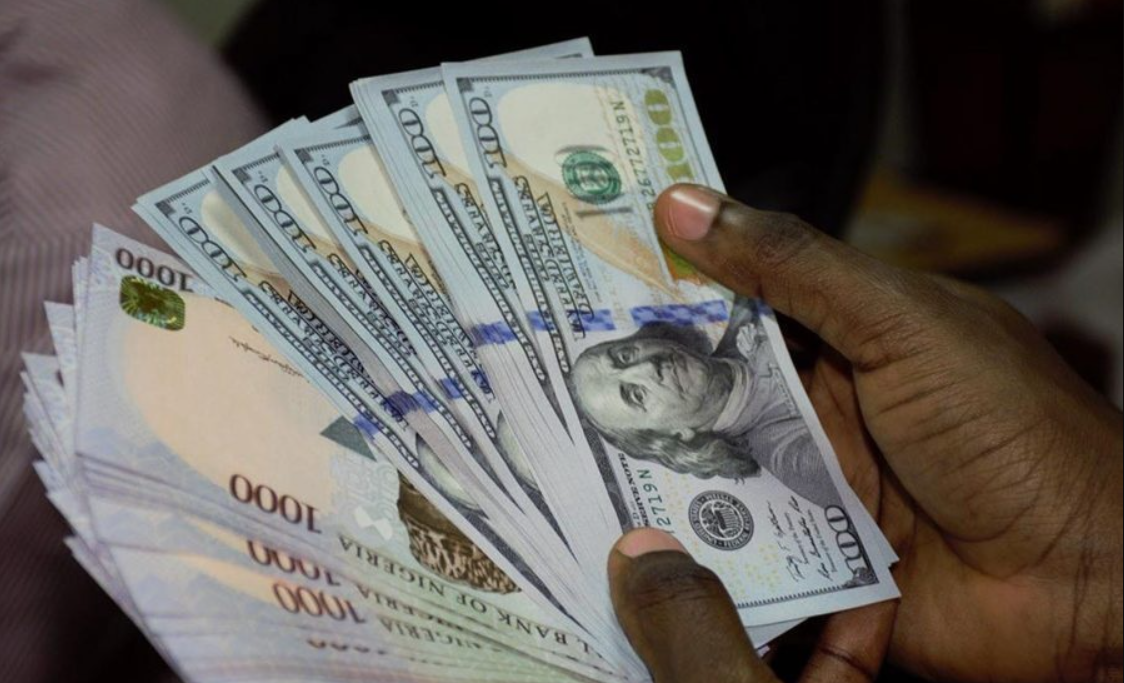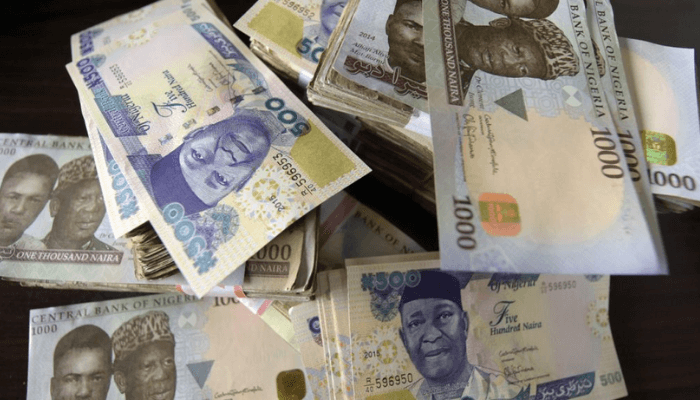
The foreign exchange market is expected to close the year with Naira depreciating by 16.85 percent to N420 in 2020, compared with N359.50k it closed in 2019, according to data from FSDH research.
In 2020, the Central Bank of Nigeria (CBN) devalued/adjusted the Naira on three occasions to ameliorate the pressure. The adjustments were also steps to bridge the gap between official and parallel markets rates.
On several occasions, these adjustments, coupled with lower FX inflows extended the gap in both markets.
The Macroeconomic Review and 2021 Outlook for Nigeria report released by FSDH research on Wednesday showed that as at the end of November 2020, the Dollar to Naira rate in the parallel market stood at N495/US$ from N361/US$ at the beginning of the year. The Naira on the I&E Window closed at N392/US$ from N360/US$.

Read Also: CBN proposes upward review of medical insurance to N500,000
At the CBN Official Window, the Naira closed at N379/US$. Increasing demand for US Dollar, lower Forex inflows and economic uncertainty are key factors that have pressured the exchange rate in Nigeria.
On a day-to-day basis, Naira weakened by 0.21 percent as the dollar closed at N476 on Wednesday as against N475 on the previous day on the parallel market.
Naira closed unchanged at N480 on Wednesday at the Bureau De Change (BDC) segment of the foreign exchange market after the operators funded their accounts in anticipation of dollar disbursement by the CBN on Thursday.
At the Investors and Exporters (I&E) forex window, Naira weakened by 0.17 percent as the dollar was quoted at N394.67 as against the last close of N394.00. Most participants maintained bids between N385.00 and N408.84 per dollar, according to analysts at FSDH research.

The daily FX turnover increased significantly by 78.74 percent to $200.34 million on Wednesday from $112.08 million recorded on Tuesday, data from FMDQ indicated.
According to the report total inflow into the I&E Window as at the end of November stood at US$16.645 billion, a 46.32% decline from the corresponding figure in 2019. In the third quarter of 2020, CBN intervention in the I&E Window stood at US$434.6 million (2020Q1: US$5.37 billion).
Foreign Portfolio Investment (FPI), which has been the major driver of inflows declined by 93% in 2020Q2 and has remained low mainly due to falling interest rates and forex challenges.
Year to date, FPI inflows contracted by 75.05% relative to corresponding period in 2019. From the available data, CBN is a major player in the market.
As at December 10th, External Reserves lost 8.2% of its value since the beginning of the year.