
It was a fascinating moment when some of Nigeria’s youngest Chief Executive Officers (CEOs) shared a mixed bag of experiences as they balance navigating a difficult business terrain with succeeding at their endeavours.
The young CEOs whose businesses are known for their milestone achievements across various sectors, headlined the 2020 edition of the BusinessDay CEO’s conference themed “A Breakthrough Approach to Leadership and Innovation in the Age of Disruption,” telling stories of what could be described as “the pain behind the fame”.
For many of them, the journey was never rosy as they had to make do with with a mirage of challenges including the currency devaluation, higher than expected commodity prices, weak purchasing power and stiff regulatory framework, to deliver good quality services and live an indelible mark in their various sectors they operate in.
BusinessDay highlights the appealing stories of these CEOs.

Hanu Agbodje, Founder/CEO of Patricia

Riding on the gains from increasing traction of Cryptocurrencies and Bitcoin, Patricia, a Nigerian fintech company is fastly becoming a household name for many.
Founded in 2017, the firm’s CEO, Hanu Agbodje, boasts of the firm recording tremendous success, and it’s eyeing a $1 trillion valuation as its goal.
According to him, Cryptocurrencies and Bitcoin are the future, and will do to fiat money what email did to letters.

Furthermore, the young CEO said he has no plans raising funds from investors, as the company has enough buffers to fund its operations.
“We have not raised any funds since our three years in business, and we are not looking to raise capital for now,” he said, noting that the firm has and is making enough money to fund its operations.
Speaking in the conference on the tremendous growth since inception, Agbodje noted that the firm now has over 205 staff from just two staff when it started 2017.
Also, the firm now has 500,000 active users and has a presence in three continents and five countries. “Patricia is now in a 5-storey building, a huge success when you compare with the boys quarters where we started from,” he said.
Babs Ogundeyi, CEO Kuda Bank

Babs Ogundeyi whose firm, Kuda, a microfinance bank, recently raised $10 million for his company, has been the latest example of the rising attention going the way of financial technology companies in Nigeria and Africa.
But for Ogundeyi, the funds raised by his firm are only starting, as he eyes more funds to capture the market.
“Our purpose is to make financial services much more accessible. As such, there was the need to leverage on technology to improve services at much more affordable rates that are essentially free within certain limits of our business model such as account opening and transfer transactions among others”. He said
According to him, one key motivation is that more individuals increasingly have access to the internet alongside the relatively reduced prices of smartphones, so hundreds of thousands of target customers exist and this is attractive to foreign investors.
He however identified “price” as a major factor posing challenges ,given that banking is an expensive operation that cannot be side-lined and financial institutions still have to find a way to make money
Hamid Joda Co-founder & COO, TAJ Bank Non-interest banking
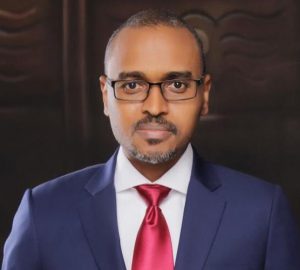
Hamid Joda Co-founder, TaJ Bank, said his company saw the huge gap in Nigeria’s financial space and decided to take advantage of it.
Joda whose firm provide digital services particularly in the Northern region of the country, said there have been a huge adoption rate of its products with its agents spanning
“We saw the success rate across other countries and we decided to try the model in Nigeria,’ he said.
According to him, unlike the traditional bank, his company now engages in both trading entity, Leasing of services and product, Equities, Bonds and guaranty. Other banks cannot do this.
Esigie Aguele, Co-Founder and CEO of VerifyMe

According to Aguele, solving the problem behind Nigeria’s credibility gap was critical in his firm survival.
“For us it’s more than just rethinking the business model it’s also about rethinking the technology,” he said.
Aguele noted that his firm took a road less travelled in 2017 by delivering infrastructure layers for trusted identity to practice micro lending space, which definitely put the firm in a great position.
“As a result of this initiative, today, 30 percent of Nigerians banks use our services, five of the top ten insurances firms use us for onboarding, we do about 100,000 verification a week,” Aguele said.
He said rethinking the business model is critical, which was why the firm “looked at the landscape and discovered that being able to deliver a trusted identity was not just a domestic problem but also internationally across every transaction in all major sectors of the economy.”
Teni Adesanya Executive Chairman, Oxford Group Nigeria

According to Adesanya, one of the main things his firm did when they entered real estate business in 2016 was filling the knowledge gap by enlightening people which put his firm at a competitive edge above others.
He noted that one of the most critical things for the firm was retaining good and trusted employees despite the huge investment in training
“In early 2017, I decided to start setting up platform for anyone who graduated from the inhouse training school my making them associates and managing directors,” Adesanya said at the panel, titled “When the Shortest Distance isn’t a Straight Line: Takeaways from CEOs who reinvented their business models.”
As a result of these initiatives, Adesanya said the firm now has over 6000 associates and managing directors but still under the group company.
Wole Abu CEO of Pan African Towers

Abu who said one of the biggest costs his firm faced was power, noted he had to find a way to solve the problem by focusing on renewable energy.”
“We made a conscious decision to make sure to change all of our sources of power to renewable energy,” Abu said.