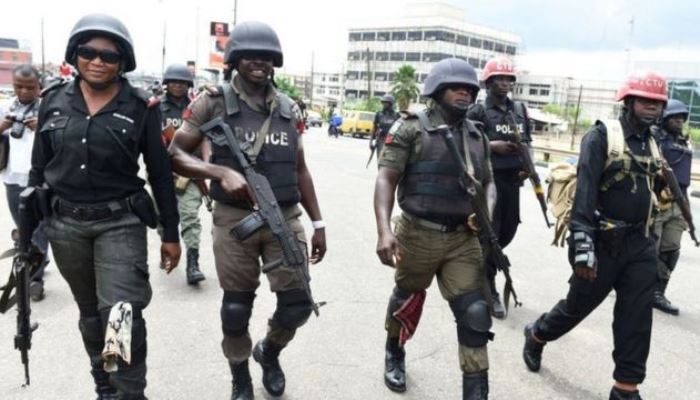
When the average police officer retires from service in Nigeria, life as he/she knows it essentially ends. There is little or nothing to fall back on, at least that would have been legitimately earned.
The welfare of police officers, particularly increase in salaries, was one of the highlights of demands credited to protesters during the EndSARS protest in October. No police reforms, it was argued, would succeed unless the financial incentives for officers were improved to make corruption less attractive to them, even though this would ultimately be a matter of personal principles and professional ethics.
“It is really not easy for a lot of them when they retire,” said Gloria (not her real name) whose father retired in 2017 after 35 years in service. “You that can get three square meals before now can’t afford one. They have to rely on the monthly stipend. I still feel the money they give to them at retirement is too small,” said Gloria, whose father had retired as an Assistant Superintendent of Police (ASP), and emphasises he was in the “works department and never had to be on the roads.”
The Nigeria Police Force (NPF) has its own pension management company, NPF Pensions Limited, which was licensed in 2014 to exclusively manage the pension fund of police personnel across the country. BusinessDay learnt that 270,000 police personnel have so far transferred voluntarily to the NPF’s pension administrator out of about 330,000 personnel. However, this is barely the challenge.

Whereas the pension law mandates contribution of 18 percent; 10 percent by the employer and 8 percent by the employee, only 15 percent is said to be remitted for police officers; 7.5 percent from government and 7.5 percent from individual officers.
Even as the contribution is already 3 percent lower than it should be, the low pay of police officers worsens their financial outlook post retirement. The low pay has a direct correlation to what can be saved for them against retirement.
“As police officers are paid little, what they get at retirement is little and it goes back to the perception of corruption because they feed on that little and have nothing left,” said a police source who pleaded anonymity.
Approved right, which like gratuity is meant to be paid to officers on retirement, is often pooled monthly over the course of an officer’s career. However, there is currently accumulated arrears of 17 months that have not been remitted, out of which payment has not been remitted for 12 consecutive months.
This automatically means retiring officers would face challenges of not getting this lump sum that should enable them settle into a new life after tservice. On its part, however, the NPFPL says it had to create a N500-million a year internal fund to cushion the lack of payment actually due from government.

Called the Retiree Resettlement Support Scheme ((RRSS), the sum of N500 million is set aside annually from the company’s profits and disbursed free of charge to retirees to enable them resettle after retirement, while awaiting the release of their accrued rights.
It says N1.5 billion has been paid to 10,400 retirees, this would be about N144,000 on the average, and is what would be immediately available for a retiring officer to resettle his/her family from the barracks and start a new life. The sum would barely get a good accommodation in any part of Nigeria, and is also likely to vary with some getting far less based on their rank at retirement.
Gloria had explained from experience of living in one of the police barracks in Lagos that when an officer retires, there is only grace of a few months before he/she starts being pressured to move out and could in fact become embarrassing for the person and his/her family.
Without government paying what it should, there is little the NPFPL can do as it is different from other PFAs, because it cannot solicit for clients outside of the police force. Yet, in order for it to be solvent, payments due to officers have to be regularly made from government and this hardly happens. BusinessDay learnt that up to five requests have been made to President Buhari to look into some of these challenges but no action has been taken on them.
While the company says it invests up to 70 percent of its funds in FGN bonds, equities and REITS, there is only so much it can do if government perpetually fails to live up to its own obligations by making regular and prompt payments of pension funds due to police officers.
Meanwhile, following the violent dimension that ended what started as peaceful EndSARS protest, the morale of police officers remains low, with some telling this reporter they still have not regained their confidence to face the public. What came as a rude shock to them is now seeing many shy away from their duties and other members of society who are now being targeted by criminal elements are paying the price of this.
Hotspots are fast springing up, particularly in areas of traffic congestions, with thugs increasingly breaking into cars to dispossess people of their valuables.