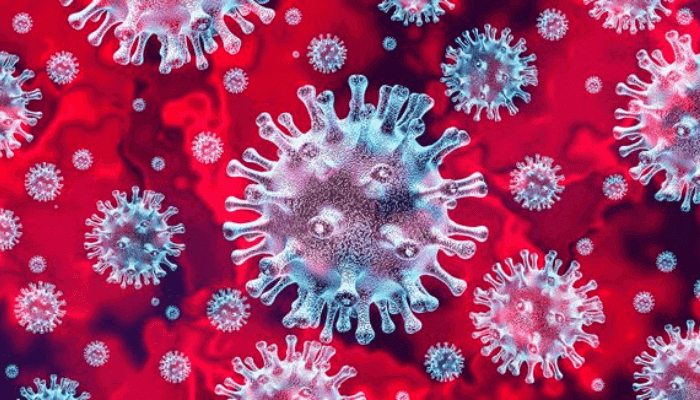
The COVID-19 virus is caused by SARS-Cov-2 virus. The virus was declared a pandemic by the World Health Organization (WHO) on 11 March 2020. COVID-19 causes severe illness and death via sustained person to person spread.
The earliest known cases were found in the Wuhan wholesale market in China in early December 2019. The market town was immediately quarantined and sealed off. Unfortunately, the virus had already gotten out and hence began to spread all over the world.
Most countries are affected by the pandemic, with millions of people infected and others dead because of the virus. The African continent has the least infections and deaths till date. As of 17 November 2020, Nigeria had reported 65,457 cases and 1,163 deaths from the Coronavirus.
“Considering the rate and number of infections in Nigeria, the cases and deaths may not be as high, but the issues we should be concerned with is the mutation of the virus, which may allow people to become more affected with the mutated virus. Therefore, there is no excuse for complacency, considering no one understands yet why the infection rates are low in the country.” – Ogunyemi Lanre MD.

Dr Lanre Ogunyemi, who is a consultant in occupational medicine and the medical director at Trinity Occupational and Public Health Solutions Limited, spoke at the Lagos Business School – Christopher Kolade Centre for Leadership and Ethics (CKRLE) webinar titled ‘Occupational Health and Safety and the Coronavirus Pandemic’. Dr Ogunyemi; a medical practitioner with over 25 years’ experience, holds various memberships and positions in many occupational health bodies across the United Kingdom and Ireland.
Occupational Safety and Health (OSH) is a multidisciplinary field concerned with the safety, health, and welfare of people at various occupations.
Workers health and safety is important and should be ensured by:
Risk/Hazard awareness by education and Information
Risk assessments
Risk management/control
Legislation by the Nigerian Factories Act and Labour Law of 1984
Coronavirus is an occupational hazard posing a health risk to the individual within the workplace.

It is a biological agent with potential damage to workers’ health. It can be introduced into the workplace by workers, suppliers, visitors, public and/or contaminated objects. It is spread through:
Droplets/respiratory secretions from coughing or sneezing landing on mucosal surfaces (nose, mouth, and eyes)
Aerosol – a solid particle or liquid droplets suspended in air.
Contact – touching something with SARS-2 virus on it and then touching the mouth, nose, or eyes.
In the bid to control the spread of the virus, many countries enforced national and regional lockdowns which included but were not limited to business closures, border closures, quarantine measures, travel bans, curfews and recreational/social restrictions. These in effect helped to curb movement of people to reduce contact and thereby reduce the spread of the virus.
In addition, many governments focused on creating awareness of the virus and its modes of spread. Thus, helping the citizens to understand the ways of preventing its spread. Awareness of symptoms of the COVID-19, some of which include fever, cough, shortness of breath and loss of sense of smell and taste is important. This is so people can take necessary precautions and seek medical help.
The following are some common Occupational Safety and Health measures to reduce risks of exposure at work:
Physical distancing
Hygiene
Cleaning
Information, training, and communication
Health surveillance and response mechanisms
Personal Protective Equipment- PPE
Within the workplaces, these measures should be enforced by the employer. Employers must ensure workers practice good hygiene and all other recommended measures. Employees should be encouraged to work from home if services are non-essential. For individuals who must go into the workplace, multiple prevention techniques are recommended. A face mask may leave room for error be it human or technical but using extra measures such as physical distancing may help put an extra barrier in place to prevent infections, Dr Odubanjo, a panelist at the webinar says.
Dr Odubanjo elaborates further that working from home may seem easy but in practice presents its own challenges. Many organisations were not prepared to deal with such situations and employees must be online for long hours, many working from their laptops for hours on end. The employer therefore is not able to ensure an employee is able to keep up a healthy situation and environment while doing his job from home. Sitting in bed, distractions from family, staring at the computer screen for long hours may pose health risks which many do not consider now. An employer is thus faced with challenges of keeping his employee not only safe but healthy considering these circumstances. It is recommended that while working from home, individuals should stand up at intervals to stretch and move around to ensure adequate blood flow.
The mainstay of control of spread is prevention, which boils down to keeping within the recommended OSH measures for each workplace and gathering. Also taken into consideration is the increased likelihood of fatal illness of certain age groups and health demographics.
To ascertain a person has contracted the virus there has to be testing. To test for Coronavirus, the Polymerase Chain Reaction test (PCR) is the most common test used. It tests the genetic material of the virus. Others are the antigen test and the antibody test which are not so commonly used.
According to Dr Ogunyemi, when an individual tests positive to the Coronavirus, he may be hospitalised or isolated depending on the doctor’s recommendation. In several cases, the patient tests negative in a short while, seven days after when he can no longer infect others with the virus.
It also happens that the person tests positive for longer even though he can no longer infect others and is recovered from the infection. The individual can therefore return to work in such a situation despite having a positive PCR test result. Many employers do not know this and may keep an employee who has recovered at home while waiting for a negative PCR test, which affects the organisation human resource. He recommends that employers note that if a previously infected employee has satisfied his doctor’s recommendations, he be allowed to go back to work in spite of having a positive PCR test result as he can no longer infect others.
Dr Ogunyemi states that for the future, employers should ensure that an employee’s work from home situation is healthy and comfortable for his work to be done professionally. It is important that the employee’s health be taken into serious consideration when he is required to work from home for such a long period.
Dr Cadmus, another panelist at the webinar discussed the perception of people in Nigeria to the coronavirus pandemic. She explained that many people believe that COVID-19 is a Western problem, hence the low infection rate in Nigeria.
In addition, considering the people are quite religious, they believe they are protected by a higher being and so neglect to take precautions. For this reason, it has been difficult to enforce measures to prevent its further spread and may prove even more difficult as the numbers are still low in comparison to western countries. She therefore recommended the enlisting of religious leaders in educating the people to take precautionary measures more seriously as they are more likely to listen to their religious leaders than to the government.
Other points to note include that individuals working from home should take breaks from time to time to engage in other activities as done in the workplace. Also, to schedule non work-related zoom meetings with friends to help ease mental stress. Doing some mental exercises also helps to vary mind focus and improve mental health.
Ojesebholo as an excerpt of the Humanistic Management Network (Nigerian Chapter) webinar anchored by the Christopher Kolade Centre for Research in Leadership and Ethics(CKCRLE) at Lagos Business School (LBS), titled “Occupational Health and Safety and the Coronavirus Pandemic”. You can contact the centre at crle@lbs.edu.ng..
—