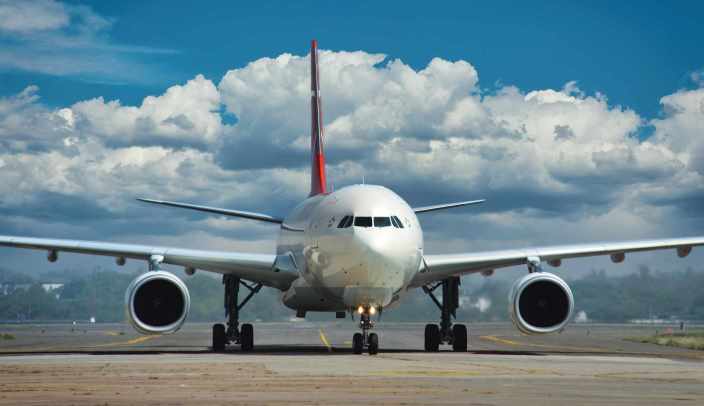
Domestic airlines operating in Nigeria have increased fares by over 100 percent as a result of the high cost of operations, which is a reflection of a worsening economy.
BusinessDay findings show that since the resumption of domestic flight operations in July, after the airports were shut several months to contain the spread of COVID-19, airlines have been struggling due to a slowing economy and depreciating local currency, resulting in increase in cost of operations and services.
Airlines buy spare parts, lease planes and sometimes pay service providers in dollars but are paid in naira for tickets sold to passengers. The depreciation of the naira has further compounded their woes, forcing them to increase airfares to cushion the effect of the naira to dollar variations on their operations.
For instance, a one-way ticket from Lagos to Kaduna or Kano, which cost between N28,000 to N35,000 in the pre-COVID era, now goes for about N70,000, indicating 150 percent to 100 percent increase in fares over the period.

Also, a one-way ticket from Lagos to Abuja, Port Harcourt or Owerri on Air Peace, Aero or Arik, which cost about N23,000 to N28,000 before, now goes for about N47,000 to N52,000, indicating a 94-126 percent increase.
Ado Sanusi, managing director/CEO, Aero Contractors, who confirmed the increase in airfares, told BusinessDay that all commodities in the market have increased, so airlines also have to reflect this on prices of tickets.
Sanusi explained that the country’s economy is struggling, and there are so many indices that reflect on airfares. Some of the indices, according to him, are strength of the naira against the dollar, GDP growth and increase in prices of commodities and services, among others.
“When we were in lockdown due to COVID-19, we thought that passenger confidence might be minimal, but surprisingly, passenger confidence was higher than what we expected. We started with a load factor of between 50 to 60 percent and we charged the same airfares during pre-COVID era,” Sanusi said.
“As we started opening up and began to realise the effect of COVID-19 and the economy on our operations, we had to increase fares. There has been an increase in the cost of spare parts, aircraft lease, Passenger Service Charge, (PSC) and services generally provided by service providers,” he said.

He further explained that, amid the increase in cost of services, the airline has also seen an increase in demand. “Most of our flights are between 70 to 80 percent load factor. We are gradually bringing back our fleet that went on maintenance and with time, we will increase our fleet size,” he said.
The Federal Airports Authority of Nigeria (FAAN) in August increased Passengers Service Charge (PSC) by 100 percent. The agency increased PSC from N1,000 to N2,000 for domestic travellers, and international travellers have had to pay $100 instead of $50. This service charge is included in airfares of passengers.
Mo doubt, the rate of the dollar to the naira affects airfares, Tayo Ojuri, managing partner, Aglow Aviation Support Services Limited, told BusinessDay.
“The cost of operations and doing business is high. Passengers, who are the end users, will have to pay for this. Not many people are flying now. The second wave of COVID-19 is affecting multinationals and businesses. Surveys we conducted recently showed that 10 to 15 companies on the Nigeria Stock Exchange (NSE) did not approve management staff to travel on domestic or international flights,” Ojuri said.
“Airlines are not flying all their fleet yet and the costs of operating the few aircraft flying are quite high. The implication will be that not many people will travel and many people will have to use roads as an alternative and this in turn will affect the contribution of aviation to the country’s Gross Domestic Product (GDP),” he said.