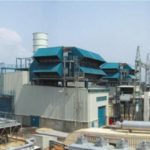
Reptiles have taken over Vitamalt’s expansive plant at Agbara, Ogun State, as the company remains under lock and key 10 years after shutting down. Businessday was told that the once producer of malt drink is facing an intractable legal case that has lasted for far too long.
The factory was under lock and key when our reporter visited, with thick grass and trees common features at the comatose factory. Snakes and lizards were also common sights, with only uniformed security officials seen inside the factory.
“Any civilian inside this factory is a suspect,” said one of the security officials guarding the factory.
“We came to do our job here and nobody crosses this gate,” he said, while pointing at the gate.

A federal high court case number ‘FHC/L/CS/1041/13’ was boldly written at the entrance of the factory alongside an inscription ‘Today 27/06/18.’ It was enough warning for any intruder to flee.
“We do not even go near that place,” one villager, who gave her name as Eunice, said. She alleged mismanagement and ownership/land tussles as reasons for the shut-down.
Businessday could not confirm Eunice’s position as others approached declined to speak on the matter, saying it would amount to contempt of court.
The situation is, however, different at the former Maltex complex as activities were on as of Thursday, November 12, when Businessday called in. “This place now belongs to Nigerian Breweries, not old Maltex,” one staff member said.
In 2009, Consolidated Breweries acquired Dumex Industries/ Maltex, a then subsidiary of CFOA Nigeria plc. In 2014, Nigerian Breweries and Consolidated Breweries agreed to explore a combination of merger of the two businesses. So, it would not be wrong to say that the complex belongs to Nigerian Breweries.

Residents told Businessday that the former Maltex complex was shut down for a long time before re-opening recently.
Read Also: MTN MoMo agent expands service offerings to bridge financial inclusion
Furthermore, there were activities going on at Procter& Gamble (P&G)’S $300 million plant as of Wednesday, November 11, when Businessday visited. In 2017, P&G unveiled the plant which was then the United States biggest single non-oil investment in Nigeria. But the diaper factory was shut down by the company due to ‘restructuring’ reasons.
“P&G is restructuring its Nigeria manufacturing operations to deliver a more effective business operation for now and sustainably for the future,” a statement then signed by Lola Adenuga of the company’s communications unit had read.
“This will entail an exit from production in Agbara plant. We will strengthen our manufacturing operations in the Ibadan plant, scale up our contract manufacturing operations as well as continue to invest in our local talents,” the statement further said.
But those familiar with the company had told Businessday in 2018 that the company shut down its Agbara plant because it was no longer sustainable to continue production due to Customs and import challenges, including high production cost.
As of November 11, activities were going on at the factory, though people going in and out said production was no longer on.
The Issues
Nigeria needs functional manufacturing companies to build a robust economy that can support economic growth. Unemployment and poverty are rising as available firms, especially SMES, are struggling to survive with little government support.
Unemployment is 27.1 percent in Nigeria, according to the National Bureau of Statistics (NBS), while poverty rate is 45 to 48 percent, according to global estimates.
Infrastructure is lacking in Africa’s most populous nation, with manufacturers self-generating 13,000 megawatts of power, according to the Manufacturers Association of Nigeria (MAN).
In the second half of 2019, members of MAN spent N34.70 billion on alternative energy sources as against N32.68 billion spent in the first half.
Apapa and Tin Can ports are still critical challenges. Firms bringing in raw materials into Apapa ports and those exporting commodities abroad have seen their costs swell on rising dwell time, which results in high demurrage charges. The Customs does not have functional scanners in a 21st century Nigeria, causing needless and avoidable delays at ports.
Only 10 percent of cargoes are cleared within the set timeline of 48 hours while the majority of cargoes take between five and 14 days to clear, according to a maritime report by the Lagos Chamber of Commerce and Industry (LCCI). Moving a container from anywhere in Lagos to Apapa (still in Lagos) costs up to N650,000 now as against N350,000 in 2019, manufacturers and exporters say.
In an interview conducted by the Manufacturers Association of Nigeria (MAN) in the first quarter (Q1) of 2020 on critical challenges facing the sector, 94 percent of CEOS said that congestion at the ports had a significantly negative effect on their productivity and cost of production.
“Most worrisome are the issues of deliberate delay in cargo clearing time, raising of technical barriers, rejection of relevant documents by officers of the agency that approved import documents, multiple agencies with duplicated functions and other rentseeking activities of vested interests at the port that excessively fleece operators,” they said.
Multiple taxation is still a major issue, with touts and contract revenue collectors heaping miseries on manufacturers.
Foreign exchange access has become cumbersome as manufacturers only get two to 10 percent of their dollar needs. It is not totally the fault of the Central Bank of Nigeria (CBN), but the country earns most of its foreign exchange from crude oil and any challenge in the global oil market, as it is now, often leads to low dollar inflows. Nigerian economy shrunk by 6 percent in the second quarter of 2020 due to coronavirus-induced slump, but the economy lacks good policies to steer local productivity.
Experts have called for the elimination of multiple FX routes and a focus on supply management, rather than just demand management which further squeezes manufacturers.
Factory shut-down is now new. Between 2000 and 2009, 820 manufacturing firms shut down, according to Bashir Borodo, the then president of MAN. Companies are still shutting down today. In 2016 and 2017, 54 manufacturers went under due to foreign exchange challenges, according to MAN.
“We must build infrastructure at industrial clusters and support manufacturers doing backward integration,” Ike Ibeabuchi, a manufacturer of chemicals, suggested.
“Re-open the Benin border for all, not just for a few. Provide tax rebates to SMES in the manufacturing sector because they create most of the jobs.”