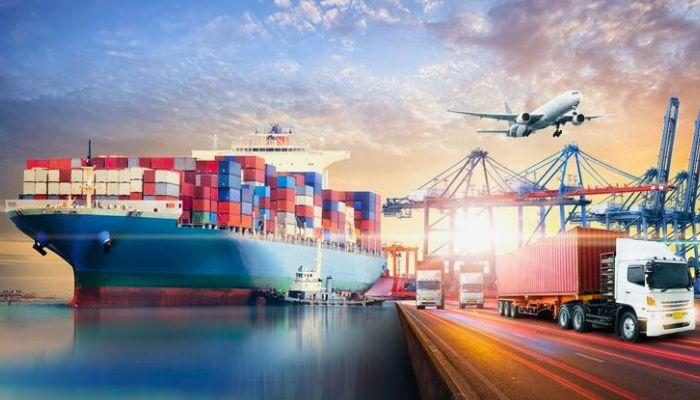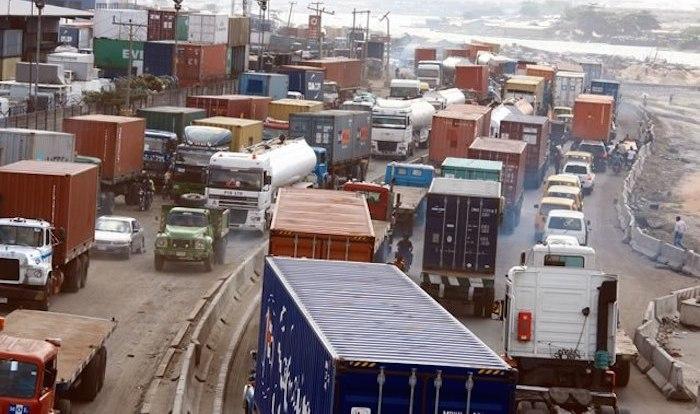
Three years after a presidential intervention raised hopes of a resolution to Apapa gridlock, there is yet no solution in sight as the traffic situation in Nigeria’s premier port city has gone from bad to worse.
Precisely on November 14, 2017, Vice President Yemi Osinbajo presided over a government/private sector meeting to find a solution to the Apapa traffic.
“Today, I presided over a Govt/Private sector meeting on how to resolve the Apapa traffic gridlock,” Osinbajo tweeted at precisely 6:03pm on that day via his verified handle @ProfOsinbajo.
He also said in the tweet that a week earlier, he had flown over the port city “for an aerial assessment of the situation”.

That intervention led to the setting up of a Presidential Task Team on Apapa Gridlock headed by the vice president with Kayode Opeifa as vice-chairman.
During the meeting and after visiting some facilities including the Tin Can Trailer Park, then still under construction, Osinbajo reckoned that the main cause of the gridlock in Apapa was poor roads infrastructure, especially port access roads that were in dire need of repair.
He, therefore, assured that government would carry out reconstruction and rehabilitation of access roads in and around Apapa, including the Apapa-Oshodi Expressway. The government would also ensure the completion of the Trailer Park which has the capacity to accommodate 500 trucks, he said.
The reconstruction of the Apapa-Oshodi Expressway is being undertaken by the Dangote Group under the Federal Government’s infrastructure tax credit initiative. The reconstruction work starts from the Apapa Port gate to Oworonshoki and that will cost the Group about N72.9 billion.
The expectation was that by the end of 2020, the entire road network would be finished and the rail facility that would run from Lagos to Ibadan should have begun some level of operation, according to Babatunde Fashola, minister of works and housing, who spoke during an inspection of the road.

Aliko Dangote, president/CEO of the Dangote Group, who accompanied the minister on the inspection tour, hoped that when the work was finished, people who had deserted Apapa-Oshodi Expressway would come back to their homes and businesses. All these remain at the level of expectation.
It goes beyond roads
Even though in the last three years some improvement has been made on a number of access roads including Apapa-Wharf Road, Liverpool Road, Creek Road, among others, the traffic situation in Apapa within this period has got worse, increasingly suffocating lives and businesses in the port city.
What this means, according to close watchers of the situation in Apapa, especially residents and business owners, is that there are some fundamental problems that go beyond bad roads in the port city.
“If you like, turn all the roads in Apapa to glass, the problem will still be there with us,” noted a business owner who did not want to be named.
“Government needs to address the issue of tank farms, about 63 of them by the last count. Apapa is a port city that needs a dedicated rail line that can help to decongest the ports. Again, there should be other ports outside Lagos where importers can take delivery of their cargo,” the business owner said.
Corruption unlimited
Another major issue responsible for much of the problem in Apapa is corruption.
Kayode Opeifa, executive vice chairman of the Presidential Task Team, told BusinessDay in an interview that part of the reasons they were not succeeding was because “corruption is fighting back”.
Corruption is now so entrenched in Apapa that it has become bare-faced and bold. It operates with impunity so much so that as a truck driver or an importer, you either swim or you sink.
A recent BusinessDay investigation revealed well-organized racketeering going on in the port city that has ensured that the gridlock never ends. The malfeasance involves truck drivers, security agencies, and government officials operating in the port city.
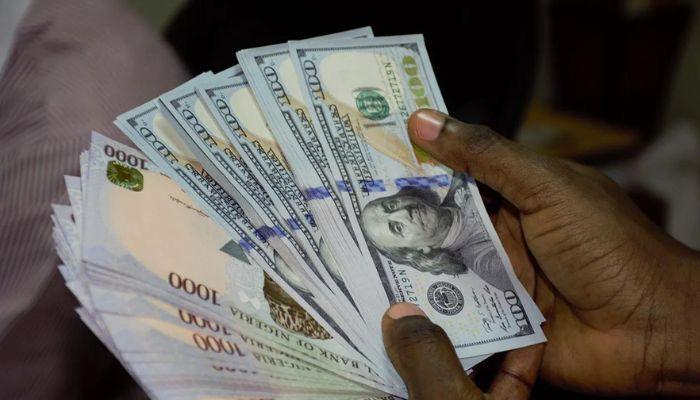
Known as ‘Fastrack’, this racketeering ensures that truck drivers who part with N250,000 to N350,000 get a speedy call-up, entering the ports before others in the queue. Because money is involved, the trucks of drivers who are able to pay come into the ports at the same time, resulting in a total lockdown of the premier port city, BusinessDay found.
“If you want the Fast-track system, you will spend between N250,000 and N350,000 to get your way through for 20-foot and 40-foot containers, respectively,” a clearing and forwarding agent, who spoke in an interview with BusinessDay, said.
“If you pay that money by 2pm, your container will be at the ports by 8pm and by 9pm-10pm, you shall have loaded your container. That’s the fast-track. But if you choose to queue, it takes a minimum of four to six weeks to enter the ports,” the person said.
The cost of this on the economy is huge. Nigeria loses N600 billion in Customs revenue annually, including $10 billion in the non-oil export sector and N2.5 trillion in corporate earnings across various sectors due to the poor state of Nigerian ports, according to a report by the Lagos Chamber of Commerce and Industry (LCCI).
Currently, 5,000 trucks seek access to Apapa and Tin Can ports in Lagos every day, despite that the two ports could only accommodate 1,500 trucks, the LCCI said.