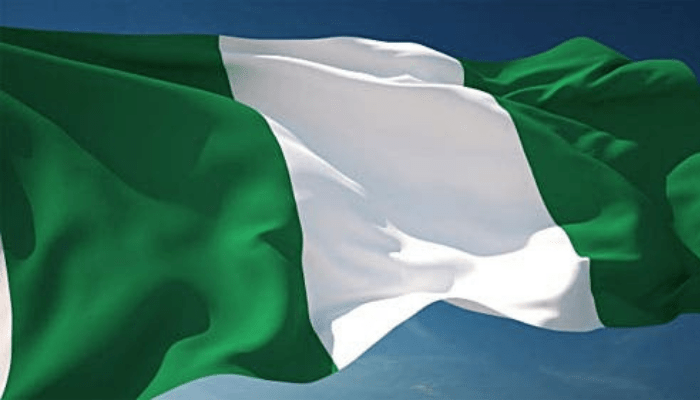
The signs are getting more ominous by the day, talking about Nigeria’s fragile unity, as it is. Over the years, the core northern elders have been vehemently opposed to political restructuring of the country. But the southern parts, represented by the Afenifere (South-West), Ohanaeze-Ndigbo (South- East) and Pan -Niger Delta Forum. Movement for the Emancipation of the Niger Delta, PANDEF (South-South) want it, by all good means. So do the members of the Middle Belt Forum, who have raised an independent voice distinct from that of the Arewa Consultative Forum (ACF).
Even a few patriots, who untilrecently held unto the weakening straw of hope for unity in the storm-tossed ocean of political and social discords, started nursing some doubts when the #ENDSARS protests took the centre stage. It was a surprise, wasn’t it that even after President Muhammadu Buhari acquiesced to the initial five-point demand from the angry youths,to end police brutality in the country, the Northern governors, led by Plateau state governor, Simon Lalong said that they were not in anyway supportive of the strident call to ban SARS!
According to Lalong, “SARS is not made up of bad elements alone as it also includes personnel who are doing their work diligently.” He added that the disbanded police unit has been useful in the fight against insecurity in the north. He also noted that although some states have genuine cases that need to be addressed, one should not just “throw them (SARS) away.” That is Nigeria for you!
‘’Our ability to reach unity in diversity will be the beauty and the test of our civilization’’
-Mahatma Gandhi
But as if that was not enough a cause for serious concern, the controversy generated over the ownership of Zamfara gold-whether it is for the state, or the federation-as it has been for the crude oil in the Niger-Delta region spewed some mire into the political horizon. Now the militants are bearing their long-withdrawn fangs to take on the federal government, in another fisticuff over the control of their God-given crude oil.Methinks what is good for the goose should be sweet for the gander.

It was therefore, utterly unpatriotic and criminal for some greedy Zamfara citizens to have over the years appropriated the gold to themselves.They went ahead and deployedthe instrument of subterfuge to cover up their obnoxious activities by fuelling banditry in the state. The aim was to divert the attention of the federal government from doing the needful.
Questions are still being asked over the constitutionality of the action of Governor Matawalle by striking an agreement with the Central Bank of Nigeria (CBN) to exploit the areas of boosting the mining sector under the Anchor-Borrower scheme which, just like Agricultural sector, which falls within the purview of the apex bank. The bank will invest the sum of N5 billion for the state to supply it with gold as a proceed of the investment over time.
By the time one adds the overtly nepotistic, one-sided political appointments here in what Nigerians see as the most lucrative federal ministries, departments and agencies, quite at variance with the federal character principle, one begins to wonder if we are not heading to the precipice of national disunity. From the Immigrations and Customs through the Police, Military to the NNPC, those at the helm of decision making hail from the core northern part of the country! The burning question keeps flaring, as if other geo-political zones lack the brilliant minds, committed and seasoned professionals to man these sensitive posts? So, where do we head from here?
Some Nigerians, who are genuinely concerned about thequick-sand and slippery state of affairs in Nigeria are either calling for a holistic restructuring of the country, or a referendum. The truth of the matter is that coming to a negotiation table demands mutual understanding, respect and the need to shift grounds. Everything must be done to avoid further bloodshed. As such, the perceived mindset of born-to-rule or superiority complex of any section of the country has to be discarded in the 21stCentury Nigeria.
With abundant natural resources of oil and gas(although of reducing economic relevance), solid minerals, agricultural and tourism potentials in addition to the rich human resource made up of highly creative, resourceful and resilient people, restructuring will bring out the competitive best in us all. That is by the time we restructure into six geo-political zones. They should control their natural endowments and pay an agreed percentage of their income as tax to the weak federal centre that should take care of the military and foreign affairs.

For now, we should learn lasting lessons from several countries, territories or empires that once existed but have since been dissolved due to issues of internal conflicts, war, rebellion, annexation, or uprising. From history, Oyo Empire existed from 1300–1896 before it was made a British protectorate. Bornu Empire existed from 1380–1893 andIbadan Empire held sway from 1860–1893. The Kingdom of Benin fell in 1897 to the United Kingdom while the Kingdom of Dahomey was conquered by France in 1894.
Nigeria that eventually emerged from these empires has seen it all-from the pre-colonial era through political independence, the short spell of democracy, the civil war to military dictatorship and currently we are back to a civilian dispensation. The pain however, is that we have run series of administrations from 1960 that catered little or nothing to up the Human Development Index(HDI) of the common man. In fact, that Nigeria remains the capital of extreme poverty of the world, at a time that countries such as India, Malaysia and Singapore are making giant leaps lends credence to our leadership failure.
Worsening the unity issue right now are high levels of insecurity in the country, characterized by terrorism, banditry, killing spree by armed herdsmen, kidnappings, police brutality and regional egocentrism that have become centrifugal forces pulling us apart as a country.
Let us therefore, glean profound lessons from North Korea and South Korea, North Yemen and South Yemen, Israel and Palestine, Sudan and South Sudan, Etiophia and Eritrea, Czech Republic and Slovakia as well as the disintegration of Yugoslavia.
We may have to bring into being the six geo-political zones as part of the restructuring, specifically, like the six republics that made up the federation – Bosnia and Herzegovina, Croatia, Macedonia, Montenegro, Serbia (including the regions of Kosovo and Vojvodina) and Slovenia. More lessons could also be learnt from the Russian-dominated Soviet Union which grew into one of the world’s most powerful and influential states decades ago. It encompassed 15 republics–Russia, Ukraine, Georgia, Belorussia, Uzbekistan, Armenia, Azerbaijan, Kazakhstan, Kyrgyzstan, Moldova, Turkmenistan, Tajikistan and Latvia.
Certainly, we cannot afford to go the way of North Vietnam and South Vietnam that were pulled asunder by war but came together after irreplaceable lives had been lost.
The earlier we swallow our ethnocentric pride, to ‘’jaw-jaw instead of war-war’’, the better it would be for us as individuals, communities and a country. It is always wiser and cheaper to prevent crises than to douse the flames of any calamitous disintegration.