|
Getting your Trinity Audio player ready...
|
Nigeria’s national constitution has empowered state governments to generate, transmit and distribute electric power, and some states are taking advantage of this provision to improve energy access for their people by partnering with the private sector, improving access to meters and displacing dirty fuels.
Since the major issue in the sector is poor cashflow considering that many electricity users are not metered, the Ogun state government has intervened directly to solve the problem.
“In Ogun State, the government has metered all government parastatals and agencies to ensure they are adequately billed. Lagos has guaranteed contractural offtake,” said Habeeb Alebiosu, non-executive director at Viathan Engineering Limited.
The Lagos state government is embarking on a similar venture but on a larger scale. It has ambitions to produce between 600,000 and 1million meters and recently organised a Hackathon to select the best ideas and implementation teams to produce cheaper meters, locally.

Read also: Why Oyo Govt signed MoU with Shell Gas -Energy Commissioner
Alebiosu, in a presentation at the BusinessDay Energy Conference which held virtually last week said one of states’ role in setting up Independent Power Plants is revenue assurance. The other is contractural offtake, with the state as an anchor tenant. Other areas include licensing, Environmental Impact Analysis certificate and identifying load centres.
These provide a blueprint for other state governments when designing policies to improve energy access. In Nigeria, over 80million people still do not have access to electricity and half of those under the gird suffer long periods of blackouts.
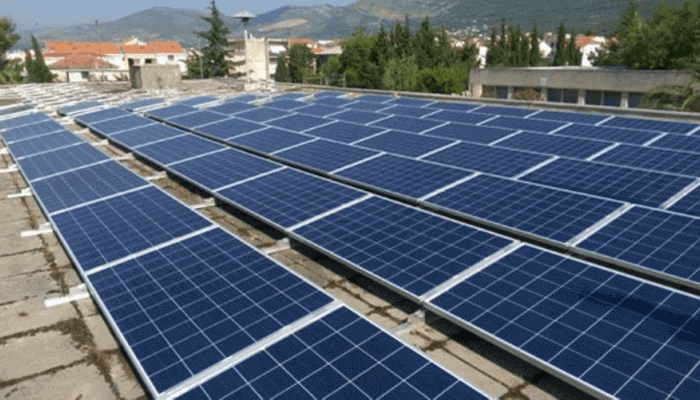
In Kano, 10 megawatts (MW) solar project has been built on a 24-hectare parcel of land provided by the state government. This is a project that is happening as a result of the collaboration between the Nigeria Sovereign Investment Authority (NSIA) and the Kano state government.
“COVID-19 has slowed down the progress of the project. However, we are getting all the necessary licences, working on the engineering, procurement and construction (EPC) contracts and by the fourth quarter of 2021, the solar project would be fully operational,” Aisha Abba Kyari, vice president, Renewables, NSIA said.

The NSIA has an ambitious target of 500MW of renewable energy capacity but achieved incrementally. In addition to the enabling conditions investors expect from states as listed earlier, Kano solar project shows additional conditions such as the provision of land, resolution of land ownership disputes and compensations.
“States need to commit and be excited. They need to provide access to industrial clusters, this will in turn boost economic activity,” Abba Kyari said.
Joel Abrams, executive director Konexa, an integrated power company says there is a real case for an integrated distribution network, thanks to the growing liberalisation of the power sector.
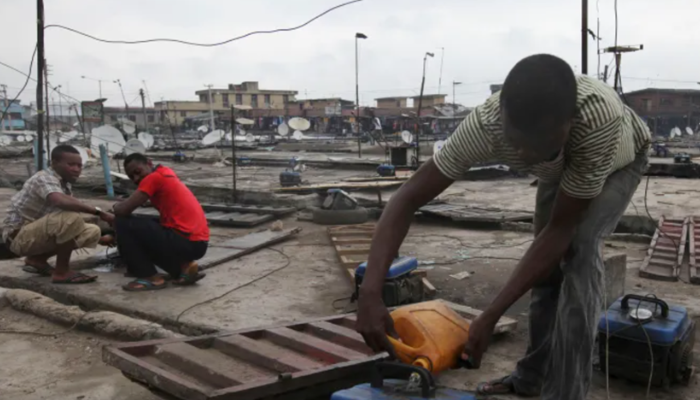
The Kaduna state government seeks to replace diesel with cleaner forms of energy and is working with private companies to this end. Diesel generation is many times costlier than on-grid electric power, yet the largest supplier of energy for Nigerians.
“Aware of the sensitivity of Nigerians to national grid tariffs, we decided to take a small batch of customers. Our goal is to understand them from the base of the pyramid to the top and develop an integrated funnel of projects,” Abrams said.
Koxena started operations in Kaduna in because of the state’s large industrial base and mass non-industrial customers. Both Kaduna and Kano have a large peri-urban population, which Koxena has a robust business case for.