High cost of doing business, unnecessary delay during cargo examination and poor road infrastructure have been identified as factors limiting inland container terminals’ capacity to ease the high rate of congestion effecting seaports in Lagos State.
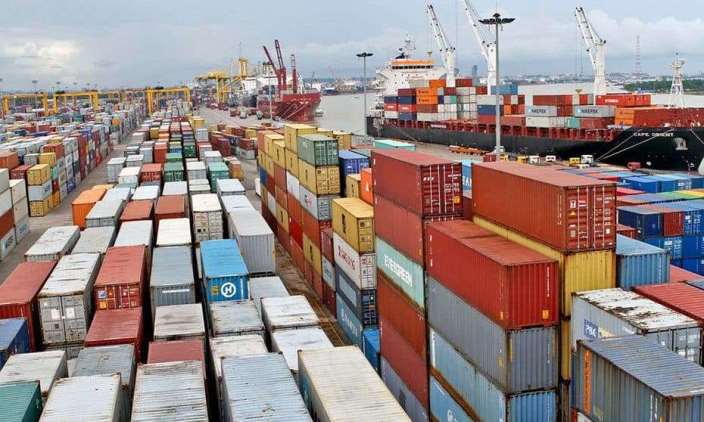
Inland container terminals, popularly known as bounded warehouses, are facilities located outside the seaport where containers are moved for Customs examination and clearing in order to reduce or avert congestion in the main seaport terminals.
Usually, once there is up to 70 percent yard occupancy at the port terminal, it means there is need to transfer some of the laden containers to bounded warehouses licensed by the Nigeria Customs Service (NCS) in order to decongest the port yard.
Presently, Apapa Port is experiencing 90 percent yard occupancy, which shows that there is congestion and longer dwell time for imports. This has also affected waiting time of vessels as ships now spend between 30 and 50 days on Nigerian waters before being able to enter the port to berth.

Sadly, Nigeria has not been able to leverage the existence of these inland container terminals to deal with the congestion in Apapa and Tin-Can Island ports.
A recent visit to some of the terminals at Mille 2 axis, Festac Town, Amuwo-Odofin and Satellite Town where over eight different bounded warehouses are located, residents and consignees have been finding it difficult to commute as container carrying trucks lay siege to the roads designed with gullies and portholes.
It is also discovered that access roads leading to most of the bounded warehouses in Lagos are presently in bad state causing serious congestion and delay in cargo evacuation from the terminals for both consignees as well as residents.
Another factor limiting the efficiency of inland container terminals is cost associated with moving the container from the mother port to the allotted bounded warehouses.
BusinessDay checks show that before containers would be transferred to these bounded warehouses, the shipping liners must first discharge the containers at the seaport before they are moved by barges and trucks in most cases to these terminals, which come with extra cost.

As a result of the cost, most importers forbid shipping liners from moving their containers from the mother ports to bounded warehouses in order to avoid paying transfer charges.
Emma Nwabunwanne, a Lagos-based importer, says payment of transfer charges is like paying double transportation or haulage charges because after the container is cleared from the bounded warehouse, one would need to pay the trucker to move the container from inland terminal to his personal warehouse.
“This is why we don’t like shipping liners to transfer our consignment to bounded warehouses because at the end, the consignee bears the cost of transferring the container from the mother port to terminal,” he says.
Giving insight into how such charges originate, Tony Asiadiachi, general manager, Denca Bonded Terminal, states that during a recent visit to the terminal, that containers transferred to their terminal come with bills such as transfer charges to cover the cost of transporting it from the mother port to the bounded terminal using (barges and trucks).
According to Asiadiachi, some containers leave the mother port with terminal storage charges, which must be paid by the operators of the bounded warehouses before the seaport terminal operators would allow them to move the container away from the seaport.
Such payments and expenditure that are made in advance to seaport terminal operators, barge operators and truckers must be recouped by the bounded terminal owners from the cargo owners, he states.
Confirming this, Lawrence Eboji, head of operations, Kachicares Resources Limited, an inland container terminal located in Amuwo-Odofin, notes that bounded warehouses do not collect any abnormal charges as most of the cargo owners complained.
Eboji states that storage/rent charge usually originates from the mother port, especially if the bounded terminal, which the containers are allocated, is not able to lift the containers directly from the vessels but allowed it to overstay the rent free days in the terminal.
He says most of the bounded terminals are working with seaport terminal operators to see to it that cargoes transferred to them are not entangled with storage charges.
Meanwhile, the situation has been made worse with the ban placed on collection of transfer charges on containers moved to inland container terminals without the consent of the consignee and storage charges impose on such containers.
Hassan Bello, executive secretary, Nigerian Shippers’ Council (NSC), says shippers are worried about the high cost of doing business at inland container terminals.
According to Bello, some terminals are collecting transfer and storage charges from consignees, which the Council has already abolished due to the high cost they impose on cargo owners.
“We are saying no storage and transfer charges on goods that are transferred from the seaport to bounded terminals. Those who move the goods are responsible for whatever cost and not the shipper,” he says.
Bello, who states that the Council is determined to ensure that all the charges collected by owners of bounded terminals are streamlined, says charges need to commensurate with services offered by these terminals in order to ensure that cost of shipping are reduced considerably.
“In terms of operational efficiency, there is need for improvement in the area of cargo examination as well as access to these terminals to achieve operational efficiency. We insist on efficiency because delay is dangerous to cargo evacuation.
“We are also looking at the frequency as well as the capacity of these terminals. Many of them have 28,000 Twenty-foot Equivalent Units (TEUs) capacity that is why we are talking with them to ensure they improve on the equipment on ground,” he says.
Some of these terminals are not properly situated such that there is no good access into most of them. He however notes that going forward, the Council would work with Nigeria Customs to ensure proper situation, location and geographical suitability before a terminal would be sited.
“Shippers are facing traffic gridlock in Apapa and it is not good that they would come where these terminals are located to face another round of traffic gridlock that also delays cargo evacuation. We also want to digitalise the port by making it contactless and ensuring that manual operations are discouraged. We are also discussing with these terminals to ensure they carryout transactions online because it is faster, more efficient and more transparent,” he notes.