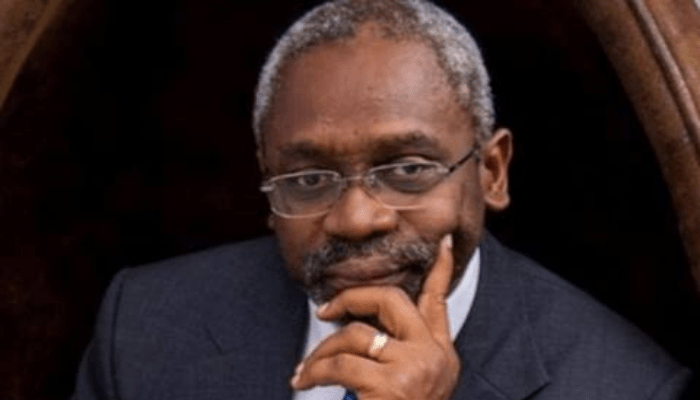
Speaker, House of Representative, Femi Gbajabiqmila, Chairman, House of Representatives Committee on Niger Delta Affairs, Essien Ayi, Senior Special Assistant (SSA) to President Muhammadu Buhari on National Assembly Matters, Ita Enang and other stakeholders had decried failure of benefit transfer to the Niger Delta.
The stakeholders spoke at webinar organized by OrderPaper Nigeria on ‘Resolving The Host Community Question, which was monitored by BusinessDay at the weekend.
They called for immediate overhaul of Niger Delta Development Commission (NDDC), the 13 per cent extra revenue being voted for oil producing states as well as careful consideration of the ecological fund.
Decrying growing unemployment, poverty and gross lack of development in the region, some of the experts specifically asked that the 13 per cent derivatives being paid to governors of the state be paid to local communities.

Gbajabiamila, who had noted that the Niger Delta region has contributed significantly to the country than to remain in a state of shambles, said the house would find a sustainable solution through legislative actions.
He said the lawmakers are currently looking to address the loopholes in NDDC, while taking proactive steps through the Petroleum Industry Bill.
The speaker insisted that unless cooperation actions were taken, especially beyond game blames, the development of the region may remain a mirage.
Read also: Again, Akpabio denies accusing lawmakers of NDDC contract scam
According to him, the country must resolve political differences bedeviling the development of the region.
Enang blamed oil companies for some of the issues in the region as we as governors of the states.

“The oil companies, like Agip, Shell, Mobil and all of them seems to have conspired in ensuring that the Niger delta communities are impoverished by way of dividing them,” he said.
Enang was displeased by the actions of the governors in the region, noting that they have not been kind to the citizen.
“National Assembly should amend the Niger Delta Development Commission Act, and they should amend the constitution, so that the 13 per cent derivation does not go to the governors; it should go to the host communities and targeted at development of these communities,” the SSA said.
He also urged lawmakers to retool the Local Content Act, stressing that it was focusing on big capital projects instead of looking at the local communities in every oil areas.
“Let the committee on the Niger Delta look at the NCDMB ACT and the NCDMB, headed by Simbi Wabote; it is almost veering out of purpose; it is not working for the development or management of local content in oil producing areas. Let it return to the mandate for which it was created,” he said.
Ayi decried the state of affairs at the region. He said while efforts have been made by the government, it may not be timeous, adequate or sustained or even sustainable.
Condemning what he called “disdainful exposè and consequent disgraceful display by some actors upon whom the sacred responsibility of ensuring development of the Niger Delta Region was entrusted,” the lawmaker said cooperation was needed to address the issues in the region.
“Nigeria must not allow the crisis of this global pandemic to go to waste and must therefore seize the opportunity to reform and improve the petroleum sector which remains the mainstay of the economy.
“In this regard, the leadership and indeed, the entire House of Representatives eagerly await the outcome of this conference in order to highlight it as a significant value addition to deliberations and other legislative interventions on the Petroleum Industry Bill (PIB) when we reconvene from our annual recess,” he said.
Executive Director, Centre for Social Studies and Development (CSSD), also called ‘We The People’, Ken Henshaw, faulted the lack of structures for dispute resolution for affected communities.
He noted that oil communities are losing onfidence in the ability, impartiality and willingness of regular judicial processes in Nigeria to efficiently resolve dispute between resource-affected communities and oil companies.
According to him, efforts should be made to ensure that benefit-sharing mechanisms translate to tangible benefits for the people of the Niger Delta region.
Also speaking, Former Permanent Secretary in the Ministry of Labour and Productivity, Timiebi Koripamo-Agary, lamented that there had not been an effective monitoring of benefit transfer mechanisms in the Niger Delta, such as the Niger Delta Development Commission, NDDC, and the 13 per cent Derivation Fund.
She called for the scrapping of the NDDC, stating that the commission had failed in its mandate, while she advocated the use of the model for the development of Abuja to develop the Niger Delta, using established contractors to build major infrastructure projects in the region.
She insisted that the Niger Delta is in need of a huge infrastructure development, noting this would create jobs in the region.