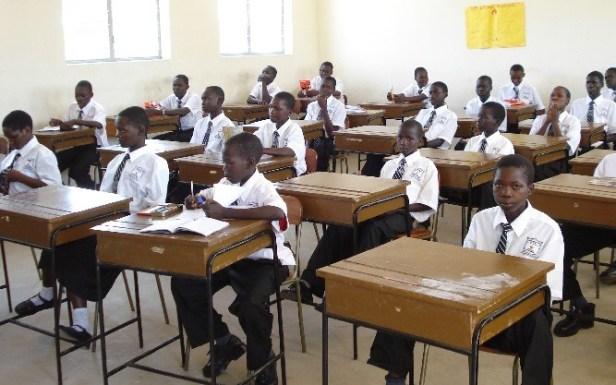
Divergent views have continued to trail the call for the reopening of schools across the country.
Following the outbreak of the coronavirus pandemic in March, schools were shut down. Many stakeholders have however, called for the reopening of the learning institutions.
The more the calls, the more some divergent views advance arguments why the doors of the schools should remain shut for now.
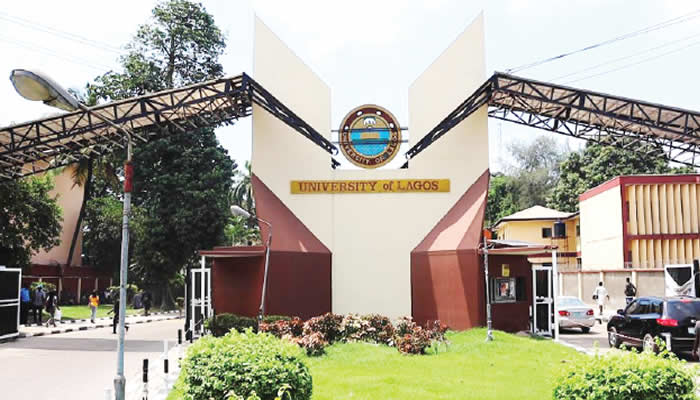
Already the pronouncement by Babajide Sanwo-Olu, governor of Lagos State, that tertiary institutions in the state would resume September 14 has already been followed by the Osun State government, which has announced September 21, 2020 as a tentative date for reopening of schools.

While Nigerians expect other state governments to toe this line, the Presidential Task Force on Covid-19, last Monday, urged state governments making preparations for the reopening of schools to be guided by the experience of countries where reopening of schools led to a rise in confirmed cases of the virus.
Boss Mustapha, chairman of the task force, and Secretary to the Government of the Federation, while giving the advice, listed the affected countries to include Germany, France, United States of America and the United Kingdom.
“As we plan to re-open more sectors, we must stay the course and stick with our winning strategy which is anchored on the ability of our health institutions to contain the virus while we as citizens wear our masks properly, stay away from crowded places, avoid mass gatherings, maintain simple hygienic practices and as much as possible protect the elderly and most vulnerable to this pandemic,” he said.
According to him, “It is in the above context that the PTF appreciates the ongoing calls for re-opening of the education sector and indeed some sub-nationals are already making preparations for such.
“Whilst the PTF does not discourage making such preparations, we need to be guided by experiences from countries such as Germany, France, the United States and the UK where opening of schools in some cities led to an increase in confirmed cases and fatalities.”

Following Sanwo-Olu’s announcement, Olanrewaju Fagbohun, a professor and vice chancellor, Lagos State University (LASU), said that students of the institution would resume in batches.
Fagbohun, who also said that lectures would hold between 9am and 3pm on the university campus, did not give a specific resumption date.
The vice chancellor said that students in 200 and 300 levels would resume two months before the commencement of their examinations.
“A gradual phasing has been done for our students’ resumption. Students in 400 to 600 levels would resume for a duration of two months with an intensive lecture starting from 9am to 3pm for those that reside off-campus.
“After the completion of 400 to 600 levels’ resumption, students in 200 and 300 levels are to resume for a two-month lecture before the commencement of their examinations,” he said.
According to him, “Resumption of the students in 200 and 300 levels is divided into different days of the week. On Mondays and Wednesdays, 300-level students would be on campus for lectures. On Tuesdays and Thursdays, 200-level students would be on campus. This is in order to maintain social distancing and to protect the lives of the students of Lagos State University and the staff.”
Parents, teachers, students in divergent views
Parents, teachers and students across the country have continued to express mixed reactions on school resumption date.
While some hailed the resumption announcements and looking forward to some of relief, some others have continued to remain apprehensive, doubting how Covid-19 guidelines and safety protocols would be met when necessary arrangements had not been made in some public and secondary schools.
Some parents expressed fear that it was too sudden for states like Lagos and Osun to announce school reopening, giving that there is no known cure for the virus and the experimental vaccines are not yet here.
Ayodeji Dada, a father of three, told BDSUNDAY that schools should not be in a haste to reopen, saying he is in total support of the position of presidential task force on Covid-19.
Dada observes that even though Babajide Sanwo-Olu, governor of Lagos State and his Osun State counterpart may have acted in the interest of the students of their states, such decision was a hasty one.
Uchenna Ukaegbu, another parent insists that government should remain more combative in dealing with the health pandemic instead of succumbing to the pressure of powerful school proprietors, arguing that “For our children to go back to school while Covid-19 cases are still being recorded in different states, the Federal Government should post health officers to different states to keep the states under surveillance.”
Ibironke Ajayi, a mother and civil servant, lauded the Lagos State government’s decision, describing it as a step taken in the best interest of the education future of students in the state.
Ajayi said that Covid-19 has for six months affected the academic programme as contained in the curriculum of the Ministry of Education, adding that it was therefore, a wise decision by Sanwo-Olu because it is something that pertains to getting the education economy back on track.
Reacting from a teacher’s perspective, Adedoyin Adesina, Lagos State chairman of Nigerian Union of Teachers (NUT), said the resumption date might not be realistic, adding that the union had submitted a memorandum to the state government on what must be put in place before schools could resume.
Adesina observed that the government had just started to fix the water system in public schools in preparation for resumption and wondered if they could meet the resumption date.
The state chairman of NUT suggested that schools should resume in phases, depending on the government’s level of readiness.
On his part, Haruna Danjuma, chairman, National Association of the Parent-Teacher Association of Nigeria (NAPTAN) called on Sanwo-Olu to tread cautiously.
On their part National Association of Proprietors of Private Schools (NAPPS) members said they were ready to resume as they have put in place all the necessary safety protocols required for school resumption.
Yomi Otubela, NAPPS president, stated that safety would be a matter of very high priority, pledging that students, staff members, and visitors will comply with safety protocols and Covid-19-related guidelines that help reduce the chance of infection.
For students who are at the receiving end of this situation, their views were also divergent. While some insisted that schools be immediately reopened, others called for caution.
Tobiloba Abiodun, a 200-level student of Engineering, University of Lagos, insists that he and his fellow students are tired of sitting down at home and called on the government to re-open the campuses.
Abiodun maintains that education is a right, not a privilege, describing the delay in school resumption as injustice on students and lecturers.
Onyeka Igbokwe, another student, told BDSUNDAY that although he and his fellow students were worried about the impact the prolonged school closure would have on their academic programmes in terms of graduation, he said it would be unwise to allow schools reopen and risk the lives of students.
Universities react
Ayodeji Adesina, assistant public relations officer, McPherson University, said the university management was ready to resume physical classes because they have complied with the safety protocols required by government in response to coronavirus pandemic.
Adesina told BDSUNDAY that all was set to receive students back to campus to carry on with blended learning, which he said was a combination of brick and mortar and online classes.
“Management and students are anxiously awaiting the go-ahead from government for school to reopen because all the things required are in place,” he said.
ASUU vs FG unresolved issues
BDSUNDAY check shows that even if the Federal Government were to reopen tertiary institutions today, most public universities may not reopen for physical teaching and learning until the Academic Staff Union of Universities (ASUU) calls off the strike they embarked since March 23, 2020.
Recall that the university lecturers had embarked on industrial action over the Federal Government’s decision to withhold the February salary of their members who refused to enroll on the Integrated Payroll and Personnel Information System (IPPIS).
Giving the situation report, Biodun Ogunyemi, national president of the association, affirmed that the strike would continue in as much as the Federal Government does not fulfil its pledges to the ASUU.
Ogunyemi said even if the government eventually reopens schools, it has nothing to do with universities battling with series of crises.
The ASUU said that the current crises pre-date Covid-19, adding that there are fundamental crises that will make reopening of universities longer and impossible for now.
“We had long told government our position and until they meet necessary conditions, universities are not resuming even after Covid-19,” he said emphatically.
Ogunyemi further pointed out that there are outstanding issues and government is not ready to fix our universities and provide enabling learning environment.
“You cannot talk about social distancing in universities without talking about additional lecture rooms. So, we have two crises delaying resumption. The health crises and the refusal of government to make our universities standard,” he further said.