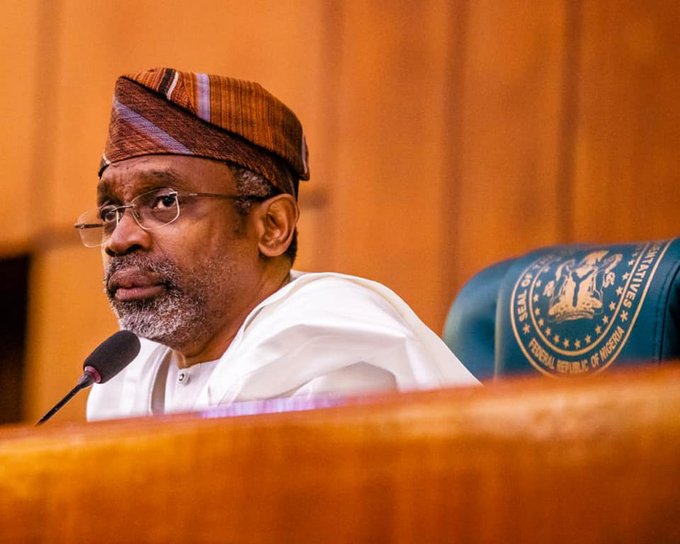
In the past 20 years, Nigeria has made no meaningful progress on all fronts, according to Femi Gbajabiamila, Speaker of the House of Representatives.
This is as Africa’s largest economy, with a population of over 200 million people, is still bedevilled with the same problems and challenges, faced some two decades ago,
“If you read the papers of 20 years ago, you will find out its same problem of corruption, epileptic power supply, poor health services, the country has been battling with, that same problem is still being discussed today,” the speaker said.
Gbajabiamila who spoke at the ongoing 60th Annual General Conference of Nigerian Bar Association, NBA, on the theme “Step Forward”, said until the government, private sector and policy makers understand that the country has been stagnant, no much progress will be made.

The speaker who spoke in the virtual conference, alongside Vice President, Yemi Osibanjo, said the Coronavirus pandemic has, to a large extent, assisted in identifying these challenges, so that a workable solution can be administered.
On the path of the lower chamber of the house in which he is the speaker, Gbajabiamila explained that a number of works, including electoral, social and political reforms are in the works.
Among these reforms, the speaker noted is the Police reform Act, which he said is now on the table of the President Muhammadu Buhari, waiting to be assented.
The Police Reform Act, he said, was drafted to address the issue of community policing as well as scaling up remuneration for the police force.
He said in order for the issue surrounding community policing to be properly addressed, the National Assembly is working on amending the constitution.

This would help in properly outlining the roles of the federal, state and local government, Gbajabiamila said
According to him, there has been too much concentration and burden on the Federal government while the Local government has remained moribond. Reviewing the constitution will allow us to spell out the responsibility of each tiers of government and hold them accountable where necessary.
“It is important to critically review our federal system by looking at the exclusive, concurrent and residual,” he said, noting that we cannot achieve the state of the nation we want if governments do not play their roles.
There is also a bill seeking alternative fundings for the military, Gbajabiamila said.
According to him, this alternative funding will complement the defence budget, that will assist in equipping the military in the fight against insecurity.
He noted that the world is ruled by information technology hence, it is pertinent for the military to adopt technology in fighting the Boko Haram insurgency.
On electoral reforms, the speaker noted that nothing can be done in the country if leaders are not elected freely and fairly.
The admonished Nigerians to see the development of the country as a collective one as opposed to just the government.