Analysts expect Nigeria’s economy to see a shallower decline in the remaining part of the year due to the reopening of the economy. However, Renaissance Capital says the recovery of Africa’s largest economy will be prolonged by the run-down in consumer spending.
According to the Moscow-based investment bank, consumption (as indicated by wholesale and retail trade’s decline) was the biggest drag on Nigeria’s first contraction of -6.1 percent in the second quarter of 2020 as reported by the National Bureau of Ststistics (NBS) on Monday.
“Nigeria’s recovery will be undermined by a consumer who was already in recession,” Renaissance Capital said in its economic update report released on Tuesday.
In the report titled ‘Nigeria: 2Q20 GDP Consumption collapses’, Renaissance Capital maintains its forecast for Nigeria at -2.9 percent and 1.0 percent for 2020 and 2021, respectively. This is because it believes “a run-down consumer implies a protracted recovery”.

Meanwhile, the July 1 ‘Sub-Saharan Africa: The recovery note’ by Renaissance Capital reveals that Nigeria’s wholesale and retail trade – the second-biggest economic sector and the company’s proxy for the consumer – contracted for the four quarters preceding second quarter of 2020, implying the consumer was already in recession before the COVID-19 pandemic hit.
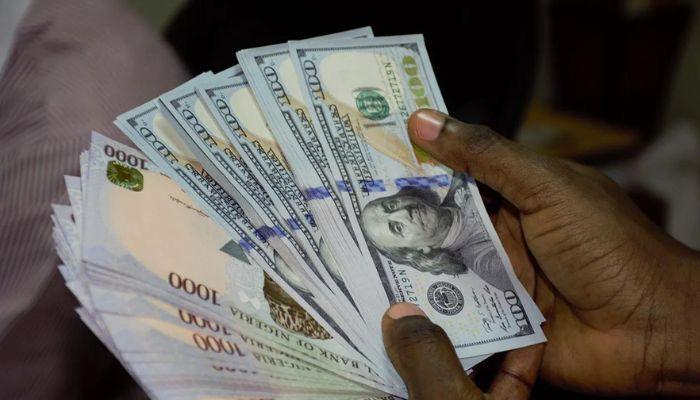
The sector’s decline deepened to -17 percent YoY in Q2, as against the -0.2 percent YoY in 2Q19. It also corresponded with a sharp fall in Nigeria’s Consumer Confidence Index to -29.2 from 1.2 over the same period. The last time consumer confidence was this low was in the second half of 2016 when the naira was sharply devalued against the dollar to NGN315/$1, from NGN199/$1 previously.
With Nigeria’s first contraction in three years at -6.1 percent in the second quarter of 2020, the largest economy in Africa can now be best described as a stagflated economy, a condition marked by slow, declining or contracting economic growth and relatively high unemployment, or economic stagnation, which is at the same time accompanied by rising prices (i.e. inflation).
The NBS recent report on unemployment shows the rate rose to 27.1 percent while inflation accelerated to 12.8 percent.
Faced with the double challenge of lower oil prices and COVID-19 pandemic, Nigeria’s second-quarter contraction is the deepest the economy has witnessed since 2004.

On the economic outlook, Resssiance Capital thinks there is potential upside for growth in the second half of 2020 due to the easing of lockdown restrictions.
“We also do not expect the stringent lockdown restrictions imposed in April to be reinstated, because the government and the economy cannot afford it,” it said.
It expects agriculture’s growth to be sustained, in large part because it is the most insulated from the COVID-19 pandemic and its associated restrictions.
“There is some moderate upside for oil production, which is set to pick up to 1.4- 1.5mn b/d in 2H20, according to our Frontier oil and gas analyst, Nikolas Stefanou, from 1.4mn b/d in May to June (and to 1.6mn b/d from January 2021 to April 2022), following the OPEC+ initiative,” it said.
Meanwhile, Renaissance Capital’s growth forecast for Nigeria is the highest among all the projections from different industry players.
The International Monetary Fund (IMF) recently revised downwards its projection for Nigeria to -5.4 percent from a -3.4 percent projection in April 2020. According to the IMF, the forecast was influenced by the larger than expected storms to global value chains due to the coronavirus, affecting global demand for goods and services.
The Washington-based organisation expects poorer nations dealing with the disease to have longer economic recoveries as lockdowns continue in the worst-hit to global GDP since the financial crisis in 2008.
According to a World Bank report that assesses economic and social developments in Nigeria, the country’s economy would contract by 3.2 percent this year. This was on the assumption of a yearly average oil price of $30 per barrel. It also assumes Covid-19 would have started easing out by the second quarter of 2020.