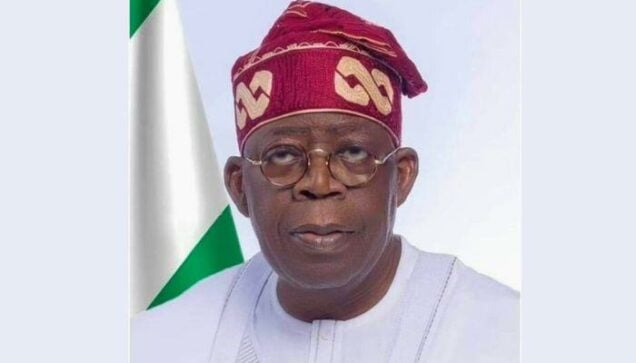
Lagos State governor, Babatunde Fashola, says the utilisation of the proceeds of privatisation exercise solely by the Federal Government is unconstitutional and inconsistent with the principle of federation, arguing that the public assets so far sold and those billed for further sale were not solely owned by the Federal Government, but by the Federal Republic of Nigeria which the constituent states are part of.
On the strength of this, Fashola who spoke when members of the Senate Committee on Privatisation led by the chairman, Gbenga Obadara, argued that all monies realised from the privatisation exercise since its commencement ought rightly to go into the Federation Account from where the three tiers, federal, states and local governments will draw from.
The governor also faulted the privatisation procedure which excludes the communities which gave up their lands for the establishment of the public companies being sold, adding that agitations are already popping up in some communities, and this needed to be carefully handled in order not to rubbish the gains of the privatisation exercise.
Fashola cited the case currently at Egbin in Ikorodu, the host community of Egbin Power Plant, Nigeria’s largest electricity generating plant with about 1,320 megawatts, where the locals and their Oba (traditional ruler) are protesting and threatening to go to court following exclusion of their interest in the privatisation exercise. “The Oba protested to me and I have told them to hold their peace as this issue can be addressed,” Fashola said.

“So your committee after supervising the sales must also supervise the appropriation of the proceeds among the federating units”, Fashola told members of the committee.
Earlier, Obadara had told the governor that the committee was in the South-West region as part of its oversight functions to see some of the privatised public companies, to assess the congestion situation in Apapa, which host the nation’s two most utilised seaports.
He said having assessed the congestion on the roads leading into Apapa and the ports, the committee had resolved that it would together with the Nigerian Ports Authority (NPA) and ports concessionaires, review the situation on a monthly basis. He expressed the concern that if not tackled, the situation in Apapa could lead to more loss of revenue to the economy
JOSHUA BASSEY