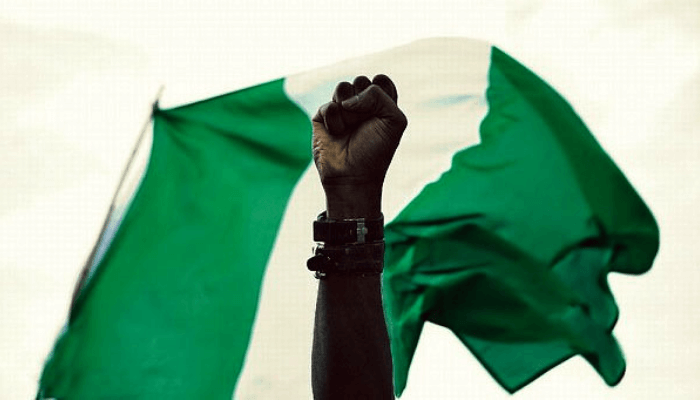
According to the Nigerian government, following a rebasing exercise that took place over the weekend, a new economic leader of the African continent has emerged. This recent development would on the surface appear to be exciting news capable of infusing pride in the citizens of a country that are inundated regularly with much more negative media reports that range from breathtaking corruption allegations to macabre stories of terrorism in the north of the country.
However, before bottles of champagne are popped, a closer examination of conditions in Nigeria would be appropriate. Such an analysis of conditions in Nigeria would note that in the last decade, there have indeed been several notable economic advancements in the country. The most striking of the economic advancements are related to the ‘revolutionary’ reform of the telecommunications sector that has now empowered millions of Nigerians with the ability to communicate with ease and more importantly, access previously inaccessible information on the internet. Even though we may now take it for granted, not too long ago, the use of phones was the exclusive privilege of a very wealthy few. The scale of change in a short period of time has been phenomenal and as a result, mobile phones are now owned by even the destitute. At the root of all of this positive change has been an economic policy of privatization and liberalization. Thus, a number of private telecommunication companies fiercely compete to render services to Nigerian consumers and consequently, their rates have been consistently driven down. The privatization process was not blemish free however. The sale of the government company that monopolized the sector previously has remained stalled in limbo for over a decade. Assets worth billions of naira have been allowed to rust away while thousands of employees had to suffer unemployment and uncertainty.
Further examination of conditions in Nigeria will reveal extensive rot beneath the glossy facade being presented to the world and Nigerians. A recent World Bank report suggested that greater than 60% of the populace survives on less than a dollar a day. The country has a low HDI, occupying the 153rd position in the world, behind Cameroon, Kenya, Congo and even conflict ravaged Palestine. To better grasp what horror life is like for the less privileged in Nigeria, it should be borne in mind that for many among the elite and privileged few who are not among the 60% mentioned by the World Bank, a typical night consists of the discomfort of extreme humidity exacerbated by the psychological torture of noisy electricity generating sets and whining malaria transmitting mosquitoes. Periodically, some generator users fall victim to carbon monoxide poisoning from their exhaust fumes, failing to rouse from sleep the following morning.
Against this backdrop, the Nigerian government stakes claim to title of the largest economy in Africa. What exactly does this dubious claim mean? If Nigeria is the best Africa has to offer to the world, what sort of woe are the millions of Africans in less prosperous smaller economies enduring? Considering that much more stable and better organized countries such as Seychelles, Mauritius, Botswana, Namibia and South Africa are located on the African continent, is this Nigerian claim a delusion of grandeur?

An analysis of economic conditions in South Africa, the previous leader we are said to have bettered, will put things in perspective. The South African per capita of $7336 is more than double the new per capita figure of $2688 arrived at by Nigeria. Anecdotally, a trend of somewhat desperate economic migration from Nigeria to South Africa appears to exist. Queues of visa seeking Nigerians, several ultimately enduring the indignity of denials, form at the South African embassy on a daily basis as early as 5am. In 2010, South Africa achieved the no mean feat of successfully hosting the world during the FIFA world cup. Globally, South Africa belongs to the so called emerging bloc of nations, the BRICS, which includes heavyweights such as Brazil, Russia, India and china. Coincidentally, a South African company, MTN, played a critical role in facilitating the telecommunication revolution alluded to earlier. Ultimately, it is really difficult to picture present day Nigeria being hailed as better than post apartheid South Africa.
The Nigerian paradox underscores the folly of what appears to be a fashionable obsession with GDP and economic growth even when the majority of people are clearly left out of the said growth. Sometime last month, a recruitment exercise organised by the government led to the deaths of multiple job seekers who were victims of stampedes in different stadia used as venue for the tests. Apparently, more than a million youth nationwide had applied for less than 5 thousand available spots. In the face of this alarming situation, the MIT trained finance expert who has been the architect of government economic policy has continued to boast of a stellar record of macroeconomic stability and continued GDP growth.
Chukwudebe Olisaemeka