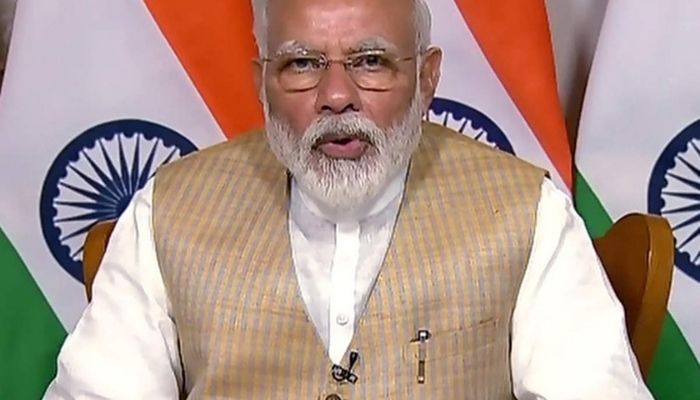
India’s Prime Minister Narendra Modi has, in the past month or so, sat through more than 50 presentations and reviews aimed at accelerating reforms through a number of sectoral decisions intended to address bottlenecks and the impact of COVID rather than opting for Bigbang decisions.
In the absence of regular interactions and public programmes, the Prime Minister has had the time to pack in several virtual discussions in a day and top officials have logged in 1,000 man-hours as meetings lasted two hours on an average with about 10 people attending, said official sources. The brainstorming sessions on a wide range of issues are intended to boost economic growth.
There were multiple meetings dealing with infrastructure, use of technology in areas from health to taxation, welfare policies targeting the poor and pro-middle class initiatives relating to ease of living for citizens.
READ ALSO: Despite Covid-19, India-Nigeria trade remains steady at $13.9bn – Envoy

Reports say in his interventions, the Prime Minister called for efficient land use at ports, faceless tax assessment to improve transparency, use of technology to enhance state capacity at the level of local government plans to boost access to online learning in rural areas and more use of UPI in DBT schemes, said an official present at the discussions.
There were presentations by Niti Aayog, the Prime Minister’s economic advisory council and the finance ministry on further reform push options in the light of the pandemic.
Sources said what seemed to be in the pipeline were several sectoral decisions rather than a major stimulus. It was also felt that some time be given to allow the previous set of measures announced by the government to play out.