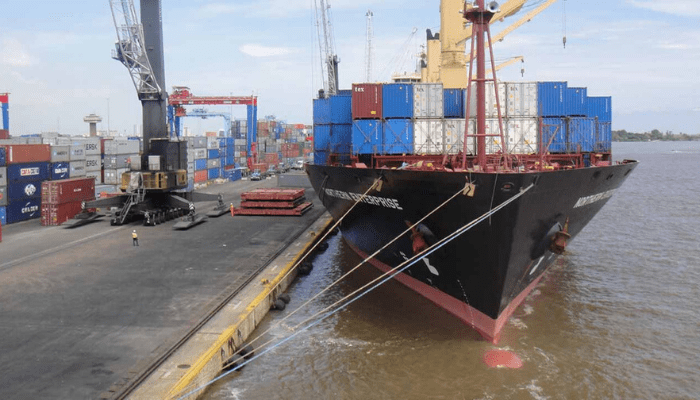
The Nigerian Ports Authority (NPA) says efforts are on top gear to ensure that a Single Window cargo clearing platform is established in the nation’s seaports in order to drive efficient and automated port operations needed at this time of the outbreak of Coronavirus (Covid-19) pandemic.
For the authority, one of the things hindering Nigerian ports from achieving efficient and timely service delivery, which translates into huge cost for the consignee, is the absence of Single Window platform.
Speaking in Lagos on Wednesday during a webinar session on ‘Covid-19 and the Nigerian Maritime Sector: Lessons and the Way Forward,’ Hadiza Bala Usman, managing director of the NPA, said the establishment of Single Window would ensure that Nigeria has less human interventions in cargo clearing system.
“We are pushing to ensure that this automation is deployed within the shortest period to reduce cost for port users. Though, the critical component of this platform lies with the Nigeria Customs Service,” she said.

According to her, the NPA has also been engaging with the Presidential Task Force (PTF) on Covid-19 to lift a directive that states that vessels coming from high-risk countries must wait on Nigerian waters for 14 days before berthing.
Stating that a lot of vessels go to West African neigbouring ports first before coming to Nigeria, Usman said that there may not be need to say that a vessel that is coming from Tema, Ghana must wait for 14 days before it could be allowed to berth in Nigerian port.
“This is a big concern that is ongoing with the shipping companies. However, in line with the International Maritime Organisation (IMO) submission that member states should ensure that vessels are given free passage in and out of ports, we are suggesting that maybe we can quarantine the crew because they could be the ones that may have infection, and the Nigerian Centre for Disease Control (NCDC) has the necessary protocol to handle that,” she said.
She further stated that NPA is leveraging on that submission to convince the PTF and all the necessary stakeholders that priority should be given to vessels to call in and out of Nigerian ports, adding that Nigeria has already attendant challenges that should not be compounded with additional barriers.
On concerns around ships seeking approvals to dry-dock, she assured ship owners that the NPA had granted waivers for movement of vessels required to dry-dock and repair in Nigeria in order to help build ship repair industry in Nigeria.

On his part, Hassan Bello, executive secretary of the Nigerian Shippers Council (NSC) called for the establishment of a virtual port and elimination of ports that depend on manual operations with all the freight forwarders going to the port when things could be done online.
“We must have a port that is contactless and paperless. We need the NPA, Customs, freight forwarders and service providers to transact business online. We have to sharpen our terms of trade and there are four vital legislations that we have to push out including arrival and departure of ships, responsibility of terminal operators for transparency, and electronic bill of lading, which will make it mandatory for people to transact online,” he suggested.
Bello, who noted that the need for the port to operate 24/7 just like the airport, said that one of the reasons the nation’s ports have congestion is that the port operates Mondays to Fridays. He also pointed out the need for intermodal evacuation of cargoes, which is very vital using train, barges as well as roads because one mode of transportation means chaos.
Tony Iju Nwabunike, national president of Association Nigeria Licensed Customs Agents (ANLCA), who was represented by the national secretary, Babatunde Mukaila, also emphasised the need for automation of port processes.
To him, having automated cargo clearing processes would means less physical contact because brick and mortar type of cargo inspection is going to be phased out for automation to come in.