Since Friday, May 29, 2020, there have been a lot of assessments on the performance in office of elected political actors in Nigeria. There were, however, no drums rolled out that day for celebration. That was deferred till Friday, June 12, 2020, a date that has been officially recognised as the Democracy Day in Nigeria.
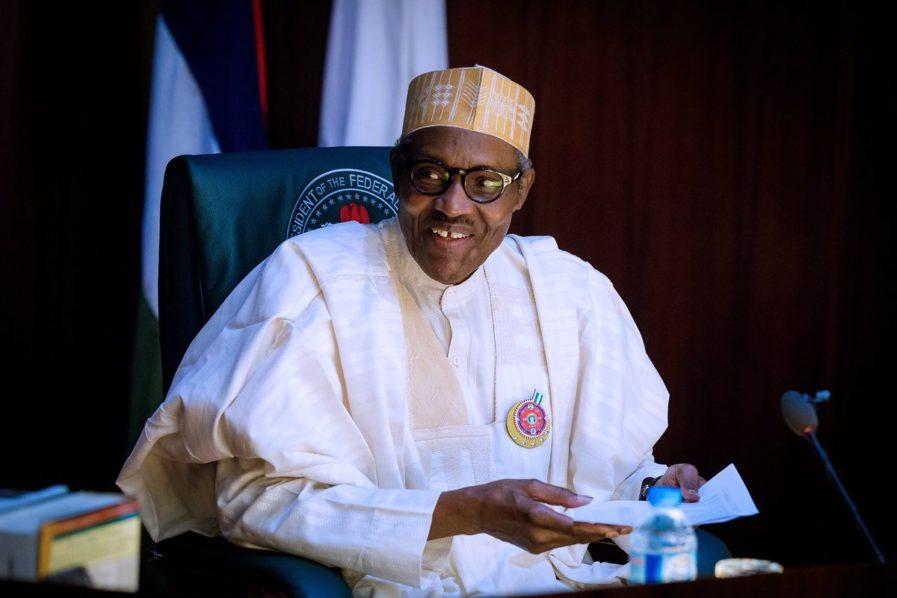
Recall that President Muhammadu Buhari had on June 6, 2018, while recognising Moshood Kashimawo Olawale (MKO) Abiola, posthumously, moved the Democracy Day celebration from May 29 to June 12. The late Abiola presumably won the presidential election held on June 12, 1993 but was not allowed to exercise the mandate given to him. In his struggle to reclaim that mandate, he died.
The current Buhari administration came into power on May 29, 2015 and was also inaugurated for a second term in office on May 29, 2019, having been declared winner of the presidential election held on February 23,2019.
Opinions are divergent on the performance of the All Progressives Congress (APC)-led government in the last five years. Whereas some observers believe the nation is still contending with the teething problems of yesteryear, pointing epileptic electricity supply, insecurity, high unemployment rate, high poverty rate, massive corruption in high places, among others, the Federal Government pooh-poohs such assessment.

The administration prefers rather to say that though challenges abound, it has put up a sterling performance in the last five years and that the administration has been on the path of progress. It, however, says it is not resting on its oars to address all challenges since it is still work in progress.
In an apparent move to convince some doubting Thomases that the administration has not been sleeping on guard, the Presidency recently pointed out key areas it believes it has performed creditably.
In a document, ‘Buhari Administration’s Fifth Anniversary Factsheet’, a copy of which was sent to BusinessDay recently, the Presidency listed areas it believes it has recorded a huge success. Such areas include agriculture, making business work, Ease of doing business reform, pension reforms, and monetary, fiscal, trade, immigration, consumer protection reforms.
It noted that a number of Executive Orders signed by the President since 2017 has helped a great deal in shaping the economy and restoring sanity to the system. According to the document, successes have also been recorded in the areas of infrastructure- (power, transport- road, air, water, railway, etc), and in the Oil & Gas sector.
It also said that the administration has continued to invest in people as the Social Investment Programme (SIP) has remained the largest and most ambitious social safety net programme in the history of Nigeria with 12 million direct beneficiaries so far.

Other areas where great success has been recorded include healthcare, Science, technology & innovation, sports, creative industry, new vision for the Niger Delta, anti-corruption and transparency, justice reforms, prison reforms, security, diplomacy and international relations, and the coronavirus response.
In 2015, the APC couched its campaign on the “change” mantra. It promised Nigerians succour and a paradigm shift from way of doing things in the country.
In 2019, while seeking a re-election, President Buhari and his party anchored their manifesto on ‘Our Vision for a New Nigeria’. It made critical promises cutting across many spheres of national life. The promise was essentially aimed at taking Nigerians to the ‘Next Level’, which was the catch-word during the electioneering campaign.
Pointing to some of its achievements in office, the administration said that its efforts at diversifying the economy, through Agriculture, have yielded some fruits.
It points to the Anchor Borrowers Programme (ABP) of the Central Bank of Nigeria, launched by President Buhari on November 17, 2015, saying that the initiative has made available more than N200billion in funding over 1.5 million small holder farmers of 16 different commodities (Rice, Wheat, Maize, Cotton, Cassava, Poultry, Soy Beans, Groundnut, Fish), cultivating over 1.4 million hectares of farmland.
According to a recent document that listed some of the scorecards of the administration in the last five years, the ABP has substantially raised local production of rice, doubling the production of paddy as well as milled rice between 2015 and 2019.
“Between 2016 and 2019, more than 10 new rice mills came on stream in Nigeria, while many of the existing mills have expanded their capacity; several new ones are under construction,” it said.
It also said that more than a billion dollars of private sector investments in the production of rice, wheat, sugar, and poultry, animal feed, fertilizers, etc, since 2015.
The Federal Executive Council also gave approval (2020) for a national agriculture mechanisation programme, “the Green Imperative”, in partnership with the government of Brazil and multilateral financing institutions.”
The Presidency also claimed that its ‘Fertilizer Initiative’ launched in January 2017 as a government-to-government agreement with the Kingdom of Morocco, is really paying off. According to the document, more than a million metric tonnes of fertilizer have been produced since 2017, translating into distribution of more than 18 million 50kg bags of NPK fertilizer in the first three years of the PFI).
“Also, 22 blending plants resuscitated with combined installed capacity of more than 2.5m MT, while there is price reduction from 9,000-11,000 per bag, to 5,500,” it said.
The Presidency said that it has done a lot in making businesses work, by initiating several supports for Micro, Small and Medium Enterprises, while launching a series of funding and capacity development initiatives designed to support MSMEs.
“The new Development Bank of Nigeria (DBN) has finally taken off, with initial funding of US$1.3 billion (N396.5 billion); to provide medium and long-term loans to MSMEs. Since 2017, the DBN has disbursed a total of N100 billion through the bank’s 27 Participating Financial Institutions (PFIs) impacting more than 100,000 MSMEs.
“Also, 52percent of loans disbursed in 2019 were to youths and women-owned businesses. Bank of Industry has disbursed more than N400 billion in loans to large, medium, small and micro enterprises since 2016,” the document said.
Other initiatives include, establishment of a N5billion Fund for artisanal miners, as part of the federal Ministry of Mines and Solid Minerals Development’s Programme to boost mining activities in Nigeria; as well as a $20 million Fund to support young technology entrepreneurs in Nigeria
“The MSME Clinics, which brings relevant government agencies together with small businesses operating in various cities across the country, to enable the agencies, provide direct support to these businesses. The interactions allow the agencies better understand the issues facing small businesses, and provide a platform for speedy resolution,” it further said.
The Presidency says that its reforms in the area of ‘On Ease of Doing Business’, has been a success.
The work of the Presidential Enabling Business Environment Council which was inaugurated by President Buhari in August 2016 and the Enabling Business Environment Secretariat (EBES) has resulted in “Nigeria moving up 39 places on the World Bank’s Ease of Doing Business rankings since 2016. And in the last three years, Nigeria has twice been adjudged one of 10 Most Improved Economies in the Rankings.”
It also noted that the Nigerian Investment Promotion Council (NIPC) in 2017completed a long-overdue revision of the list of activities that can benefit from Nigeria’s pioneer status incentive, which grants beneficiary companies a three to five-year tax holiday. The revision, done more than 10 years after the last one, has modernised the list, expanding the tax holiday incentives to qualifying companies in E-commerce, Software Development, Animation, Music, Film and TV.
“NIPC published a compendium of all Investment incentives in Nigeria, making it easier for existing and potential investors to have equal access to the information,” it said.
In the area of solving the perennial problems of pension payment in the country, President Buhari in January 2019 launched Nigeria’s Micro Pension Scheme which allows self-employed persons and persons working in organisations with less than three employees to save for the provision of pension at retirement or incapacitation.
“The Buhari’s administration is prioritising the payment of pension arrears owed staff of current and privatised/defunct Federal agencies.N54 billion was released to settle outstanding 33percent pension arrears (the 33percent pension arrears date back to 2010 when the minimum wage was increased to N18,000),” the document said.
It further explained that the Delta Steel Company (liquidated in 2005): 3,542 pensioners have now been placed on the payroll, ending a 13-year wait for their entitlements. In NITEL, 9,216 pensioners are now pay rolled, after more than a decade of neglect.
It also said that the Retired Biafran Police Officers, dismissed by the Federal Government in 1971, after the Civil War ended, and pardoned by President Olusegun Obasanjo in 2000, were paid their pensions, approved by President Buhari. It recalled that about N571.56 million was paid to a total of 174 beneficiaries in October 2017.
“In Nigeria Airways, President Buhari approved the release of N24 billion in September 2018, for the settlement of 50percent of workers disengaged when the airline was liquidated in 2003/4,” it said.
Other areas of reforms said to have recorded huge successes include ‘Monetary, Fiscal, Trade, Immigration and Consumer Protection.’
It noted that the administration launched a new Tax Identification Number (TIN) Registration System in 2019.
“For the first-time Nigeria has a consolidated, unified database of all taxpayers (individual and corporate), across all states. This new system is the product of increased collaboration between FIRS and States’ Inland Revenue Services (through improved sharing of information, and an integration of databases, among others)
“The new TIN Registration system leverages on existing taxpayer data available from databases of multiple organisations like Corporate Affairs Commission (CAC), Banks through Bank Verification Number (BVN), National Identity Card Management Commission (NIMC) and others,” the document said.
In the area of transport, power and health infrastructure, it said: “Three major rail projects inherited from previous administrations have been completed and commissioned: Abuja Metro Rail and the Abuja-Kaduna Rail, and the 327km Itakpe-Ajaokuta-Warri Rail, started in 1987, have been completed in 2020. A fourth Rail Project, the Lagos-Ibadan Rail Project, kicked off in 2017, and is due to be completed in 2020. The tracklaying for the main component of the project was completed in March 2020”.
According to the documents, “In May 2018, the Federal Government launched the Presidential Infrastructure Development Fund (PIDF), under the management of the Nigerian Sovereign Investment Authority. The PIDF kicked off with seed funding of US$650 million, and has already disbursed funds for three critical road projects: Second Niger Bridge, Lagos-Ibadan Expressway, and the Abuja-Kaduna-Zaria-Kano Expressway. Nigeria Sovereign Investment Authority (NSIA) in March 2018 invested US$11m to establish a world-class Cancer Treatment Center at the Lagos University Teaching Hospital (LUTH), which commenced operations in 2019”.
“Work is ongoing on two US$5m Diagnostic Centres in the Aminu Kano University Teaching Hospital and the Federal Medical Centre, Umuahia. Abuja’s Light Rail system has been completed; it connects the city center with the Airport, and the Abuja-Kaduna Railway Line.
“New Abuja and Port Harcourt International Airport Terminals completed, in Q4 2018. New Lagos and Kano International Airport Terminals scheduled for completion in 2020. All were inherited from the previous administration at various stages of completion, and in some cases required project redesign and revision. The Buhari Administration successfully completed the reconstruction of the Abuja Airport runway within the scheduled six-week period (March – April 2017), and will complete the reconstruction of the Enugu International Airport Runway in 2020,” it further stated.