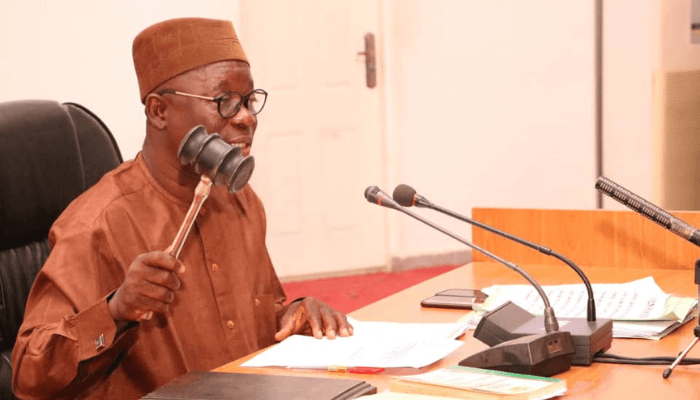
Nasarawa State governor, Abdullahi Sule, said with the impact of COVID-19 on the economy, the state would leverage agriculture during the post-COVID-19 period in order to provide employment opportunities for youths in the state.
He observed that the post-COVID-19 would be the most challenging period on the already fragile economy for Nigerians by the time the pandemic was over.
Also, the state government says it has reached an agreement with the Lower Benue River Development Authority (LBRDA) to engage about 2,500 youths who will cultivate rice farm of the CBN/NIRSAL Agricultural Youth Empowerment programmes in the state.
He disclosed this when he toured Doma Dam and inspected the 500 hectares of land allocated for youth empowerment in agriculture in Doma Local Government Area of the state.

READ ALSO: School reopening: Five things parents, governments, others need to consider
The governor, who visited the facility in the company of the managing director, LBRDA, Mohammed Addra, said the efforts as part of his commitment to mitigate the impact of COVID-19 on the economy of the state.
He disclosed that Nasarawa, being an agrarian state will seriously leverage on agriculture during the post-COVID-19 period, in order to provide employment opportunities for youth in the state.
According to Sule, this has become necessary to undertake a feasibility tour of the area in order to expedite action on his administration’s youth agricultural programme.
The Governor, however, entertained the fear that “once COVID-19 is over, the country’s fragile economy, is going to face some major challenges, particularly economic challenge, and that Nasarawa State is going to be at the receiving end when that happens.”

Sule, therefore, explained the need for the state to hasten action on its commercial agriculture programme, as well as small scale holders for youths in the state
“Just recently, the state entered into an agreement with the LBRDA, to access 500 hectares of land around the Doma Dam, which he said, will be partitioned into one hectare each for the CBN/NIRSAL youth empowerment programme.
“I am happy with what I have seen. It’s a lot of work that needs to be done to convey water from the dam all the way to the 500 hectares given to us, so that we can irrigate, and will be able to carry out two seasons of rice farming,” he stated.
The governor, however, said a lot of work needs to be done in that direction to enable the youths to cultivate rice in two seasons.
“I felt it was necessary for me to come and see the location of the dam in connection to the land given to us. To see what we need to do, are we going to irrigate? Are we going to cultivate rice so that we have two seasons of rice? Instead of one season if it is rain-fed.
“With the dam, we can have irrigation. So I want to see opportunities for the irrigation. Is the dam supposed to be feeding the field by gravity or we need to be pumping? Do we have all the structures for pumping into the field for irrigation? These are all the opportunities that I came to see. And so far so good, I am happy with what I have seen,” he said.
The Governor was emphatic that he desired the youths to have two seasons of rice farming so that they can be able to earn throughout the year, with the Doma project expected to accommodate 1000 youths.
He disclosed further that Akwanga Local Government was another location for the youth empowerment programme in agriculture, around the Mada River, where another 1500 youths would be engaged.
“My whole idea is that we want to make sure that the youth are self-employed throughout the year and then we will be working towards our food security programme,” the governor said.