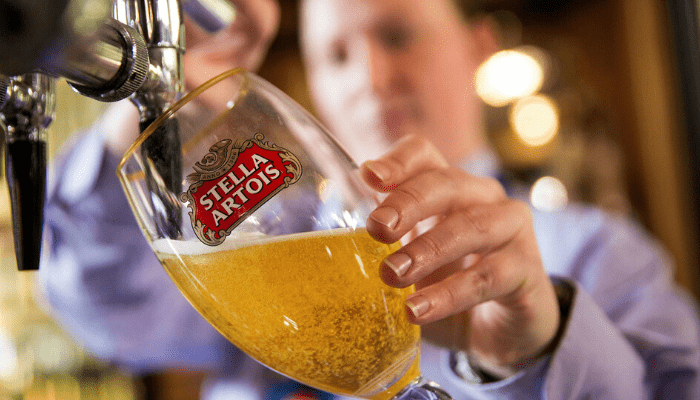
The world’s largest brewer Anheuser-Busch InBev has warned of a “materially worse” second quarter after it sold almost a third less beer and other drinks in April as the coronavirus crisis closed bars and restaurants across much of the world.
The brewer of Budweiser, Stella Artois and Corona said on Thursday that global volumes dropped 32 per cent year on year in April, following a first quarter in which they fell 9.3 per cent as the virus began to take hold.
The figures provide a marker of the pandemic’s impact on global drinking habits, with consumption at home failing to compensate for the closure of nightclubs, pubs, restaurants and bars. Some countries, such as Mexico and South Africa, have also restricted production of alcoholic drinks.
AB InBev’s revenues dropped 5.8 per cent in the first quarter — slightly worse than analysts had expected — to $11bn, taking the company to a normalised loss of $845m, down from a $2.4bn profit a year earlier.

The brewer said the slump in beer sales had prompted a series of cost-cutting measures including “the renegotiation of commercial contracts where possible, including sponsorships”. AB InBev’s beer brands sponsor the Premier League, Spain’s La Liga and Italian champions Juventus, along with football, baseball, hockey and basketball leagues in the US.
Carlos Brito, chief executive, said the brewer was in talks with leagues after many playing seasons were postponed or cancelled because of coronavirus. “If the season is delayed it doesn’t make sense to spend money now, and if there will be no season we are not going to spend any money. We will have to see how we do with the contract terms — what we are trying to do is find solutions that are win-win for the leagues,” he said.
The company said, however, that “early signs of recovery” were emerging in beer markets hit earlier by Covid-19, such as China and South Korea, with reopenings taking place from March. Volumes in China were down 17 per cent year on year in April, compared with a 46.5 per cent drop in the first quarter.
In the US, Canada and western Europe, the brewer said it had experienced an “uplift in sales” through retail stores “as consumers prepared to enjoy our products at home, though it is too early to determine the sustainability of this trend”.
Online sales through direct-to-consumer platforms such as Zé Delivery in Brazil, Beer Hawk in the UK and Saveur Bière in France were gaining ground, said AB InBev, although ecommerce makes up only a small part of the company’s overall business.

Another drag on the company’s numbers was a $1.86bn mark-to-market loss linked to the hedging of share-based payment programmes for executives. The same derivatives had resulted in a $951m gain in the same quarter a year earlier.
AB InBev’s shares were up 1.55 per cent to €39.56 in Brussels, though they have shed more than 46 per cent of their value since the start of the year, weighed down in part by the company’s debt levels: net debt was $95.5bn as of December 31. Last month it said it would cut its final dividend by half, to €0.50 a share.
?