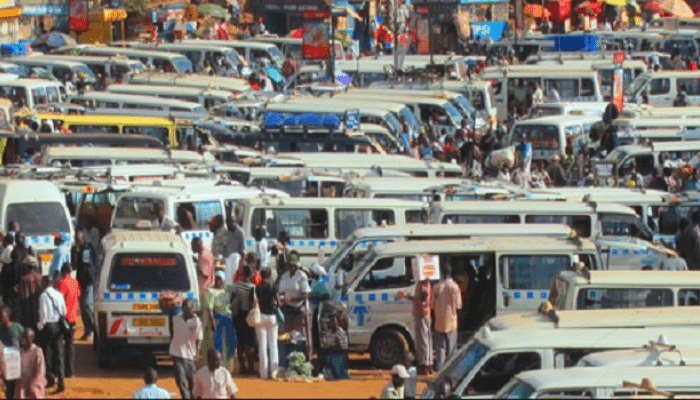
Vehicular traffic resurfaced in many parts of Lagos metropolis last Monday as commercial and business actiivties is gradually returning to normalcy in various parts of the city with commercial bus drivers yet to comply with the new transport policy announced by the state government to mitigate the negative impact of the global coronavirus pandemic (Covid-19).
Checks by BusinessDay transport reporter who drove round major roads of the state as early morning on Monday following the partial easing of the lockdown by the state government in line with federal government’s directive shows that commercial bus operators have not started complying with the 60 percent passenger capacity and wearing of face masks by all occupants.
However, a drive on Lagos-Badagry road, Agege Motor Road, through the Third Mainland bridge to Lagos Island and terminating at Apapa shows that while the 14-seater buses that use to carry four passengers on a row have now reduced to three instead of two in a row as stated by the latest transport to meet the 60 percent full capacity directive by state government.
Read also: Covid-19: France to discard 10 million litres of beer not consumed due to lockdown

Under 24 hours into the trooping out of commuters on the road, the provison of hand sanitizers by the commercial bus operators to their passengers is yet to fully take effect.
Following last week Monday’s gradual easing of the lockdown announcement by President Muhammadu Buhari in the federal capital territory, Ogun and Lagos states which commenced this week Monday, the Lagos state government introduced new guidelines to prevent a further spread of the Covid-19 virus.
Commissioner for transportation, Frederic Oladeinde said the new guidelines are proactive measures put in place by governor Babajide Sanwo-Olu to curtail a possible spread of the deadly virus among the commuting public through transportation activities when gradual ease of the lockdown commences.
Details of the public transportation guidelines as stated by the transport commissioner explained that effective from Monday, May 4, all commercial and commuter operations within Lagos shall be between 6a.m and 7p.m daily.
Oladeinde asserted that, it is mandatory for all commuters to wear nose covers, wash their hands with soap under running water and, thereafter, use alcohol-based sanitisers before and after each trip.
In announcing the immediate suspension of all inter-state operations and movements, the commissioner mentioned that the decision was taken to effectively manage and control movement within the metropolis while measuring the level of success achieved with various strategies adopted by the State Government to control further spread of Covid-19.
He also warned all commercial passenger vehicles not to exceed 60 percent of their capacity at this crucial time, while physical distancing rule must be obeyed both at the parks and in the buses, maintaining that Bus Rapid Transit (BRT) and Lagos Bus Services Ltd (LBSL) must not convey more than 21 passengers, must not permit standing in their buses and should keep the air-conditioning systems switched off always.
“In the same vein, yellow buses, popularly called ‘Danfo’, must not carry more than eight passengers (two on a row), tricycles are to carry just two passengers at the back, while private car owners must also observe the physical distancing,” Oladeinde stated.
While he maintained that, the use of motorcycles, popularly called okada, for commercial activities would not support the physical distancing rule as directed by the Nigeria Centre for Disease Control (NCDC), he further pointing out, therefore, that its operations are disallowed in any part of Lagos State at this period.

BusinessDay traveling experience this week Monday along the Lagos-Badagry expressway and Agege Motor road shows that, the directive on ban of okada as outlined by the commissioner has been completely violated as the operators are seen carrying two passengers and many of them are nor wearing face masks in complete violation of the social distancing order and ban on their operations.