Nigeria, a country that possessed the ‘manifest destiny’ to be the leader of the black race. A country that once paid the salary of the civil service of another in the Caribbeans; sent trained professionals to other countries through the Technical Corp Aid Scheme (TACS), it’s hospitals ranked high within the commonwealth, her citizens were comfortable and never really saw any reason in emigrating to other parts of the world as we now have today.
Nigeria led the fight against the brutal apartheid regime and in fact sacrificed the dreams of her hardworking athletes by boycotting the 1976 summer Olympics in Montreal, Quebec in Canada as a show of discontent against the apartheid regime. Prior to its independence in 1960 Nigeria was already active in the international relations arena and had participated in peacekeeping missions across the globe.
Like most countries of the world, it went through a teething phase of post-independence which included several coups, countercoups and a civil war that lasted almost three years ended in 1970.
An oil boom in the 70s led to the jettisoning of a growing agricultural sector which had greatly helped in infrastructural and developmental efforts across the country.

Some have argued that oil is more of a curse than a blessing as it has been and continues to be the root cause of crises and distrust in the country. Crude oil, an instrument of multiple potentials for a broad revenue generation which ought to be used to develop, maintain and scale other sectors like multimodal transportation, good roads, agriculture, education, tourism, sports and healthcare has been the focus for internally generated revenue. States have had to depend on such revenues – convenient but not enduring – as against developing areas of comparative advantage in agriculture.
This approach mirrors not only the style of leadership but a general mindset of cheap and quick gains with little or no consideration for the rainy day.
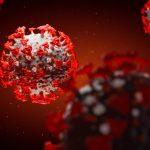
Now a country of about 200 million people and in the wake of Covid-19, the federal government
has reduced cost of petrol from 145 Naira to 123.70 Naira, it has released fund to support the poor
and also gave financial support to all its 36 states. Majority of its citizenry depend on one form of
daily activity or wage to manage to feed on what the little earning can purchase. Business owners as well as the employed still need to leave the confines of their homes to meet varying financial
demands to support themselves and their families. 80% of Nigeria’s employment and about 60% of
the economy are in the informal sector – the majority.
Nigeria’s private sector has been supportive in the ongoing battle against the Covid-19 by setting up isolation centres, donating ventilators and PPEs. Some notable individuals have delivered on
their pledges to donate large sums of money towards tackling the scourge. And, thanks to the people’s communal orientations, we have seen individuals, communities, and foundations distribute food items to the less privileged around them.
A lot of MSMEs are already going under. A fragile economy which continues to produce young, creative and tenacious entrepreneurs is now facing perhaps the toughest phase ever. Some of these entrepreneurs do have bank loans to service but are unable to get to work. Artisans have now resorted to begging to feed their families. Over 40% of adult population remains unbanked.

A stimulus fund for the poor and needy cannot easily reach the targets even if attempts were made to leverage on existing FMCG value chains. Delivery is not guaranteed. We have been unable to develop a robust national database where all citizens’ information can be pulled irrespective of age, social status or location.
Planting season has been affected and we may be heading into a major food crisis which is not only due to the Covid-19 virus but also insecurity and infrastructural challenges. Let’s not heap all woes on the virus. We have had years to tighten up loose ends but neglecting a major sector has exposed us at a really critical time. It will be frustrating again to give in to selective amnesia.Food security has also been threatened by security challenges and now farmers’ movement to and from farms is now more cumbersome, markets are closed, consumption and purchasing power have also
dipped.
As Covid 19 cases continue to increase, we do not seem to have a strategy to monitor when the virus peaks. There is increasing call to lift restrictions due to the effects of the lockdown which cannot be enforced to the letter without the absolute buy in of the people. Increasing agitation due to hunger, job loss, mental health amongst other issues. But getting people back to work will rapidly undo current wins.
What other innovative approach do we have if we cannot adopt a stay home strategy? Even Lagos State Government’s efforts may soon be diminished if cases continue to rise. Hopefully, this serves as a wake-up call to both the people and the leadership. The people must learn to look beyond asking for cheap financial rewards before casting their votes during elections so that the leadership can be held accountable at the end of the day. We have had a lockdown which ought to have been general and with interstate road and air travel restrictions. That was not the case until recently.What then is the point of the lockdown if we are easing restrictions when the disease is yet to peak? People will go out to source for food and then return home with the virus. We have found ourselves between the rock and a hard place.
Lagos State easing restrictions is dangerous and suicidal. It gives a false sense of hope and security.
Let’s not be deceived by the double figure mortality, it’s only a matter of time. With a life expectancy of below 55 years, a lot of Nigerians under 50 years already have major
health concerns. Some high blood pressure, diabetes, renal issues etc.
A number of them require regular visits to the doctor to manage such ailments. These people also fall in the category of those returning to work this week while the younger category will return home to parents of 45 years and upwards. The lockdown has not been thorough, those who were on the roads don’t seem to understand the viciousness of community transmission.
Easing restrictions does not mean we have overcome the virus. And, we witnessed several unmanned police posts while some had tiredlooking police officers. If this was the case in a supposedly full lockdown, then can we ensure compliance in a partial lockdown?We are dealing with a virus which creeps in and devours from within.
Countries lifting restrictions have citizenry that understands the importance of physical distancing and the necessary guidelines. Their governments have invested in welfare programs, healthcare, education, infrastructure, unemployment insurance among others. In our clime, you are responsible for virtually everything. Over the years we have not only witnessed a sheer lack of political will but personal agenda being elevated above the common good. A new administration wants to be seen as active then winds down projects of the previous governments. This continuous
cycle of irrational display drains one to the very core. Everything has to be personal. Ordinary hand
sanitisers must carry pictures and names of donors. Series of ignoble acts in constant competition.
Those interested in running the affairs of this country now know that healthcare must be revamped alongside the economy for them to make any impact. The CDAs need to be mobilized and equipped just like during political campaigns to push sensitization and awareness in a bottom-up approach.
Challenges do offer learning opportunities. One is that those lousy individuals who are quick
to insult along religious and tribal lines and call for war now have a faint idea of what life will look
like when the state fails.Mind you, the ‘big men’ may not be locked within as we have now. Super
markets will not open, there will be no electricity and there will be no clamour for the chance to go
to work. The experiences of the Northeast, Jos or Ife-Modakeke crisis and others should not be
quickly forgotten. Even food will lose its taste. Secondly, we can hope for the best but prepare for
the worst. What happens if the next epidemic or pandemic is airborne. Let’s be honest, we will not
all be in it together. Some probably have ventilators in their bunkers.
Afterall, being wealthy is no crime.
If caution is thrown to the wind, Nigeria and other African countries may become a humanitarian concern because the coronavirus may linger for a long time. Social distancing cannot be effective in communities lacking basic amenities. Some of the youths seeking better education abroad may now find it even more difficult to obtain visas. By extension, it will affect commerce, trade and travel in and out of sub Saharan Africa. Nigeria’s elites as mentioned in bloomberg (https://www.bloomberg. com/news/articles/2020-04-02/ trapped-by-coronavirus-nigerias-elite-faces-squalid-hospitals) may remain locked in the the same endless maze as the rest of
the populace. When the dust settles, hopefully the leadership will have a rethink and ensure to put
adequate structures in place to earn the people’s trust as well as instil discipline. Our challenges are not new but we continuously lack the political will to effect a broad based change.
Jinmi Ajayi
Jinmi Ajayi, founder VDS Farms and Foods Limited, an organic vegetables farm established in 2016.