China has made enormous investments in Africa in the last 15 years. Chinese investments and contracts in sub-saharan Africa total about $300 billion, according to Investments tracker. In 2018, Chinese President Xi Jinping promised to invest a further $60 billion in Africa.
China has extended hands of fellowship to many African nations, investing huge in their economies. It is also a big trading partner to some African countries with its trading volume reaching $166 billion, according to a joint report by Mark Esposito, professor of business and economics at Harvard University Extension School and Terence Tse, an associate professor of finance at ESCP Europe.
They forecast in the report published in London School of Economics Business Review that China-Africa trade will likely continue to increase, reaching an estimated $1.7 trillion in the next 10 years.
While more of China investment and trade could bring enormous economic benefits to the various countries in the African region, they are often viewed with suspicion, Esposito and Tse wondered.

Why is China not receiving complimentary remarks in tandem with its investments and goodwill in Africa? Many of Chinese products in Africa are regarded as substandard and non-durable compared to European products and this has given some Africans the disposition and feeling that if China could export substandard products to the 1.2 billion African population, then the Far East country’s other intentions on the continent are also questionable.
In Nigeria, Africa’s biggest market, Chinese products are everywhere and cut across product segments, still they are regarded as not durable. This affects their price and patronage. Direct users of products will hardly purchase Chinese products unless the alternatives are out of reach. They are usually purchased by contractors for selfish gains or the contractors will try to convince clients on the quality regardless of perception.
Chinese electric cables are no go areas for Nigerian building owners who insist on Nigerian cables as it has been emphasised that Nigeria has best coppers used in making cables. In various markets in Nigeria, traders are trying to avoid Chinese electric wires on the understanding that they are of poor quality with the associated risk.
Read also: 5G’s health risks, myth or real fears?
But corruption which Buhari government promised to fight is really endemic across segments, as it makes it difficult to enforce safety standards in both importation and local production.

However, since China manufactures for other markets, especially Europe and Western world, it is alleged that some unscrupulous elements in China and Africa are conniving to manufacture sub-standard products for Africa, a development which is tarnishing Chinese image. But it is not sure how China has responded to this.
China is strongly making efforts to build robust relationship with Nigeria and other African countries. When President Xi Jinping of China visited Africa recently he announced$60 billion development assistance to the Continent. Nigeria has massively engaged Chinese construction companies but the snag on its products in the continent is a big challenge to Beijing.
The 5G question
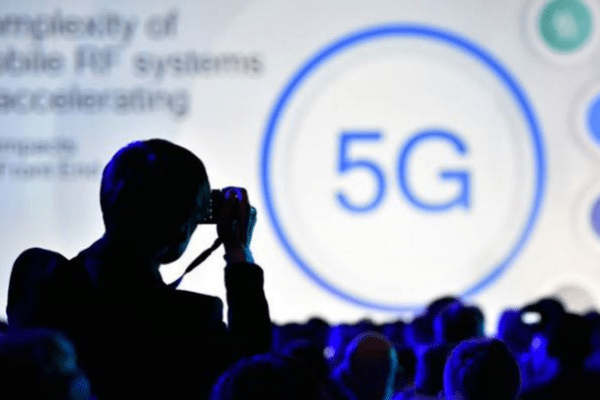
Early November, last year, China launched 5G networks, a move to improve telecommunication services. In the recent years, 5G is said to have attracted significant attention from governments and industries for its vast potential.
With the launch of 5G in November and the discovery of Covid-19 in December, last year, international rumour mill in Europe and Africa started linking the cause of the pandemic to 5G networks. 5G masts were said to be destroyed in Europe. It must be noted that China launched 5G ahead of some European countries.
In a reaction on this, one of those who knows better, Ernest Ndukwe, the Executive Chairman, MTN Nigeria and former CEO of the Nigerian Communications Commission (NCC), Nigeria’s Telecommunications Regulatory Agency from 2000 to 2010, clarified the issue in a newspaper report.
“Let me state to the best of my knowledge that 5G has not been linked to any adverse health effects not to talk of inducing the COVID-19. Any assertion to the contrary is absurd and scientifically flawed. It is also incredibly irresponsible because, in some extreme circumstances, we have seen attacks on telecoms infrastructure, which may lead to disruption of services that are absolutely essential, especially during this time.
“You can simply look at the results of a recent study by the International Commission on Non-Ionizing Radiation Protection (ICNIRP), an independent international watchdog, which confirmed there is no risk of harm to people, including children, from exposure to radio frequencies from mobile networks, including 5G. In its findings, the Commission reviewed 20 additional years of research and echoed previous reassurances from the World Health Organization. These findings have also been re-iterated by the Nigerian Communications Commission who monitor radiation emissions from base stations nationally (none of which are 5G), and have confirmed that they are well within set limits. So, there is no link between 5G and COVID-19 and no link between telecoms services in general and health issues.”
Other international scientists have re-echoed similar view debunking the link claims with UK Prime Minister spokesman describing the claim as ‘’complete nonsense’’.
Irritated over this unconfirmed belief of Covid-19 and 5G in some Nigerian quarters, Owei Lakemfa, a veteran journalist writing recently explained that “The 5G network is basically an improvement on the high-speed mobile internet (4G) which was an improvement on the voice and mobile data (3) itself an advancement on the Digital Voice (2G) and the Analogue Voice (1G).
“ In rolling out 5G which some countries like South Korea, Britain, United States, Switzerland, Finland and Germany have done, the approving authorities put into consideration basic issues like health, security, labour, commercial and social implications. The 5G will not be decided by rancorous debates, rumours or fake news. It is the logic of science, the pull of technology, demands of knowledge and commerce and the inevitability of an idea whose time has come. It should be clear to all that 5G is global and not a Chinese invention”
The Covid-19 challenge
China’s international image was further slapped by the discovery of coronavirus on its land of Wuhan. The pandemic has so far claimed about 125,000 lives globally without stopping.
Some individuals in Africa are overlooking the huge resource commitment by China in various economies but the thinking is that China is not only exporting sub-standard products but disease also.
The suspicion against China is so deep that the country’s effort to support Africans in the fight against coronavirus is equally viewed with suspicion. In Nigeria, doctors have threatened to review their “participation in the fight against COVID-19” if a government decision to purportedly invite Chinese medical team is not rescinded. Government has denied inviting the Chinese medical team.
“The controversy comes as rumors have spread on social media in Nigeria and other countries that medical equipment received from China have been contaminated with the coronavirus. In Ghana, false information about Chinese-made medication that can cause deaths has also been widely shared on WhatsApp”, writes Kwasi Gyamfi Asiedu in Bizcommunity.
China should be bothered about its reputation
China name is not too welcoming in Africa in spite of the country’s enormous investments and assistance to Africans. Poor perception of China is rubbing off on certain things it does with Africa and the country should be concerned.
Tayo Odusote, Deputy Director at CMC Connect, a notable PR firm in Nigeria also agreed that Chinese products have poor perception in Nigeria. He traced the poor perception of Chinese products to the era when Nigeria was coming from made in Taiwan. “When Taiwan products faded out, it was replaced in Nigeria by Chinese product, most of which were sub-standard”.
China economy and technology grew on imitation and copying and today its products have extremely poor ones, averagely better products and the good ones. Odusote said China good products follow the American standard as America gave them specifications for importation of Chinese products to USA.
He said the production and exportation of substandard products to ready markets benefits China. Odusote said the substandard products which thrive on the back of poverty in many African countries provide labour to 1.2 billion population of China. “Where there are restrictions for importation, some Chinese immigrants, some of them illegal establish factories in remote areas to produce en masse what they know are substandard products and repatriate the money to their economy”
Odusote therefore wondered why China, in the face of the toga that its products in Africa are substandard has not made any efforts to correct that impression. “This perhaps indicates that it has accepted that its products are substandard in Africa”
But CEO of Indigo, another PR firm, Bolaji Abimbola argued that China being a manufacturing hub, manufactures according specifications. He said today, many consumers cannot distinguish Chinese and Japanese or Korean products. “It is said that importers usually go to China and demand for certain specifications and China ships to Africa what Africa demands”
He said that it may be worrisome to place Chinese products as substandard, but said that China may not be bothered about the toga as it still remains a global manufacturing hub producing various quality products for different markets.
Bolaji who said that importation or manufacture of substandard products shows the value Africans place on themselves, also challenged standard regulatory agencies to ensure standards are maintained.
As China is committing huge investments in Africa, it should equally be bothered about its image in the continent.