The effort to provide cash relief to millions of Nigerians whose income sources have been adversely affected by the coronavirus could benefit more if it is carried out using the Bank Verification Number (BVN) system rather than the physical cash disbursement the government has employed, many people have said.
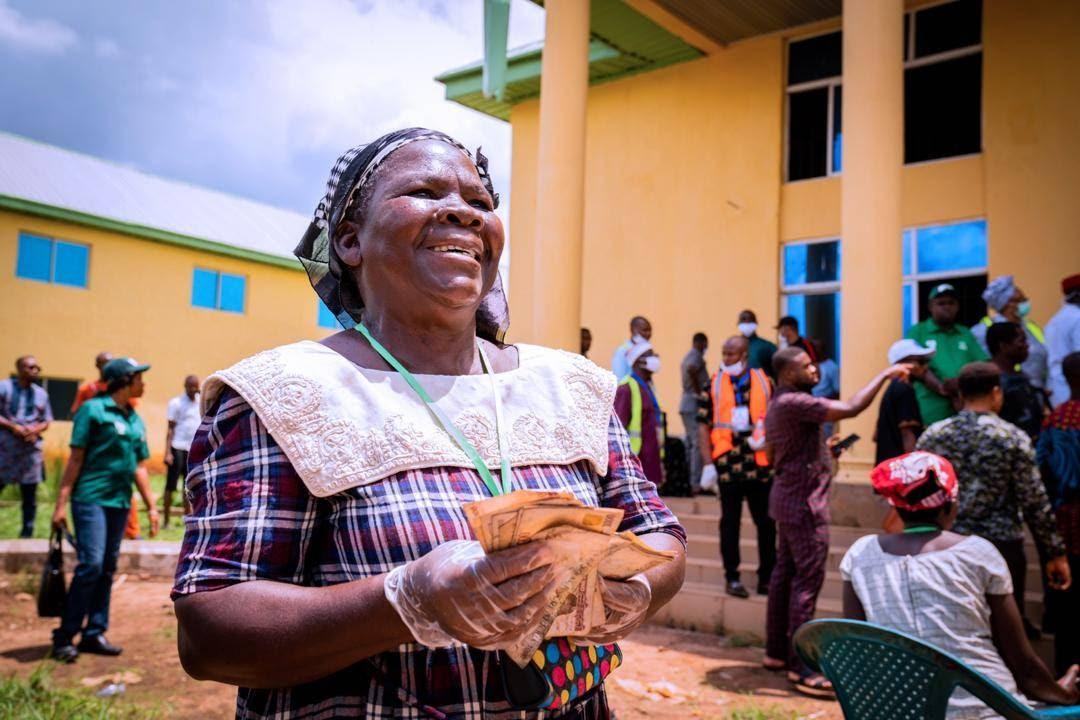
The Nigerian government in partnership with development agencies have been disbursing the sum of N20,000 to vulnerable communities. The programme which is being coordinated through the National Transfer Social Safety-Nets Coordinating Office (NASSCO) targets only one million vulnerable Nigerian households on the National Social Register (NSR). The National Transfer Cash Officer (NCTO), a unit of NASSCO, works with various state governors to develop the NSR of poor and vulnerable people in 35 states and the Federal Capital Territory (FCT).
Notwithstanding how much has been disbursed, many Nigerians say the cash stimulus is not far-reaching enough as it ignores the population of Nigerian employees forced to stay indoors for a whole month with nothing to do.
“Federal and State governments would have to think very carefully about the tension between public safety and hunger during the lockdown,” said Joe Abah, Country Director of DAI. “There are no easy answers. Governance is often about having to choose between two horrible choices. It won’t go away.”

He adds that any programmes to alleviate the effects of COVID-19 on the poor cannot focus on the rural poor alone.
“It must also include the urban poor. The rural poor can still go to the farm and get food. The urban poor living in slums share toilets and kitchens and can’t go out to get food,” he said.
Many Nigerians say that the cash stimulus will achieve better results if done via BVN.
Read more New year resolution for CBN scaling BVN accounts beyond 100m in 2025

BVN is an identification system that gives each customer a unique universal identity in all commercial banks in Nigeria.
As of 29 December 2019, only a little over 40 million active bank accounts were linked to a Bank Verification Number (BVN), according to data from Nigeria Interbank Settlement System (NIBSS).
“You have about 38.5 million people on the BVN already,” Segun Sowunmi, former spokesman for the People’s Democratic Party’s Campaign Committee in the last general elections said in an interview. “You can look at their bank balances and get the idea of those who cannot sustain themselves in the lockdown and put something in there directly.”
The use of BVN for the cash palliative removes the problem of transparency that has been raised. NASSCO had on Tuesday published a list of families on the register in order to encourage transparency.
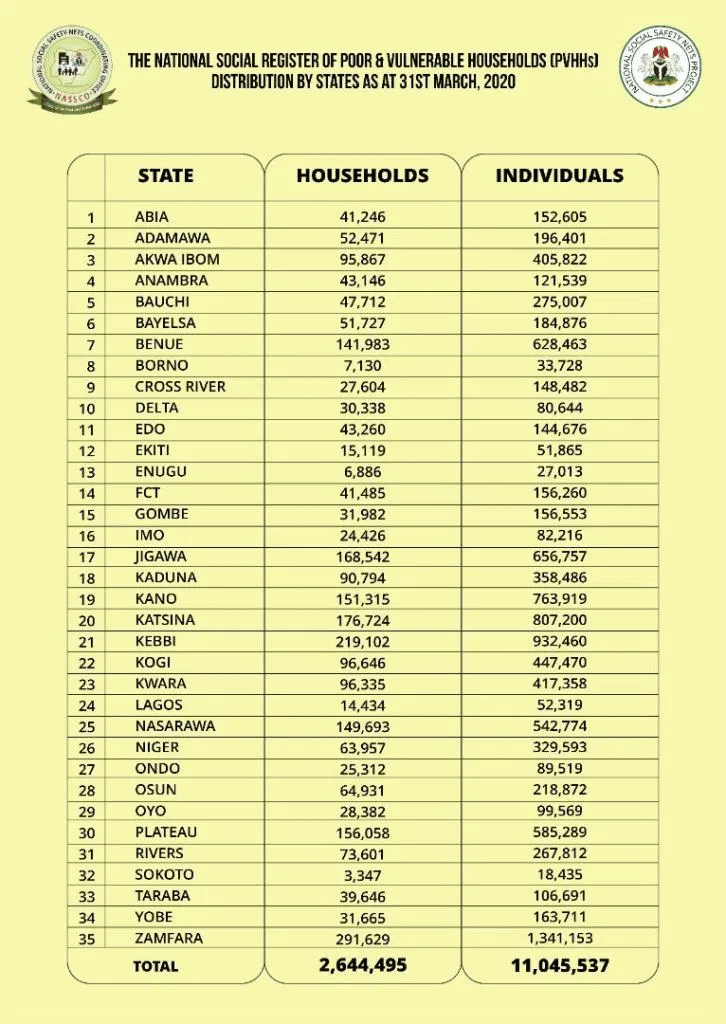
According to the agency, the states yet to be captured like Ogun and Ebonyi are still in the process of building their register. The register notwithstanding, the requirement that the cash is disbursement by hand at physical locations still raises a lot of problems that BVN and digital payments can easily address.
“If you can onboard people into a National Social Register of Poor & Vulnerable Households and give ID cards, why couldn’t you just onboard them into a digital payment scheme at the same time to ease disbursements?” said Victor Asemota, founder of SwiftaCloud.
The Central Bank of Nigeria (CBN) had in December 2019, moved to increase BVN accounts by creating the lite and premium account classifications. The BVN classification allows both rich and poor people access to financial services.
Using this system, with as little as a name and phone numbers, thousands of Nigerians can get a BVN lite. The financial regulator can easily enlist the help of mobile network operators (MNOs) to get more Nigerians on BVN in a matter of minutes. Unfortunately, the CBN is still dilly-dallying on issuing Payment Service Bank (PSB) licence, hence the MNOs have little incentive to want to help the banks or financial technology firms get more customers.