The economy is undoubtedly in a fragile state. The spiralling effect of coronavirus (COVID-19) on the global economy has complicated matters for Nigeria. Crude oil prices have declined by 47 percent this year and at $36 per barrel will strain the performance of the 2020 federal budget which is benchmarked at $57 per barrel. For example, it will affect the foreign reserves and increase the cost of borrowing planned to bridge the budget deficit. Despite the gloomy situation there are bright spots of opportunities.
Earlier this month, Actis, a London-based private equity firm, acquired Rack Centre, a leading company in the cloud computing business serving the market in West Africa. This investment is commensurate with its plan to inject $250 million into Africa data centres over the next three years given a boom in the African cloud computing market. The proliferation of smartphones and mass adoption of business software on the continent has led to a soaring demand for data centres to power the technology.
Investors also see opportunities in the insurance industry of Nigeria. About seven private equity firms have begun taking position in the underwriting business of insurance companies following the latest recapitalisation exercise in the industry. The opportunity here is obvious. Insurance penetration in Nigeria, with a population of approximately 200 million, is less than 1 percent compared to South Africa’s 17 percent. Hence, there is an existing market and room for growth. Verod Capital Management Limited and LeapFrog Nigeria Insurance Holdings Limited are among the firms stepping up to seize this opportunity.
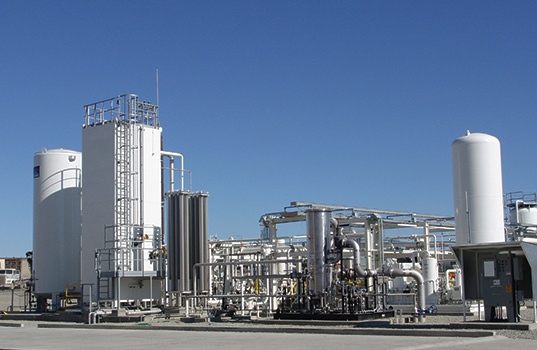
Also, in a move that will increase the amount of gas available in Nigeria to 4 billion standard cubic feet per day from 1 billion, Aliko Dangote plans to invest over $2 billion dollars in two sub-sea 550-kilometer (341-mile) pipelines running from Nigeria’s oil and gas hubs in the Niger Delta region to the commercial centre, Lagos. This move is likely going to be backed by global giants like Carlyle Group LP and Blackstone Group LP, the world’s two biggest private-equity firms. According to Dangote, “boosting domestic supply will help increase electricity generation in a country where power cuts are common and about 70 percent of electricity plants are fuelled by gas.”

These investments are being made on the premise of clarity and certainty about policies and regulations. Clarity about the future prospects of cloud computing, insurance and gas in Nigeria, and the certainty that regulators won’t move the goalpost overnight. These investors realise that data is the new oil; that gas can power the economy and that demand for insurance is huge. They all see gold in Nigeria, the largest economy and market in Africa.
The Nigerian reality, however, is the extra arduous heavy lifting investors must do. Opportunities abound but to extract them investors must contend with obstacles such as inconsistent policies and uncertain regulations. Policy and regulatory obstacles make investors in Nigeria look like artisanal gold miners digging for gold with crude, out-dated and inefficient instruments.
If the business environment is investment-friendly it will attract private capital. Data on foreign direct investment compiled by the Nigerian Bureau of Statistics shows that $922 million was invested in private equity last year (an annual rate of minus 16 percent). For an economy that desperately needs to grow this is nowhere enough to jumpstart economic growth.
President Buhari and his advisers must take note. Government has no business doing business. Its responsibility is to provide policy clarity and regulatory certainty. It must get out of the way. It will make it easier and less risky for investors.