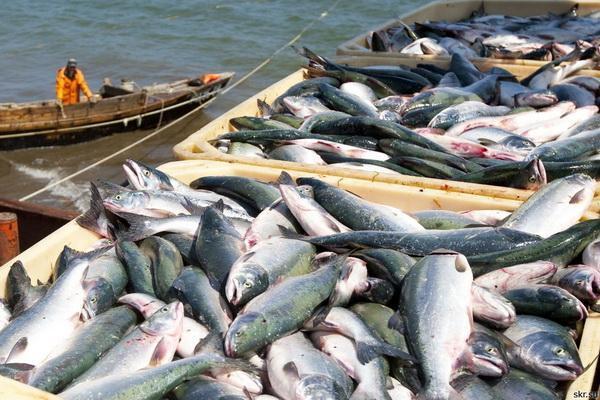
The continued failure of the Federal Government to provide the United States with its Self Reporting Tool (SRT) requirement for smoked catfish (silurifomes) export is hurting fish farmers.
The US had since March 2018 placed a ban on the importation of Nigeria’s catfish because the country had failed to submit the SRT requirement before its due date.
Since it came into force, the ban has shrunk market access for fish farmers, deterred new investments into the industry, and threatened the government’s export drive targets.
“The ban is hurting catfish farmers and we are now finding it difficult to even access the European market because of it,” Oloye Rotimi Olibale, president, Catfish and Allied Fish Farmers Association of Nigeria (CAFFAN), said.

“Many of us took loans from the banks to invest in processing to take up opportunities in export. We are now unable to meet our loan obligations because our market size has reduced and this has impacted our income,” Olibale said.
He blamed the government for not taking prompt action in addressing the issue and ensuring that the ban is lifted within the shortest possible time.
The SRT, a prerequisite for trade, is the process of determining whether a country’s food safety inspection system is equivalent to that applied domestically in the US, according to the United States Department for Agriculture (USDA).
“It has been difficult for us catfish farmers since the ban. Our profit has reduced and this is because we generate our revenue mainly from export,” Richard Agetu, co-founder, Richsi Nigeria Limited, makers of Ejazuki smoked fish, told BusinessDay.
“Currently, we are just focused on the local market since we can no longer export to the US, Canada, and even Europe,” he said.

Agetu said his business plan to expand production owing to the high demand for smoked catfish by African diaspora in the US and Canada has been affected by the ban.
Nigeria’s status on export of silurformes fish and other fish products to the US has not changed, the USDA Food Safety and Inspection Service (FSIS) said.
“Nigeria has been ineligible to export siluriformes fish and fish products to the US due to deficiencies found during the initial stage of the equivalence process,” said Veronika Pfaeffle, public affairs specialist, FSIS, in an emailed response to BusinessDay inquiries.
The US had in November 2019 held a webinar for countries affected by its ban to address all grey areas, a source familiar with the issue told BusinessDay.
“FSIS will continue to work with Nigeria if they want to continue to pursue the process to be deemed equivalent. Until that time, Nigeria will not be eligible to export these products to the US,” Pfaeffle said.
The UN Food and Agricultural Organisation (FAO) put the value of the Nigerian aquaculture industry at $848 million (N260bn) in 2017.
The country’s fish production by the three subsectors (artisanal, aquaculture and industrial) is at 1.03 million metric tons (MT) yearly, according to data from the National Bureau of Statistics (NBS).
The artisanal subsector has the highest with 694,867MT, followed by aquaculture with 316,727MT, and industrial with 15,464MT.
Nigeria exports about 100,000MT of catfish yearly to the US, Canada, and Europe out of its 316,727MT annual aquaculture production, according to the Nigeria Catfish Association.
Growth in the fishing subsector shrunk from 7.09 percent in the first quarter of 2019 to 1.09 percent in the second quarter, and grew marginally to 1.68 percent in the third quarter, data from the National Bureau of Statistics (NBS) show. Fourth quarter results are yet to be published by the state-owned statistical agency.
“The document that the US is requesting is simply a principle of equivalence. It means that Nigeria is promising the US that it has examined, monitored, sampled, and analysed residues from farmed fish and assuring that they have passed the test,” said Bisi Adepegba, former director, Department of Fisheries, Federal Ministry of Agriculture.
“Quality assurance is not administrative, it is science and most of the people at the Ministry of Agriculture do not understand. This is why we keep failing to meet the requirement,” Adepegba said.
She said until there is a framework in place to collect farmed fish residues to analyse, the country would continue to face a similar challenge.
Ime Umoh, director of fisheries, Ministry of Agriculture, did not respond to BusinessDay’s questions on the ban because, according to him, he needed to get an authorisation from the minister before he could comment.
Many export commodities from Nigeria are rejected in many parts of the world owing to poor practices by Nigerian exporters and improper use of chemicals.
The European Union had banned Nigerian beans since 2016. The ban was supposed to be lifted in June 2019, but engagement with the EU has been poor and the economic bloc is yet to unban it.
JOSEPHINE OKOJIE