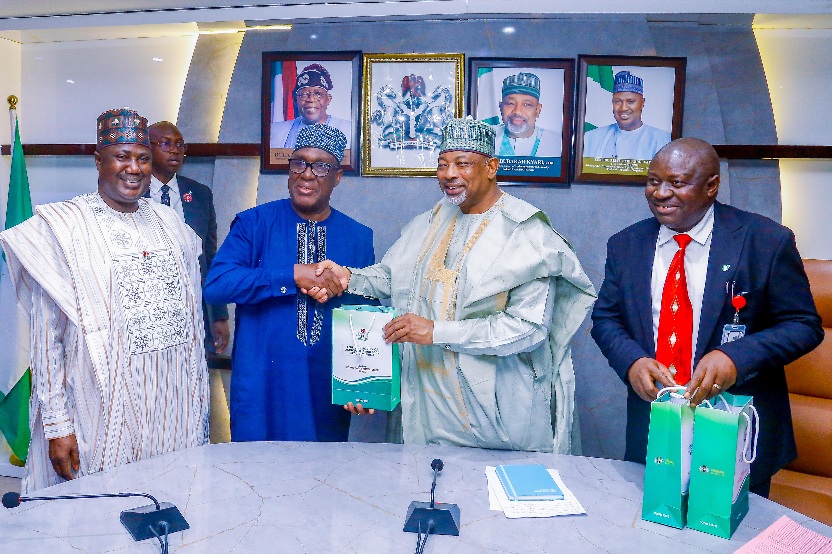
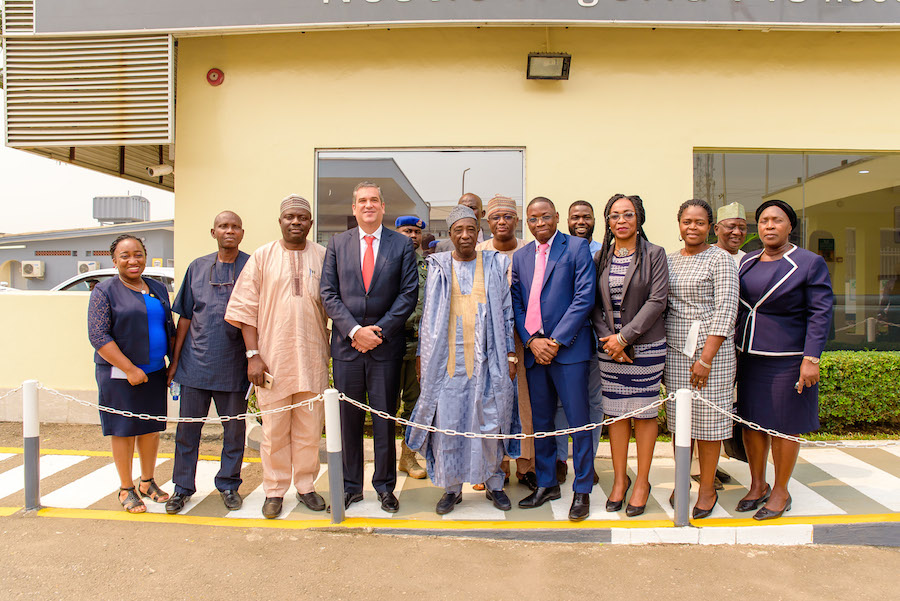
Not much has been heard in terms of strategic or policy direction since Sabo Nanono became minister for agriculture and rural development, but this Monday, an opportunity presented itself to hear from the minister, while on a visit to Nestle Nigeria Plc’s head office in Lagos. Speaking with selected journalists after a closed door meeting with Nestle’s management team, Nanono touched on a few expectations those keen about agriculture should expect this year, and for the foreseeable future.
The visit according to the minister was the first he will be making to the private sector in the South, describing his choice of Nestlé as predicated on the company being, “a huge agro-allied industry and I think it is one that can save the country from the huge unemployment situation”.
Agribusiness Insight picked seven key things from this meeting and one of these had become particularly popular in the course of the week, a claim that Nigeria will start exporting rice in two years. However, the minister did not say this as a matter of certainty. The takeaways are as follow:
Intervention of CBN, NIRSAL and others will drive development, not ministry’s budget

Asked how the ministry would deploy this year’s budget of N138 billion to advance agricultural development in the country, the Minister said “In the first place, do not worry too much about budget.”
According to him, while the budget is important, “it is a guideline, but probably in terms of agricultural intervention, think of what the CBN, NIRSAL and other agencies are doing, which are in billions, and probably ten times more than the ministry’s budget.”
He also said a lot of funding will be coming into the country particularly by virtue of an ongoing agricultural mechanisation programme, which he describes as a priority area for government.
“This budget, just probably is an appetizer, but the real money comes from CBN, NIRSAL and foreign investment coming massively into the country, and we will see results in the next one or two years,” he said.
Does this mean the agric ministry is ceding its responsibilities to the Central Bank of Nigeria and others?

Nigeria ‘may’ start exporting rice in two years?
Rice has been the focus of government in the last four years. It was therefore not a surprise that the minister was passionate to speak about this staple crop widely consumed by Nigerians. The summary of the minister’s discourse on rice is that “in the next two years we may even export rice”. The comment, even as it was not with a tone of certainty, was also not backed with statistics reflecting current levels of national demand and supply, production capacities, and estimates that show Nigeria will have excess enough to export.
According to the minister, there are currently 11 rice-milling plants of capacities ranging between 180 to 350 tons per day in Kano. He also says another mill with a capacity of 400 tons per day is to be opened soon. Apart from these, there are smaller ones, about 34 of them, and the clusters in different areas.
Before border closure, he explained most of these rice-milling plants were partially operating but are now operating at full capacity and also expanding, not only within their premises but also to other states.
On the basis of his observations (which focused on Kano from his analogy), “if we maintain the same momentum, in the next two years we may even export rice.”
Agric policy ‘will not change’
The Agriculture Promotion Policy (2016 to 2020) terminates this year and the minister was asked what is to be expected from the next policy.
“It is very simple, the main policy thrust remains the same, feed and create a platform for value chain,” he said. “That is the focus in whatever form you look at it, and does not deviate from that.”
That was all the minister said about what any agric policy coming after the APP would entail, and could perhaps, be all stakeholders in the sector should expect.
50 thousand extension agents to be trained to support farmers
Companies that source raw material locally have two major requirements; getting the right quality and quantity so that they have no need for importation. The question therefore was how the ministry will provide a framework to achieve this objective.
According to the minister, “we lack extension agents in Nigeria, and need them to guide the farmers on how to use fertilisers in different soils.
“When there are enough extension agents, they are the ones that will guide the farmers on how to grow each crop. They know the level of chemical application; pesticides etc, but unfortunately these are things we are lacking. That is why we are embarking on training of 50,000 extension workers over the next three years.”
With the training of these extension agents, the minister expects the quantity and quality issues in farm output to be substantially addressed.
Nigeria’s success in agriculture is critical for West Africa
“We are quoting Nigeria to be about 200 million people, in the next three decades we would reach about 400 million People. So how do we feed them? Nigeria controls over 70 percent of the West African regional GDP so what we do in the agricultural sector is not only critical to our country but also important to the neighbouring countries,” said Nanono.
The minister explained that considering Nigeria’s huge population (and the regional expectations); the country has to find solutions through “agricultural development and agro-allied value chains”.
Increasing production in the agricultural sector is not difficult, according to Nanono, rather, “linking the agricultural sector with the agro-allied industry is very critical as it is the only way to address the high unemployment challenges and also increase productivity”.
Without these linkages, Nigeria will not make much progress, he said.
Support for industry is key
One thing Nanono, the agric minister stressed in some of his comments, was the desire to create an enabling environment for industrial users of agricultural products to thrive, by ensuring production is not only ramped up, but achieving linkage between producers and processors.
“The synergy between the ministry and industry like your own must be highly valued, consistent, proactive and consistent. We must cooperate and support each other because you need us, and we need you more,” Nanono said.
How much of this is achieved will only become clear in the months and years to come.
Real farmers, processors should get CBN loans – Nestle CEO
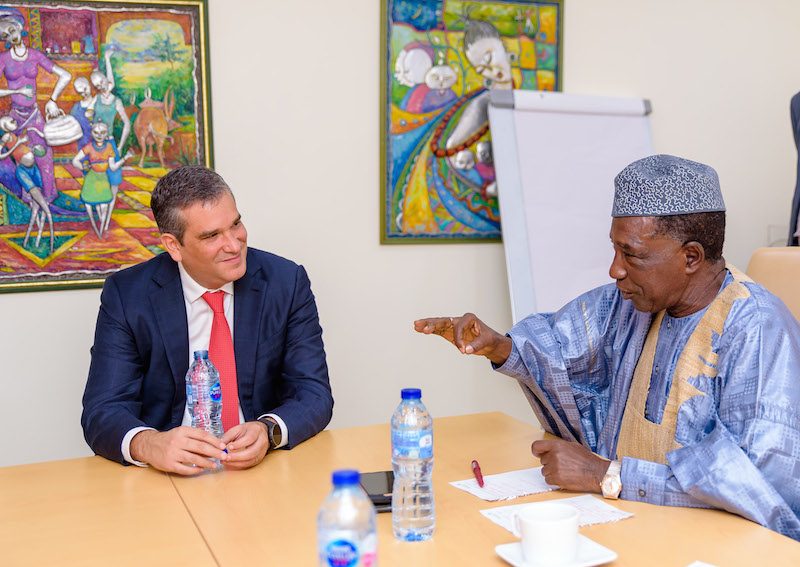
The minister’s points were not all that dominated the meeting, as Mauricio Alarcon, Nestle’s CEO also gave insights on spurring growth in the agric sector to meet the needs of industry.
With the CBN’s seemingly passionate push to facilitate credit to the real sector in recent years, Alarcon was asked how he thinks improving access to credit will drive growth, and making the current system work better.
“What we want is for those loans to be given to the right people in the value chain. Those are people like the processors and farmers as those loans are very critical to them,” Alarcon said.
He explained that the only way to make this successful is to ensure there is a linkage in the value chain. When a farmer produces but does not have someone to off take it, then there is no further business, and therefore the loan would not have been a productive one.
In the same vein, if the loan is put into processors and they do not have raw materials to process it, then this will also create an unsuccessful loan, as according to him “a successful loan is something that is paid back”.
However, when either a producer or processor has no linkage to either side, then whatever loan may have been secured for their operations is likely to be unserviceable.
CALEB OJEWALE