A declaration by the Minister of Justice and Attorney-General of the Federation Abubakar Malami that the Western Nigeria Security Network, codenamed Project Amotekun, is illegal has set off a firestorm with potential consequences for positives and negatives. Many groups, associations and learned men from the South dispute Malami’s claim, asserting that only the courts have the rights to such a pronouncement. The Federal Government has dug in on Malami’s side with defence chiefs stating that states should avoid alternative sources of defence.
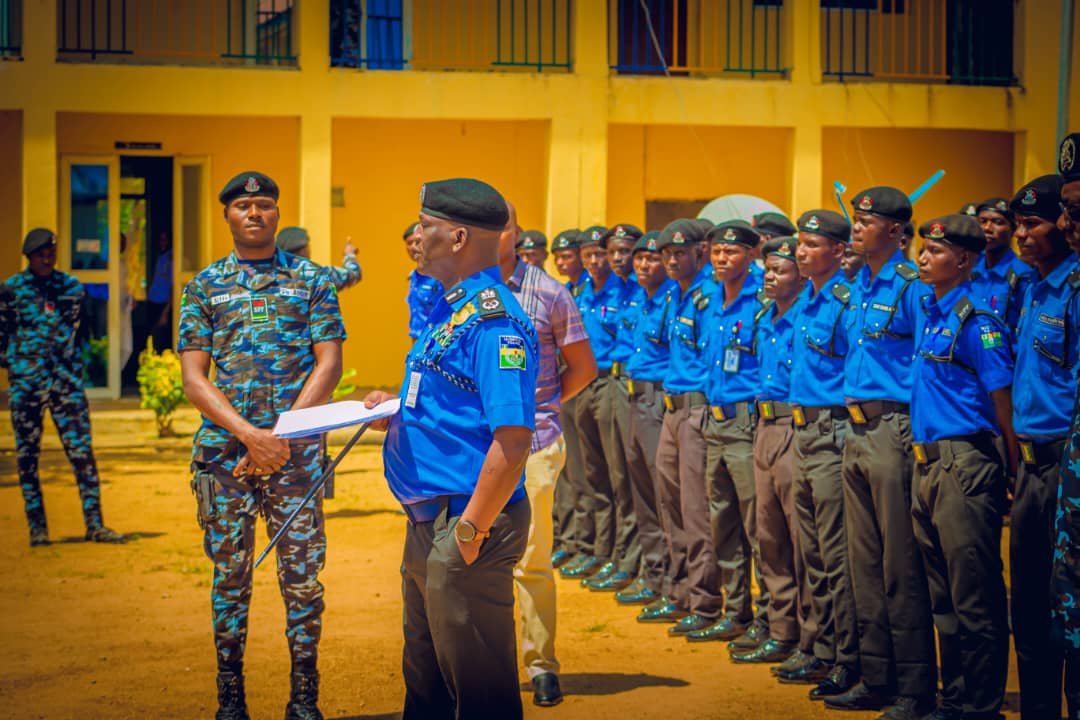
Project Amotekun is the effort by the six states of the South West to provide a backup civil defence mechanism in response to the rash of banditry, abductions and herdsmen attacks in the region in the second and third quarters of 2019. Federal law enforcement authorities such as the Nigerian Police and the Nigerian Army were conspicuously absent and failed in their duty of protection of citizens in the period. Something had to give: enter Amotekun.
Ekiti State Governor Dr Kayode Fayemi, who is also chairman of the Nigerian Governors’ Forum, affirms that the initiators of the Amotekun project had the buy-in of the federal security apparatus. He stated, “We see Amotekun as a logical end product to the community police debate. That is why we say it is to complement the police in response to security challenges, information gathering, and so on. In the process of doing this, the conventional security agencies were taken along and they have agreed to collaborate with us.
“They agreed that there is a need for multi-dimensional solutions to our security challenges, the paradigm shift, which is the direct involvement of the local population and government in the grassroots for protection. It is a model open to public scrutiny in improving the quality of the protection of the people”.

The Amotekun matter has, unfortunately, taken on a North-South divide. Supporters are mainly from the South of Nigeria while opponents are from the North. Supporting voices include those of Africa’s first Nobel laureate Prof Wole Soyinka, founder of Afe Babalola University, Are Afe Babalola, SAN, and the presidential adviser on legal matters Prof Itse Saga. Ohanaeze Ndigbo, IPOB, Afenifere and socio-cultural and political organisations of the South West, the South East and the Middle Belt are all in support. On the other side are groups and individuals from the North such as Miyetti Allah, Balarabe Musa and former President Ibrahim Babangida.
The statements by the Federal Government and military authorities unfortunately also fall into the ethnic trap. It is the first challenge and riddle of Nigeria that Amotekun has exposed. All the defence chiefs are Muslims of Northern Nigeria extraction. They sing from a hymn book that does not include nor represent the south of Nigeria.
A second and more significant challenge is the question of the legality of Amotekun and similar civil defence structures in place across the country. History helps. In February 2006, the Kano State Government unveiled Hisbah, a local sharia implementation organisation with paramilitary orientation. The Federal Government declared it illegal, arrested two of its officials and charged them to court on three counts of felony and running a clandestine organisation. The government claimed that Hisbah contravened Section 214, subsection 1 of the 1999 Nigerian constitution. The Kano State government sued the Federal Government seeking a constitutional interpretation. They went directly to the Supreme Court, which declined based on lack of original jurisdiction and directed that they start at the Federal High Court. The case went cold, but the arrested officials won their separate lawsuit against the federal government.
Amotekun would require a forthright judicial pronouncement on its legality. It would force a much-needed conversation about Nigeria’s federal status, the duties, responsibilities of constituent parts and the limits thereof. Nigeria should take advantage of the Amotekun Opportunity to examine all issues that it throws up.