|
Getting your Trinity Audio player ready...
|
Investors typically prize high dividend players in a low rate, low growth environment, as they search for high yielding and stable instruments.
Shareholders crave for the stock of an entity that pays steady dividend as it signals sound financial health, but dividend is irrelevant in a corporate finance world since the value of a firm depends on the discounted expected future cash-flows.
But average investor doesn’t care about the finance jargons but the money that trickle down into his pocket, a reward for investing his hard earned money in a corporate entity.
The companies that will be paying higher dividend to their owners from distributable profit in 2020 are: Zenith Bank, United Bank for Africa, and Dangote Cement Plc, LASACO Insurance, and United Capital Plc.

The dividend yield is the ratio of a company’s annual dividend compared to its share price. The dividend yield is represented as a percentage and is calculated as follows.
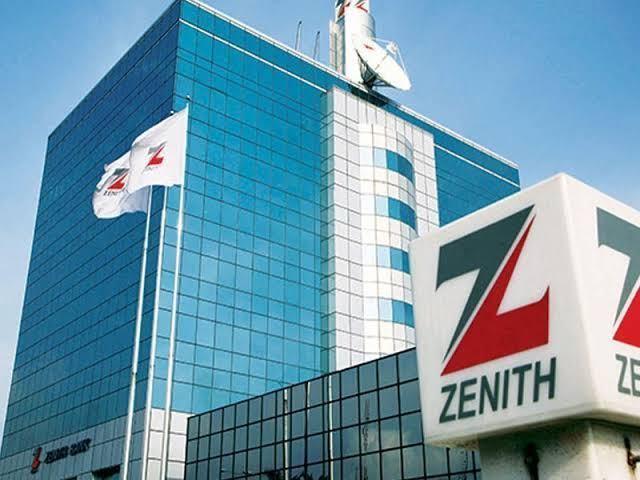
Zenith Bank, the largest lender by profit in Africa’s largest economy has a yield of 15.05 percent, as it had paid an interim dividend of N9.14 billion as at Half-Year 2019. This means that an investor will get N150,00o for every N1 million invested in the company.
But the lender shares has not been rallying since the start of the year as it has a year to date (YTD) of -20.17 percent.
Zenith Bank’s shares are cheap and attractive as it has a price to earnings ratio of 2.92 times and a price to book ratio of 0.67 times.
United Bank for Africa (UBA)’s stock yields 11.89 percent, and it had paid a final dividend of N10.26 billion. This means that an investor would get 118,900 if he invested N1 million in the company.

The lenders closed 2019 financial year with an YTD of -9.09 percent.
United Capital Plc has a yield of 12.50 percent, and it shares are attractive as price to earnings ratio stood at 3.58 times to end 2019 financial year.
Lasaco Insurance Plc has a dividend yield of 20.00 percent as it has met the minimum capital requirements by the regulator.
Dangote Cement has a dividend yield of 11.27 percent, and it had paid a financial dividend of N272.64 billion in 2018.
The largest producer of the building material in the country and most capitalized firm plans has revealed plans to buy back 10 per cent of its entire issued shares from shareholders.
The exercise is to help underpin its stock price and bolster earnings per share (EPS), as the company had issued commercial papers with a view to reducing finance cost and strengthening working capital position.
Dangote Cement, which currently has 17.04 billion fully paid up ordinary shares of 50 kobo each, would be buying back 1.70 billion shares.
It said the share buy-back was going to be on terms and conditions determined by the board of directors.
“They feel that the stock is too cheap and they want to suck up liquidity. In the long run stock price will go up. They are not happy that the stock price is between N140 and N160,” said Paul Ozim, a stock broker.
Ozim said that Guaranty Trust Bank’s good corporate governance and transparent shareholdings makes the largest lender by market capitalization a value stock even as it yields
“You hardly find a director that owns more than 5 percent of shares or stocks; hence it is difficult for someone to take a decision that will rattle the market. Foreign investors like such as stock as it gives boost their confidence,” said Ozim .
GTBank is trading at a price to earnings ratio of 4.38 times and it has a yield of 9.48 percent.
Lack of good corporate governance is inimical to the capital market especially when a shareholder holds majority of the shares.
Nigerian billionaire, Femi Otedola, who held majority stake in Forte Oil, sold the downstream oil and gas firm after stripping off all of the assets and left the trading carter while lot of investors were short changed.
Absence of structural reforms in strengthening the resilience of the domestic economy, rising vulnerabilities to external shocks, poor corporate earnings delivered mostly by consumer goods companies and in recent times, dampened foreign investors’ appetite for Nigeria equities.
Also, the flurry of regulatory guidelines from the CBN which has raised uncertainties in the banking sector, which means 2020 will be a tough year for lenders.
The equity market extended its recent bearish run as a late Santa visit on last week Friday failed to erase losses that had been recorded before the Charismas.
The NSE-ASI YTD return worsened to -14.60 percent as the local bourse continues its lackluster performance.
Nigerian Stock Exchange (NSE) data on domestic and foreign investor participation for November revealed that foreign investors’ outflows from Nigerian equities outpaced inflows for the second consecutive month.
The higher decline in Foreign outflows (down 19.3% m/m to N53.2bn) when compared to the reduction in Foreign inflows (down 11.3% m/m to N33.6bn) led to lower net outflows (N19.6bn in November compared to N28.0bn in October).
BALA AUGIE