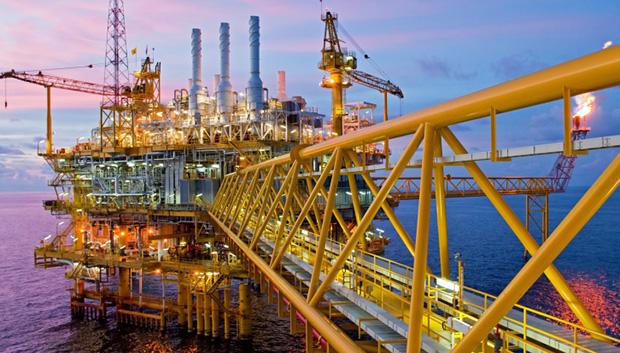
The global oil and gas industry may be in for greater troubles as Chevron, one of the world’s largest and best-performing oil companies, plans to write down the value of its assets. And Nigeria won’t be spared.
Chevron announced on December 13 that it is writing down the value of its assets by more than $10 billion, a concession that in an age of abundant oil and gas some of its holdings won’t be profitable anytime soon.
The impairment is a sign that the waters are getting pretty rough for the oil and gas industry due to a combination of supply surpluses, low prices, the struggling and unproven business case for large-scale shale drilling, and the looming threat of peak demand.
“Chevron’s write-down is a signal of much greater troubles to come in the oil and gas industry, most especially for countries that still run oil-dependent economy,” Charles Akinbobola, an energy analyst at Sofidam Capital, said.

Nigeria, Africa’s largest oil producer, is dependent on the oil sector for 90 percent of its foreign exchange earnings. The country has Africa’s second-largest oil reserves with estimated known reserves of 37 billion barrels of oil and 202 Tcf of proven gas reserves.
Chevron said the expected write-downs this quarter are related to a deepwater Gulf of Mexico project, which needs higher oil prices to churn a profit, and shale gas in Appalachia, which has suffered from low natural gas prices. It is considering selling its stake in a cultural region in the Eastern United States Appalachia shale and the proposed Kitmat LNG project in Canada.
“Oil companies have struggled to reap the profits of old and are falling out of favor with investors amid fears that electric vehicles and renewable energy, along with government regulations to address a warming planet, will constrain their futures,” Jasper Teulings, an energy analyst at General Counsel & Advocate, tweeted Dec. 13.
Only recently, Spanish energy giant Repsol announced a $5.3 billion write-down of its assets while also pledging to be carbon-neutral by 2050. The announcement comes after Repsol set a goal of becoming a leading international player in renewable energies.
US-based Schlumberger took a massive $12.7 billion write-down in October, largely due to the slowdown in shale drilling, while British Petroleum (BP) also wrote down $2.6 billion in assets in October.

The timing of International Oil Companies’ impairment has big repercussions for the planet and the strategy and future of oil producers, most especially countries like Nigeria which seem unprepared for the future of oil.
At the moment, there is a rising attractiveness of producing electric cars. From Europe to America to Asia, many advanced countries are considering a ban on the sale of gasoline-powered cars. If this happens, there will be a reduction in Nigeria’s oil revenue which will have an adverse effect on the exchange rate; oil companies may lay off workers, debt profile may increase while a sick government balance sheet looms.
Already, some companies, such as Total, one of the major players in Nigeria’s oil and gas industry, and Norway’s Statoil, another player, have seen the writing on the wall and are aiming to become energy companies focused on all forms of energy, including solar and wind.
Also, Saudi Aramco’s Initial Public Offering (IPO) prospectus seen by BusinessDay revealed oil demand is expected to peak around 2035 before levelling off, but the inflexion point could occur by the late 2020s.
On Chevron’s planned write-down, Mike Wirth, its chief executive, said in an interview with the Wall Street Journal that Chevron has to make the tough choices to high-grade its portfolio and invest in the highest-return projects in the world it sees ahead which is different from the world that lies behind.
The write-down comes as Chevron lowered its long-term forecast for oil and gas prices, which directly impacted the value of its assets.
Chevron has been among the strongest performers among the big oil majors but reported a 36 percent drop in 2019 third-quarter profit, hit by lower oil and gas prices and refining margins.
Other stakeholders said the admission that assets worth billions of dollars are worth a lot less than previously thought could force others to publicly reassess the value of their holdings in the face of a global supply glut and growing investor concerns about the long-term future of fossil fuels.
“Part of the reason why companies are increasingly acknowledging the likelihood of lower long-term prices is because of the energy transition which is a worrisome trend for oil companies,” Emmanuel Afimia, energy analyst and CEO of Afimia Consulting Limited, said.
US-based Institute for Energy Economics and Financial Analysis (IEEFA) said in a report that the write-down is also an indictment of shale gas drilling in Appalachia as low prices and a track record of not producing any profits have soured investors on the sector.
A recent analysis by IEEFA found that the seven largest Appalachian gas drillers burned through half a billion dollars in the third quarter.
“Despite booming gas output, Appalachian oil and gas companies consistently failed to produce positive cash flow over the past five quarters,” the authors of the IEEFA report said.
DIPO OLADEHINDE