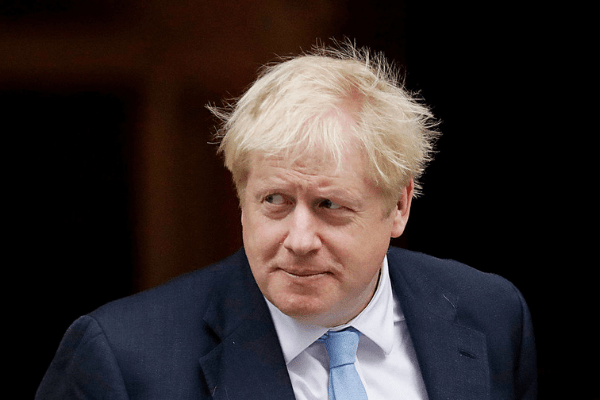
Supporters and foes alike have been left stunned by the scale of the victory of Boris Johnson and the Conservative Party in Britain’s General Elections on December 12. Permutations are on concerning what it would mean for Britain over the next five years. Many lessons abound the electoral victory, the campaign and the man for Nigeria, our politics and politicians as well as the country.
Alexander Boris de Pfeffel Johnson extended his tenure as Prime Minister of Britain since July 2019 with his victory at the snap polls this December. It was the first election in December in the UK since 1979. More significantly, Johnson led his party to a resounding victory the scale of which the party last experienced more than 35 years ago.
In Johnson, Britain elected a prime minister who primed himself for the job since childhood and has gathered valuable experience for the top job. The 55-year old Johnson is a politician, writer and former journalist. He has been Member of Parliament (MP) for Uxbridge and South Ruislip since 2015. Before then, he was MP for Henley from 2001 to 2008.
Johnson served as mayor of London from 2008 to 2016. He was a foreign secretary from 2016 to 2018. Britain elected a prime minister with significant experience and exposure. Johnson is also an independent-minded team player. He resigned the Theresa May cabinet in protest against the handling of the Brexit decision of the British electorate in 2016

The British election witnessed a sophisticated campaign that underlined the importance of focused messaging. He is controversial. He is also a strategist who understands how to duck and feint. On the positive side, Johnson has achieved victories from the jaws of seeming defeat since his days as president of the Students Union at the University of Oxford. His brilliant mind conjures tactics that yield positives from seemingly impossible situations.
As a biography noted, “Johnson is a controversial figure in British politics and journalism. Supporters have praised him as an entertaining, humorous, and popular personality, with an appeal stretching beyond traditional Conservative voters. Conversely, his critics have accused him of dishonesty, elitism and cronyism, and of using racist, sexist, and homophobic language. Johnson is the subject of several biographies and many fictionalised portrayals.
Boris Johnson as Prime Minister of Nigeria’s traditional ally, represents a challenge for the skills of our diplomatic corps. Johnson has disparaged Nigeria. While serving as editor of The Spectator, a political tabloid, Johnson wrote racist and offensive comments about Nigeria in 1999. He wrote off Nigerians as avaricious and childish when he said the young people of his country “have an almost Nigerian interest in money and gadgets of all kinds.” He has not apologised. Nor has Nigeria taken him up since a newspaper unearthed the offensive comments.
The British General Election was instructive for upholding the choices of the electorate. Even seats traditionally belonging to one party went the other way because of the sentiments and opinions of the voters. It was free, fair and devoid of the brinksmanship, violence and various atrocities that attended a similar election here in April 2019.
Johnson won and will lead with the mission of delivering Brexit. Nigeria must continue to engage Britain as an ally. Our focus should be what a Britain outside of the European Union will mean for Nigeria and in particular the nature of trade and other relations with that country. Will Britain regard its obligations to Commonwealth nations better than it did before now?

Congratulations to the Conservative Party and its swashbuckling and history-making leader.