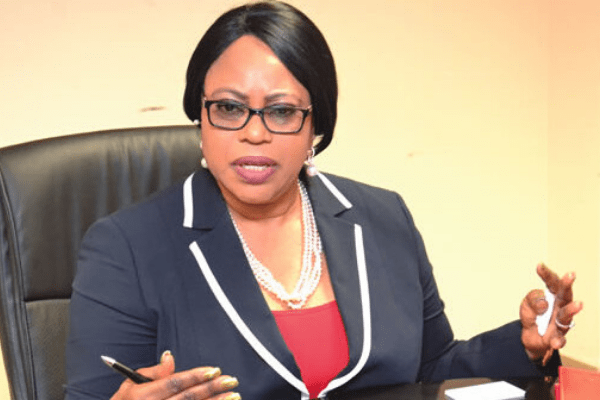
The efficiency of Nigerian seaports is being hampered by poor state of the port access roads, manual cargo examination by the Nigeria Customs Service (NCS) and the preponderance of overtime goods at the nation’s seaports, Vicky Haastrup, chairman, Seaport Terminal Operators Association of Nigeria (STOAN), has said.
Speaking in Lagos recently, at the 2019 Annual Stakeholders’ Appreciation Night organised by Nigerian Shippers’ Council (NSC), Haastrup said bad roads have become “the largest single obstacle working against the efficiency of Nigerian ports”.
“Port operators and users are groaning under the weight of severe stress posed by severely dilapidated port access roads. While terminal operations at all the ports have attained varying degrees of efficiency, the severely dilapidated roads leading in and out of the ports are fast eroding the gains of the port reforms we all worked hard to achieve,” she said.
According to her, port workers, government officials and other stakeholders daily endure avoidable stress to resume work and return to their homes.

“Recently, I read the newspaper account of a Customs Controller who said that officers serving at his command frequently fall ill because of the Apapa gridlock and the attendant stress induced by commuting daily to and from work on motorbikes, which many have resorted to because the roads are no longer passable. There is only so much the body can endure,” she said.
Haastrup also identified manual clearing processes as another major issue hindering the efficiency of the ports.
“The scanners at the port are not working, while almost all the cargoes landed at our ports are subjected to 100 percent physical examination. This certainly slows down the cargo delivery process and increases the cost of doing business. We urge the Federal Government to, as a matter of urgency, work on automating Customs processes at our ports and installing functional scanners to reduce manual clearing processes,” she stated.
Read also: Customs Service says it has no audited accounts
She however said that automation and scanning will reduce human contacts at the port and cut down on the use of discretionary powers by government officials, adding that it will in turn reduce the cost of doing business at the port and boost government revenue.

On overtime cargoes, the STOAN chairman appealed to Customs to expedite action in auctioning the goods as provided in the Customs and Excise Management Act (CEMA).
Space, she said, is vital at every port and “a situation where overtime cargoes are allowed to take up substantial space at the port is not healthy enough”.
“Customs is empowered by law to auction overtime cargoes so as to free up space in the port and also recover government revenue. Not auctioning those cargoes that have been in the port for more than a year does not serve the best interest of government and of the operator. I therefore wish to appeal to the Nigeria Customs Service to free up the space in the port by auctioning those overtime or unclaimed goods,” she further stated.
Tony Anakebe, managing director of Gold Link Investment Ltd, confirmed that importers are paying demurrage and storage charges to shipping companies and terminal operators.
He said that these charges serve as additional cost of doing business that end up being imposed on Nigerians by way of rise in the market prices of commodities.