Multinational consulting firm PricewaterhouseCoopers (PwC) has said the power sector could see injection of estimated N400 billion every year if industries pay a tariff of N80/Kwh rather than the current average rate of N52.4,
Speaking at the yearly power and utilities roundtable organized by PwC, themed “Financing the Power sector: The facts, fiction and the future”, Andrew Nevin, partner and chief economist at PwC Nigeria, advocated for improved revenue collection, metering of consumers and review of energy tariff to check losses suffered by value-chain operators.

“We assume the average charge of N80/Kwh at 50percent electricity supplied to industries while other consumer categories maintain the current Multi Year Tariff Order charges will inject an estimated N400 billion into the power sector annually,” Nevin told the audience.
At tariff charge of N80/Kwh, Nigeria’s electricity tariff is still below most developed industrialized countries such as Finland with an electricity tariff of $314.96, Germany with an electricity tariff of $142.94 and Japan with an electricity tariff of $120.48.
According to PwC, the effect of charging industries a tariff of N80/Kwh and supplying 50percent of electricity received by DisCos to industries at a constant time will have a spill over effect on the economy and increase the level of manufacturing GDP from N6.4 trillion to N13.3 trillion.

Nevin said electricity distribution companies in the country posted a total loss of N931billion from 2014 to 2017, adding that a minimum estimated revenue of N1 trillion was required by DisCos to break even.
“Discos in Nigeria continue to report losses; hence, they pay only an estimated minimum tax, based on turnover instead of the 30 per cent company income tax, which is higher and would have resulted in significant tax revenues for the government,” Nevin said.
Other stakeholders in the power value-chain noted that consumers only pay for about 1,000MW of the average 3,500MW energy distributed daily, hence causing a dislocation in the value chain.
Ebipere Clark, senior special assistant on Energy and Power to the governor of the Central Bank of Nigeria, said some of the interventions in the power sector have been repaid, adding that focus should be on revenue collections for viability in the sector.
“It has been observed that maximum demand on the grid is at 9 pm, showing that many households use energy at that time. There should be transparency in consumption billing and collection, rather than focusing solely on the tariff”, Clark said.
On his part, Chiedu Ugbo, managing director/CEO of Niger Delta Power Holding Company (NDPHC), in his keynote address advocated for the need to explore alternative financing models that would spur economic growth and revitalise the power sector.
Citing various models that have been adopted in the country, Ugbo noted that private investment remains the future power financing in Nigeria in view of the huge capital requirement of the sector.
He, however, identified the need for the government to play its role in the market with the well-coordinated policy as it is currently doing under the Power Sector Recovery Plan – with Payment Assurance Facility (PAF) of N701billion and N600billion as precursors.
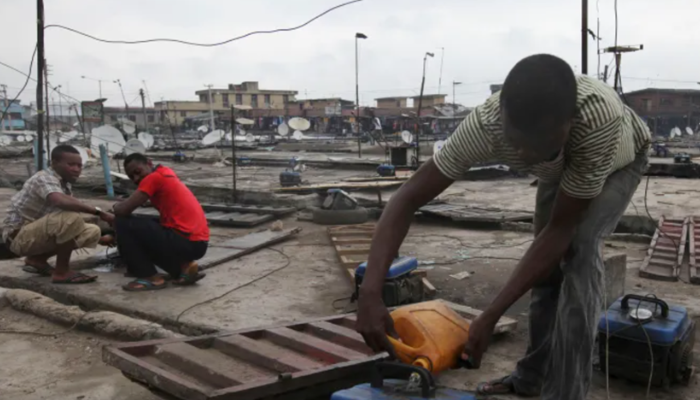
From the electricity distributors’ perspective, the Chief Financial Officer of Ikeja Electric, Olubunmi Olukoju stressed the need for stiffer regulations to ensure that consumers pay for the electricity that they consume and punished whenever they bypass or tamper with meters.
According to her, energy theft has increased, despite the metering exercise embarked upon by distribution companies.