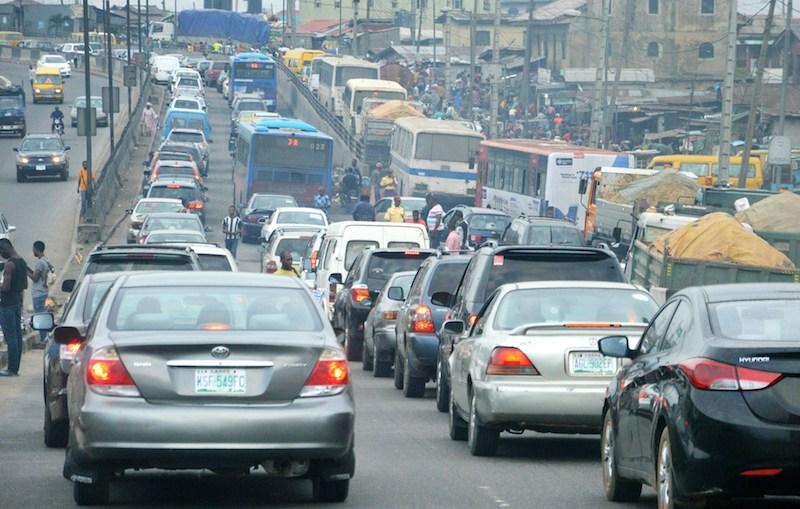
To Nigerians especially Lagosians, it’s strange, yet true that Lagos State, the self-styled Centre of Excellence in Nigeria, has been searching for solution to its trade mark traffic crisis since the last 36 years without success.
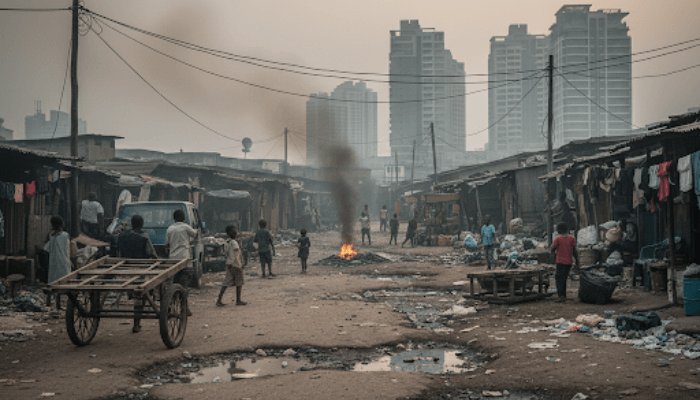
Lagos which is addressed in superlative terms as the largest economy in West Africa; one of the fastest growing cities in the world, a mega city and one of the 100 resilient cities in the world. But it easily and pitiably falls flat when the cards are laid out on the table. A major card is gridlock; another is misery which is quite deep.
Precisely on July 16, 1983, Lateef Kayode Jakande, the first civilian governor of the state (1979-1983) flagged off the Lagos Metro Line project projected to cost N689 million. It was a major attempt at introducing an intra-city rail system as a response to the state’s traffic crisis.
A few years earlier, the March 29, 1978 edition of Daily Times had hit the newsstand with a screaming headline, “Lagos Traffic Defies Solution” with a rider – “chaos despite new measure”, meaning that Lagos has known traffic crisis for more than 40 years today.

“We are making history today. One hundred years from now, generations yet unborn would thank us for the wisdom in establishing this project. At that time, the metro line would have expanded from the north-south route of Lagos to other states. I dream of a comfortable future and I thank God for making me and this administration instruments for this future,” Jakande said at the flag –off event.
But the visionary governor was mistaken and unfortunately his dream was dashed following the military coup of 1983 which saw the junta, led by then General Muhammadu Buhari, which overthrew the civilian administration of then President Shehu Shagari and Governor Jakande. Consequentially, generations yet unborn have no reason to thank him and his administration for the wisdom in establishing the project that never was.
The administration had planned to execute the metro line project in two phases, with the first starting from the Marina to Yaba. This phase was slated for completion in July 1986, while the second, commencing from Agege to Yaba through Oregun and Ikorodu Expressway, was slated for completion in March, 1987.
.
Till date, Lagos has experimented on one measure after another in an attempt to tame the monster called traffic gridlock to no avail. The population of the state has more than doubled along with growing number of vehicles, but infrastructure has remained almost static.
It is sad that with a vehicular density of over 222 vehicles/km, Lagos has largely unplanned network of roads which, in the last five years, have become landmines with deep gullies and yawning craters.
Though successive governments in the state, especially the administration of Babatunde Fashola, have made some attempts at containing the challenge of traffic in the state, these attempts have not yielded tangle, measurable and sustainable results.

It is sad to note that whatever were the merits or achievements of the traffic law in its early days have been diminished by the traffic realities in the state today. It seems as though the state never had any such law in place.
LASTMA which came out smoking with some level of positive results soon became an octopus, assuming larger than life image and extorting motorists on spurious charges, leading to its widespread condemnation.
Traffic wardens are a rare sight while LASTMA officials are overwhelmed as Lagos traffic congestion worsens daily. This in our view creates opportunities for new hires who can be trained to control traffic situations. However, what we see now are touts in their numbers taking up responsibilities of traffic officials in ways they deem fit.
Lawlessness in road conduct among drivers and riders is now the order of the day. “One way” which should be frowned at and have its offenders brought to book is now the norm, as drivers try to beat traffic.
Regular motorcycles as an alternative means, has solved to an extent the menace however created new challenges as they are the perpetrators who ply the one-way route and drive at full speed thereby exposing people to the risk of accident. However, this isn’t the case with the likes of Gokada, Opay etc. who ride in line with traffic regulations.
It has become unbearable to live in the state and this was reflected in the ranking of the state as the third most miserable city in the world by an international ranking organisation.
We are alarmed by the rise in travel time and cost which have gone up by over 1000 percent. Apart from impoverishing the residents, the traffic crisis situation is also diminishing the economy of the state as it affects productivity significantly from the level of artisans to CEOs in the corporate world.
We are of the view that that for so long as the state government shies away from creating new city centres in places like Ikorodu, Badagry, Abule Egba and other far-flung suburbs, so long will everybody find their way to the already congested Ikeja, Ikoyi and VI, and for so long too will this crisis endure.