To meet demand, African nations should add nearly 15 gigawatts of Photovoltaic (PV) each year through 2040 in order to become increasingly influential in shaping global energy trends as it undergoes the largest process of urbanization the world has ever seen, a report from the International Energy Agency (IEA) said.
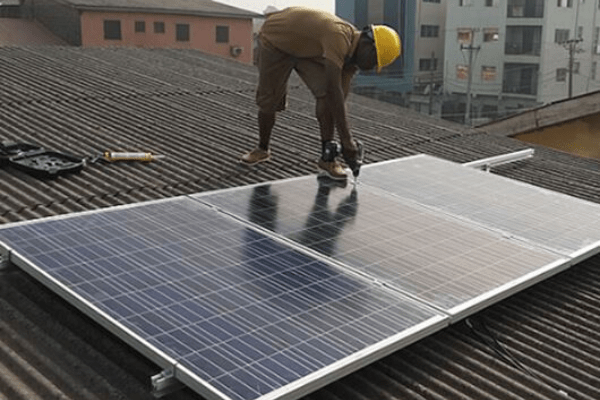
PV is a technology that converts sunlight (solar radiation) into direct current electricity by using semiconductors.
Africa is home to abundant renewable energy resources and its renewable energy power potential is substantially larger than the current and projected power consumption of the continent.
According to IEA, energy demand in Africa is expected to rise by 60percent by 2040 as a result of rapid population growth, with an overall expansion of more than two billion people during the next two decades, of which 600 million will inhabit major cities.

However, growth has been constrained, by limited access to financing, underdeveloped grids and infrastructure, unstable off-taker financial arrangements and, in many countries, an uncertain policy environment.
“Africa needs Solar PV deployment of almost 15 gigawatts (GW) a year between this year and 2040, an amount equivalent to the solar PV capacity the United States adds every year over the same period,” IEA said.
IEA’s executive director Fatih Birol said Africa has a unique opportunity to pursue a much less carbon-intensive development path than many other parts of the world.
“To achieve this, it has to take advantage of the huge potential that solar, wind, hydropower, natural gas and energy efficiency offers,” Birol said.
IEA’s Africa Energy Outlook 2019 said the scale of deployment of non-hydro renewable is even more significant in the Africa case as a large part of this comes from solar PV, which overtakes hydropower and natural gas to become the largest electricity source in Africa in terms of installed capacity and the second-largest in terms of generation output.

IEA noted that Nigeria, South Africa, DR Congo and Ethiopia are among the countries with the highest investment needs, however, half of this investment is needed to expand and upgrade electricity networks including mini-grids and most of the rest is needed to increase low-carbon generation capacity where solar PV plays an important role.
Despite this, recent advances in renewable energy technologies and accompanying cost reductions mean that the large-scale deployment of renewable energy now offers Africa a cost-effective path to sustainable and equitable growth. In many parts of Africa, decentralised renewable energy technologies offer an economical solution for electrification in remote areas as well as for grid extension.
Another study undertaken by the International Renewable Energy Agency (IRENA) noted that Africa’s solar PV theoretical potential could provide the continent with more than 660 000 TWh of electricity a year, far above it’s projected needs.
The IEA suggests that, with the right policies in place, Africa can become the first continent to develop its economy mainly through the use of modern energy sources, drawing on its “rich natural resources” to exploit clean, renewable technology in the form of solar, hydro and wind power.
The new report is the IEA’s most comprehensive and detailed work to date on energy across the African continent, with a particular emphasis on sub-Saharan Africa. It includes detailed energy profiles of 11 countries that represent three-quarters of the region’s gross domestic product and energy demand, including Nigeria, South Africa, Ethiopia, Kenya and Ghana.