|
Getting your Trinity Audio player ready...
|
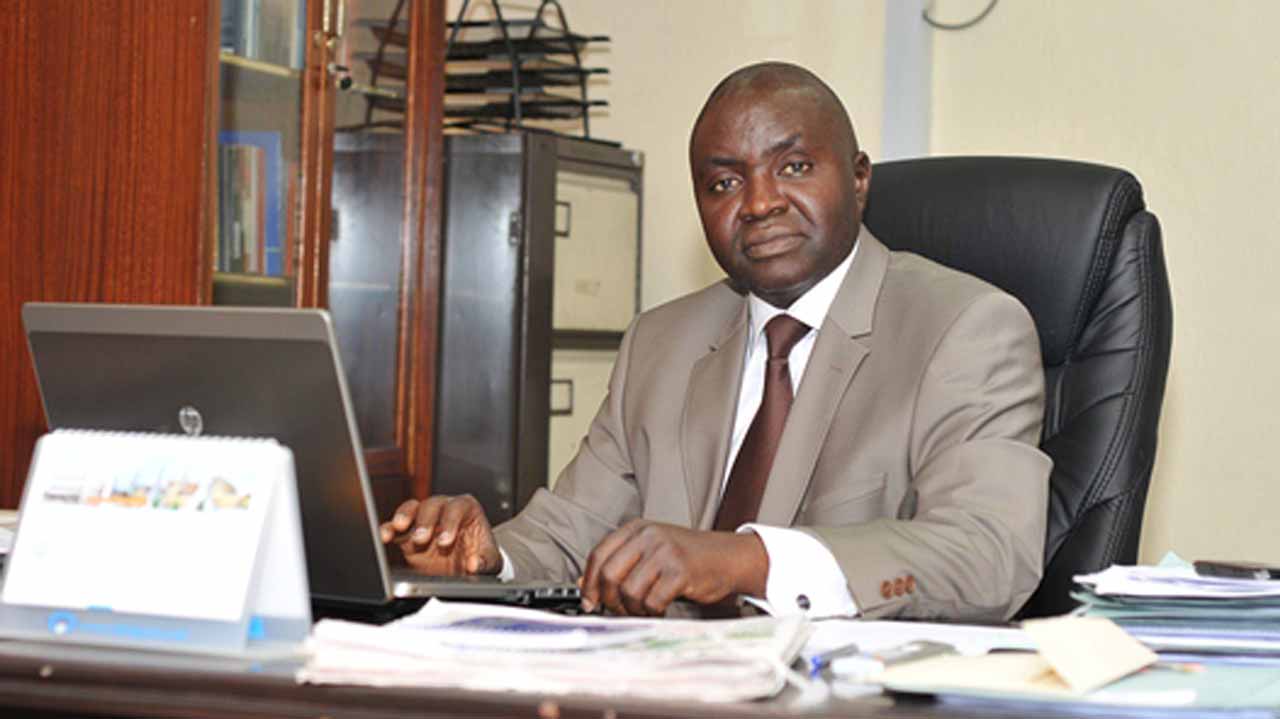
Otunba Adeniyi Adebayo has been the minister of industry, trade and investment for three months. He has made public statements to reflect his vision for local and international trade as well as the investment environment.
As soon as he became minister, his first pledge was to work with his counterpart in the ministry to attract investments and boost trade in the country. He has since spoken on job and investment creation.
On October 5, he urged the business communities in Poland to consider Nigeria as a profitable investment destination.
However, the minister is yet to provide his blueprint on industrialisation of the mono-product Nigeria.

He has left manufacturers guessing on what his policies are on critical issues such as backward integration, incentives, import restrictions, waivers, Export Expansion Grant and small businesses.
Many manufacturers are asking in hushed tones whether Adebayo’s policy centres around import substitution, export orientation or resource-based manufacturing.
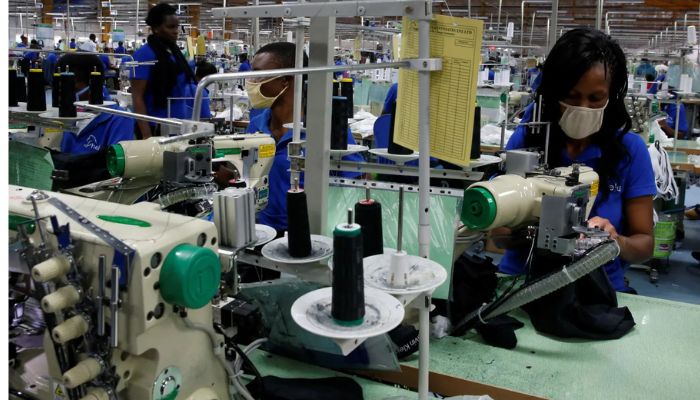
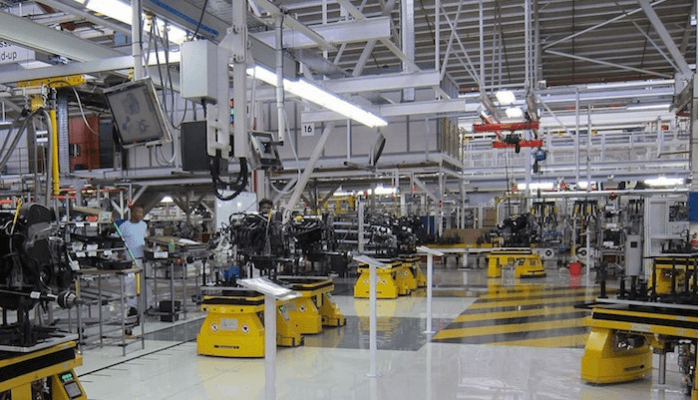
Currently, the manufacturing sector is challenged. Firms such as Grif, Universal Steel, Evans Medicals, Swiss Pharma, Procter &Gamble, among many others, have exited Nigeria recently for diverse reasons ranging from poor policies to tough operating environment and debt. What is Adebayo’s magic wand for arresting closure of industries?
In 2014, pharmaceutical companies like Emzor, GSK, and a number of others earned $7.708 million from export of medicines to the African market, according to the International Trade Centre (ITC). Four years later, however, the companies made only $708,000. Naira has weakened from N199/$ in 2014 to N360/$ in 2018 (80.9 percent), but export earnings fell by a whopping 90.8 percent.
Okey Akpa, chief executive of SKG Pharma and former chairman of the Pharmaceutical Manufacturers Group of the Manufacturers Association of Nigeria (PMG-MAN), said that increased import of medicines jeopardises Nigeria’s drug and national security.

“Local companies in the pharmaceutical industry are struggling to remain in business and some have gone into extinction. And to meet the shortfall in demand, import increases,” Gbolahan Ologunro, a research analyst at Lagos-based CSL Stockbrokers, told BusinessDay recently.
The Export Expansion Grant has been suspended since 2013. Up till now, it has not been reinstated.
The EEG was originally established in 1986 to help Nigerian exporters to become competitive at the global market. It is a practice in many developing and developed countries such as China, India and Australia to provide concessions or cash rebates/grants to companies penetrating new markets or consolidating already established markets to enable them rival competitors.
In Nigeria, companies that exported different kinds of products or commodities between 2006 and 2016 were owed billions of naira in claims as the federal government did not meet the obligation of settling them as promised.
The National Assembly approved the promissory notes of 269 companies worth N193.042 billion, but 38 exporters have been left in the lurch.
According to Ede Dafinone, chairman, he Manufacturers Association of Nigeria Export Promotion Group (MANEG), continuous drop in the non-oil exports since 2013 may not be unconnected with the suspension of the only incentive that helps to drive exports.
More so, what is Adebayo’s blueprint on the Central Bank of Nigeria’s list of 43 items not eligible for foreign exchange?
Annealed cold rolled steel is on that list even when no firm produces it in Nigeria—rendering end users in the industry hopeless and jobless.
Textile is on the list even, though the number of textile makers in the country today is fewer than four. There is no evidence of improved local production and new investments in textile production, industry players say.
In fact, most of the so-called textile makers are producers of rugs, handkerchiefs, and towels.
“The textile industry has been a beneficiary of several fiscal incentives and protectionist measures over the years, yet it has remained in stagnation,” Muda Yusuf, director-general, Lagos Chamber of Commerce and Industry, said in a recent statement. “Some of them have even gone into receivership as they could not repay their loans. The lesson is that we should deal with the fundamental issues of production competitiveness in our economy,” he added.
Though tomato is still one of the items, yet local production is still very low. About $360 million is still spent on import of tomato paste. Much of the paste that comes into Nigeria is smuggled. Local industries are not faring better, with Dangote Tomato just reopening its Kano plant. Others are either not functional or operating below 25 percent capacity.
Moreover, what is Adebayo’s position on dishing out import waivers on one company to the detriment of others? A number of large firms have been beneficiaries of the flip-flop to the detriment of other players. Will this continue or stop?
Many firms are struggling to stay afloat as their margins continue to drop.
On September 4, the Flour Mills of Nigeria had its annual general meeting in Lagos. Its group financial statement showed that revenue fell 3 percent to N527.4 billion in March 2019, as against N542.7 billion in March 2018. Profit from continuing operations slumped by 71 percent to N4 billion, from N13.61 billion in the previous year.
McNichols, a producer of consumer goods, was hit by the economic headwinds as its revenue dropped by 17 percent to N355 million, from N430 million in the 2018 financial year. The company’s profit before tax was N20.9 million in 2018 but it dropped to N15.4 million in 2019.
Okomu Oil Palm had its turnover fall by 22 percent to N4.34 billion in 2019, from N5.59 billion in 2018. The company’s gross profit also dropped to N3.49 billion, from the N4.45 billion in 2018, representing a 21.6 percent decline. Its total comprehensive income dropped significantly by 38 percent from N2.46 billion in 2018 to N1.52 billion in 2019.
Guinness Nigeria recorded N131.5 billion in turnover in the year ended June 30, 2019, which was a decline of 8 percent when compared with N143 billion in the corresponding period of 2018. The decline cut across both the domestic and export sales. In the domestic market, Guinness realised N124.9 billion, a decline of 7.9 percent when compared with N135.7 billion it made in the same market during a corresponding period of 2018.
Nigerian Breweries’ sales fell by 5.9 percent. Local sales in the financial year ended stood at N324.20 billion, representing 5.9 percent decline.
Dangote sugar, a division of the Dangote conglomerate, experienced a decline in its revenue by 2.24 percent, from N80.4 billion recorded in half year 2018 to N78.6 billion in the half year of 2019. Its gross profit dropped by 8.19 percent to N21.3 billion from N23.2 billion, though profit after tax grew marginally to N12.8 billion in 2019 from N12.7 billion in 2018.
PZ Cussons is also facing tough times with series of losses.
Portland Paints’ three months to June 2019 fell to N207.34 million from N319.23 million, as profit from operations crashed from N95.2 million to N5.4 million, according to the company’s unaudited financial report for the period ended June 2019.
This is coming on the heels of the imminent African Continental Free Trade Area (AfCFTA).
Today, Nigeria’s most comprehensive and ambitious industrial plan has been left in the shelves of his ministry to gather dust five years after it was launched in 2014.
The five-year plan was conceived and prepared by Nigerian experts, the United Nations Industrial Development Organisation (UNIDO) and several technical partners with a view to building a resilient manufacturing sector that would drive jobs, generate wealth, diversify the economy, substitute imports, boost exports, and broaden the tax base in three to five years.
But this plan will end next year in the shelves, with most of its parts unexecuted.
“We are sure that there is a need to review of the industrial plan, assess the level of achievement of the plan and project for the next five years,” Mansur Ahmed, president of the Manufacturers Association of Nigeria (MAN), told BusinessDay on the phone.
“There are areas where the plans have not met expectations in terms of today’s realities and we have to review it to make it more realistic for today’s situation,” he further said.
Will Adebayo review or implement the NIRP? Manufacturers expect him to start work on local industries as time ticks fast.
ODINAKA ANUDU